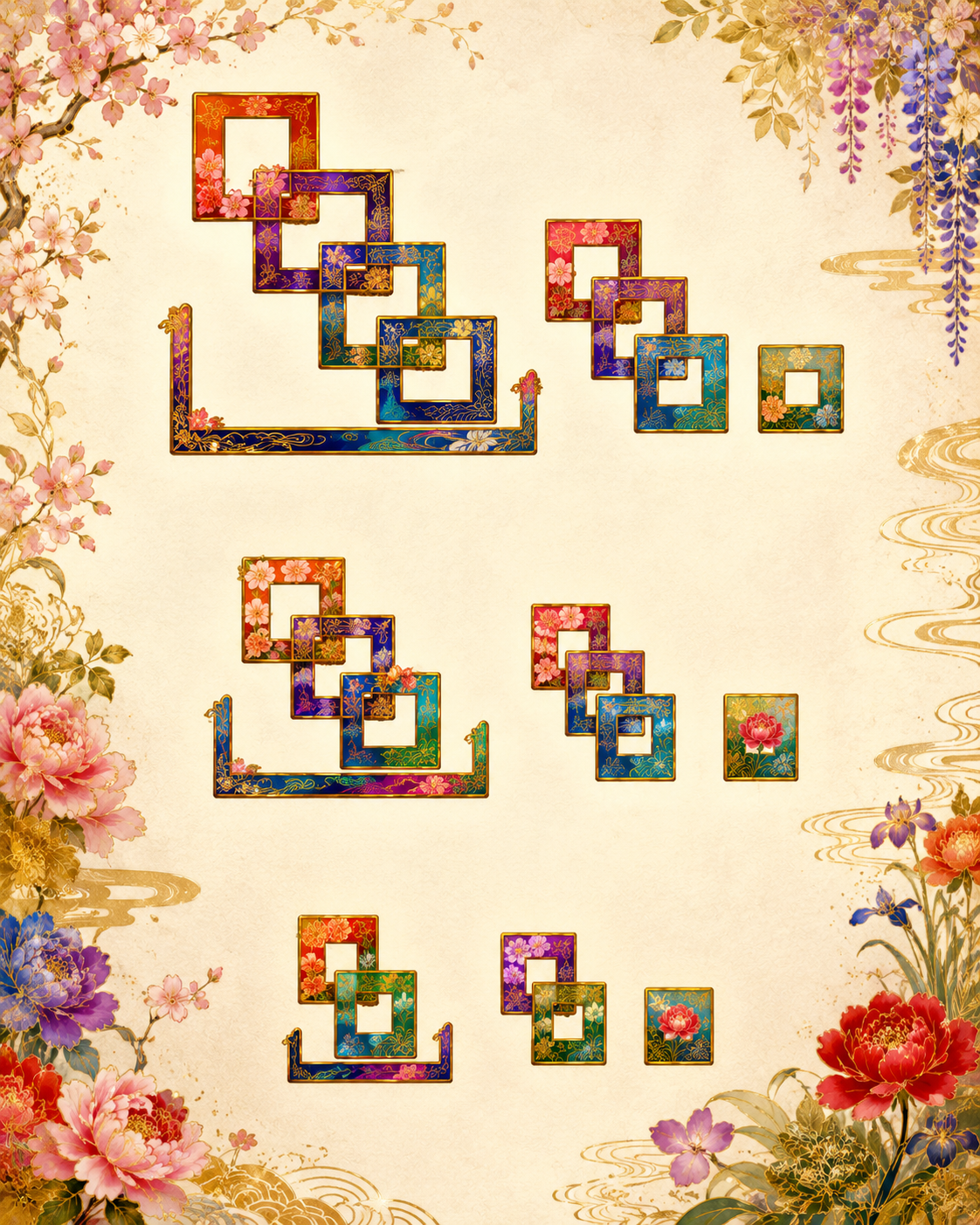
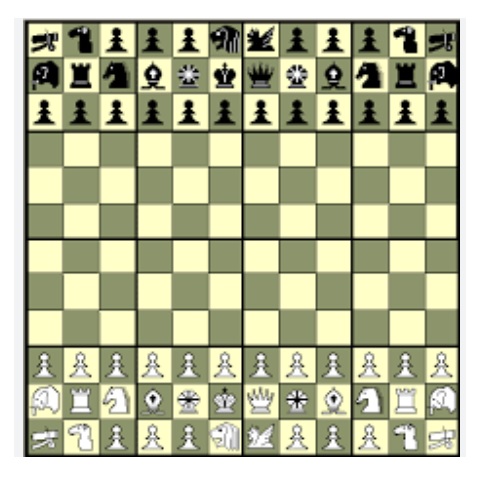
A. Tracktrixes:
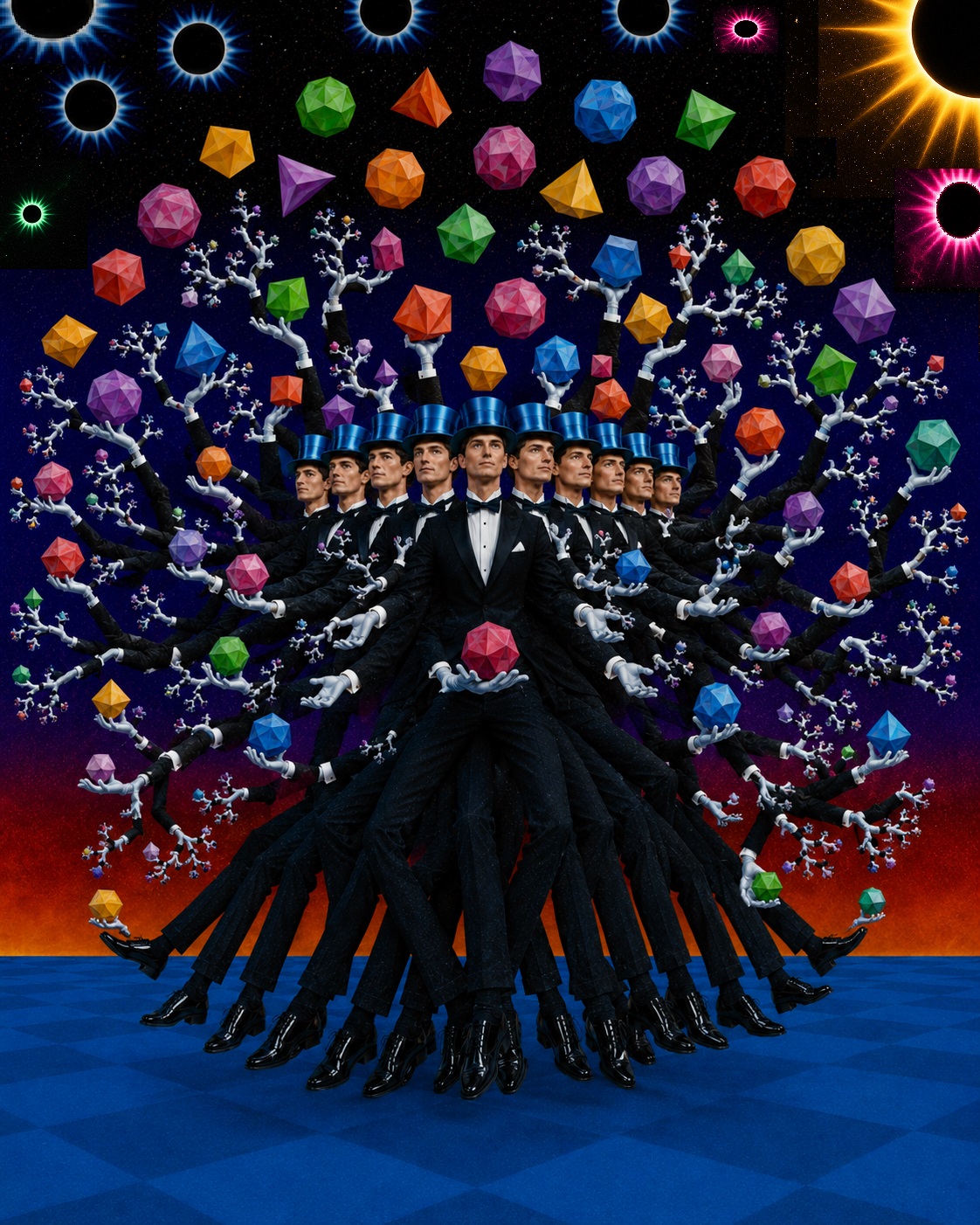
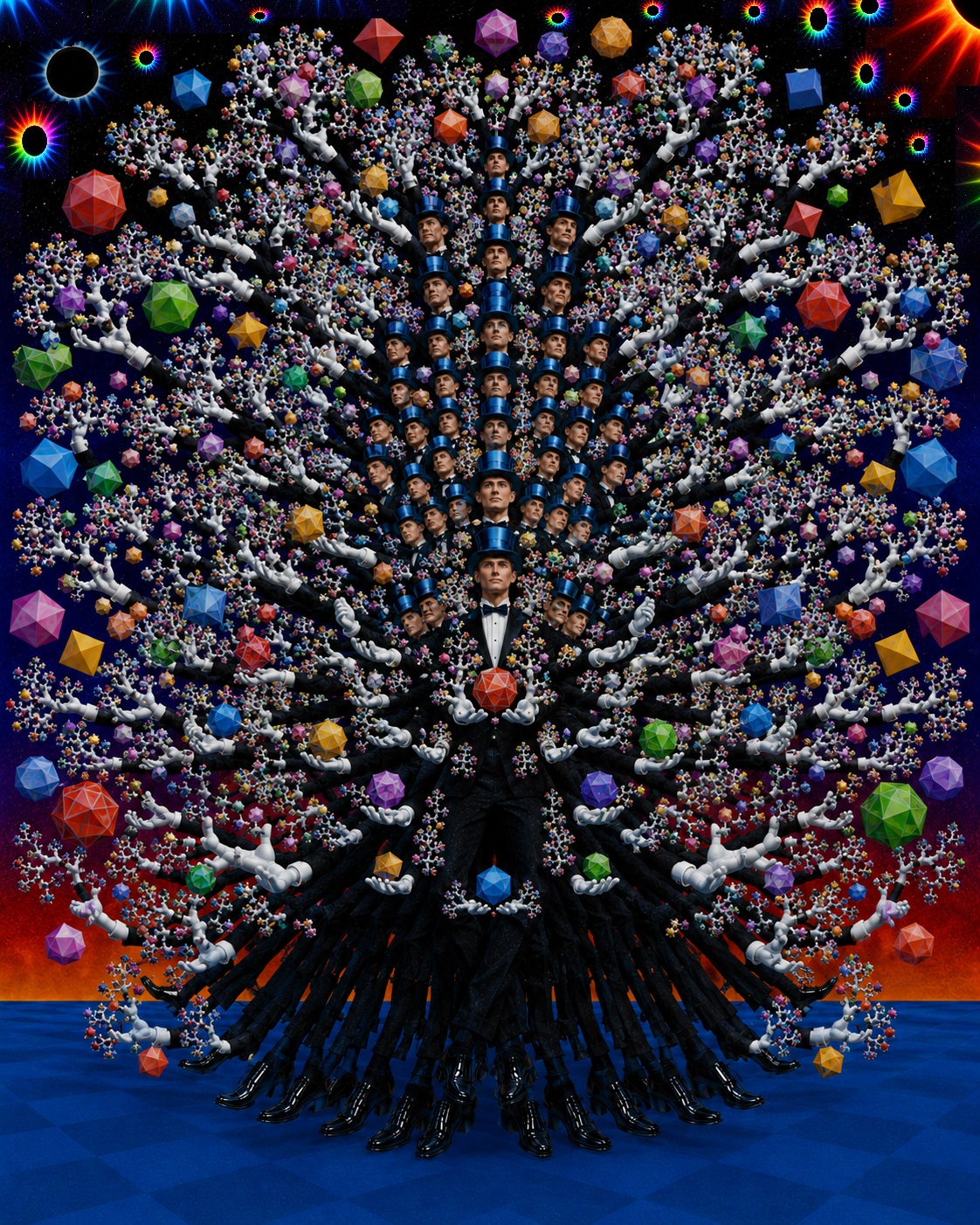
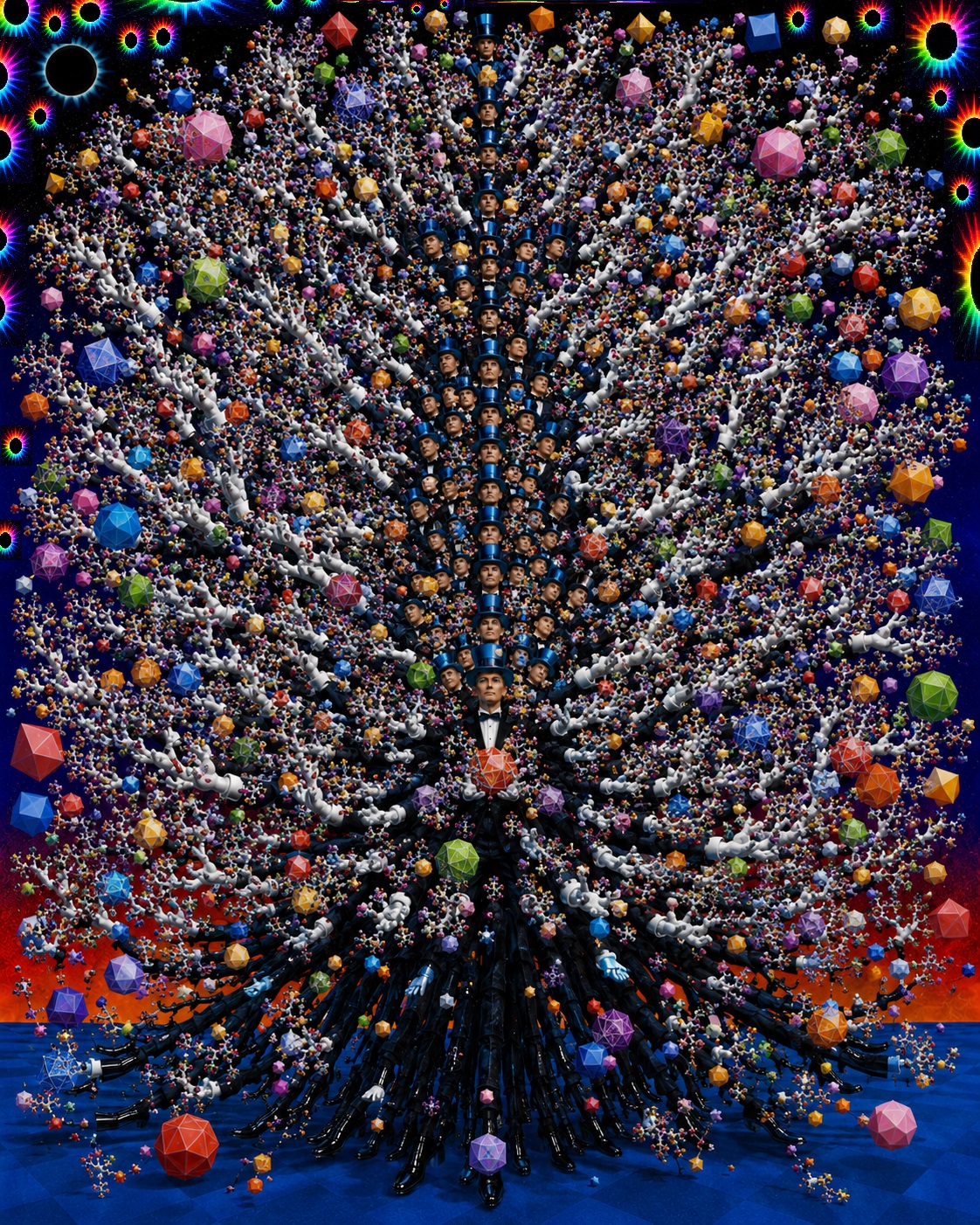
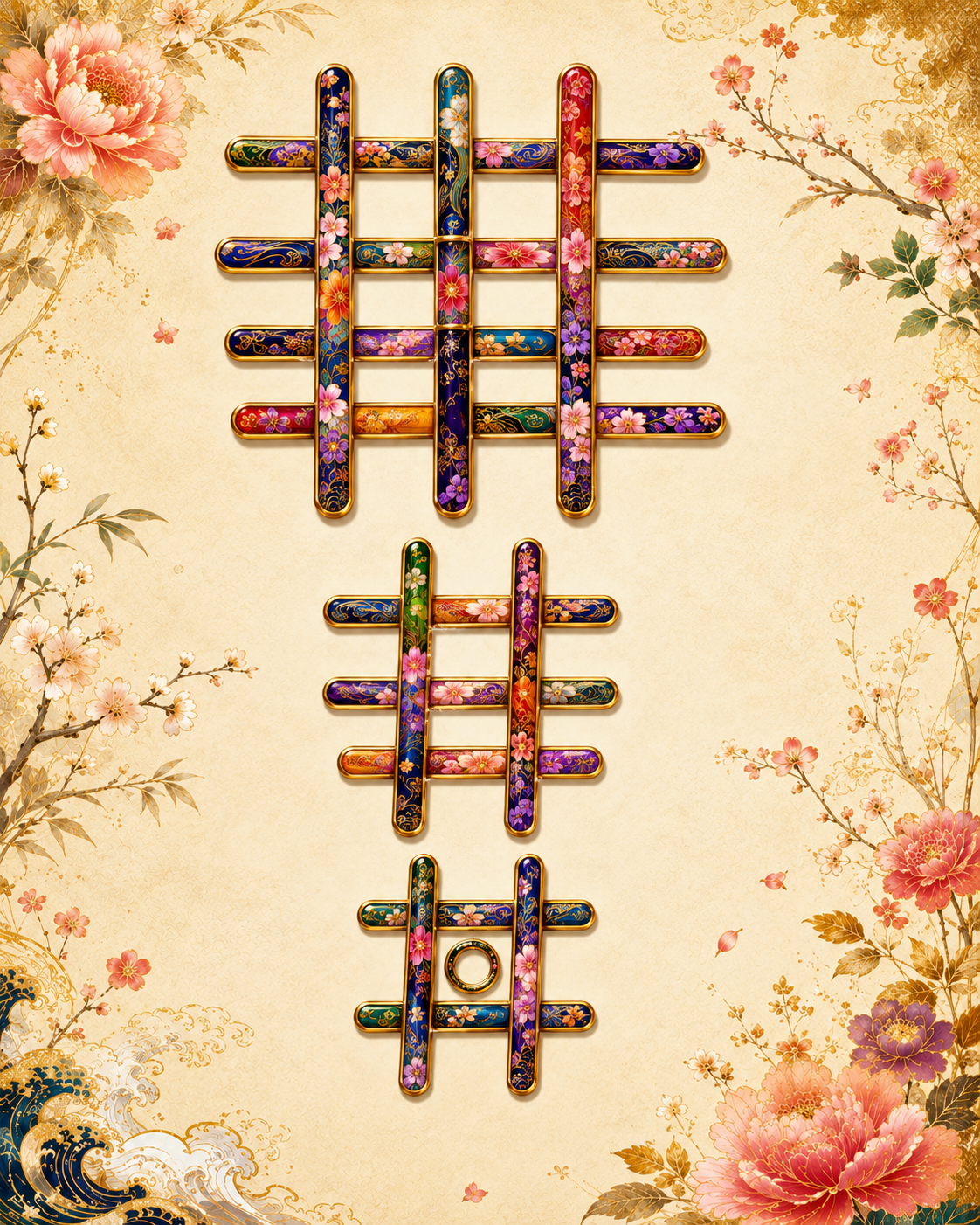
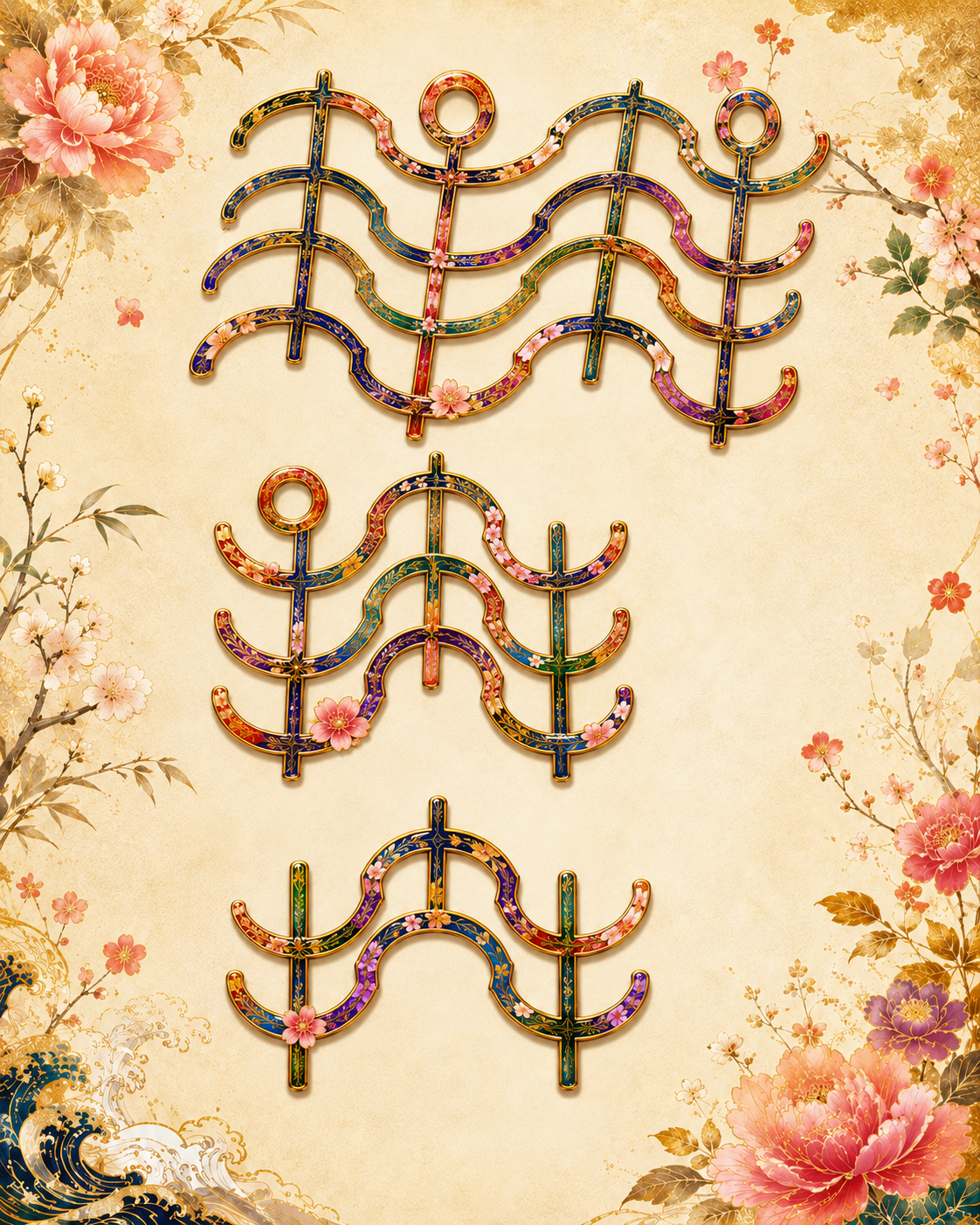
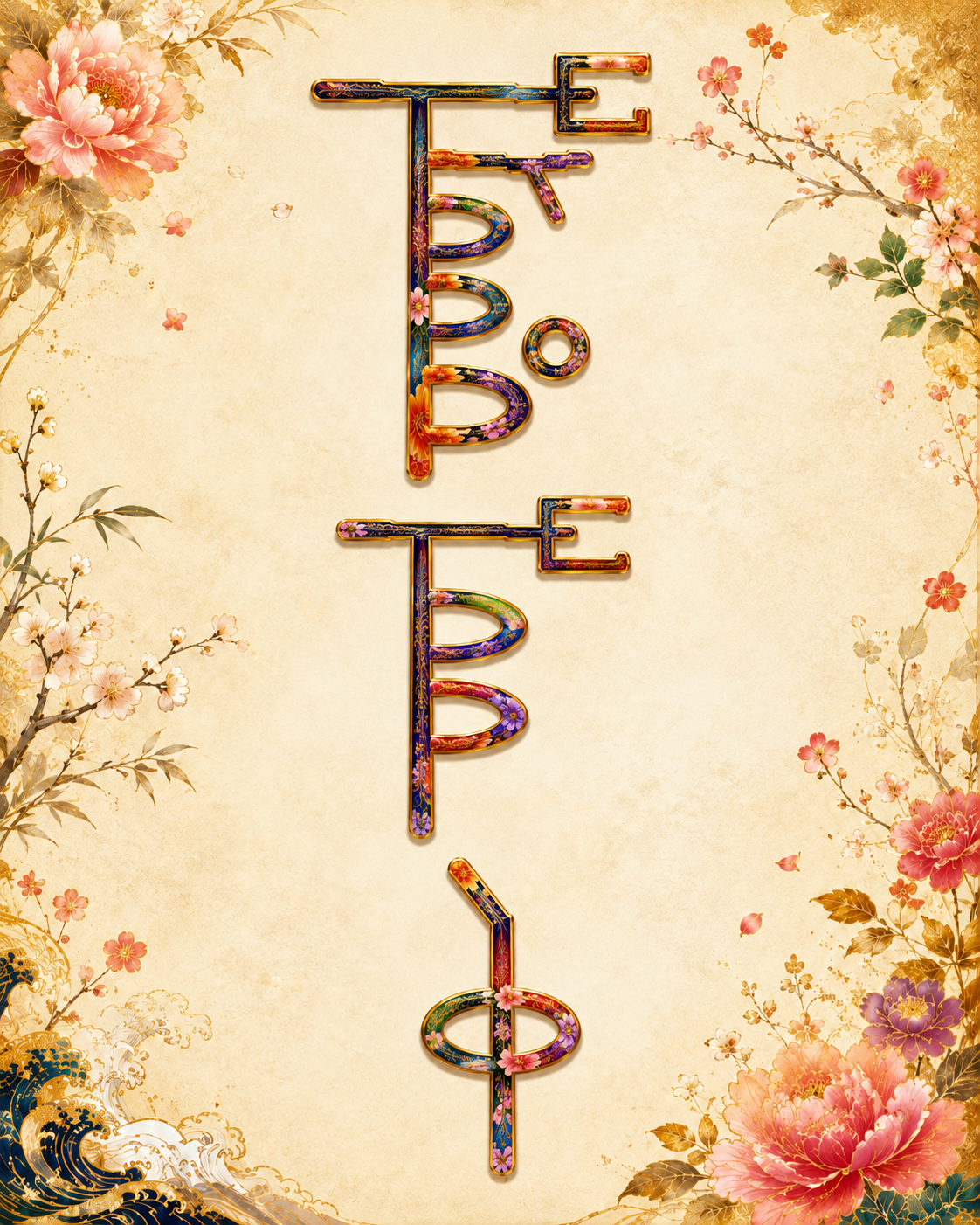
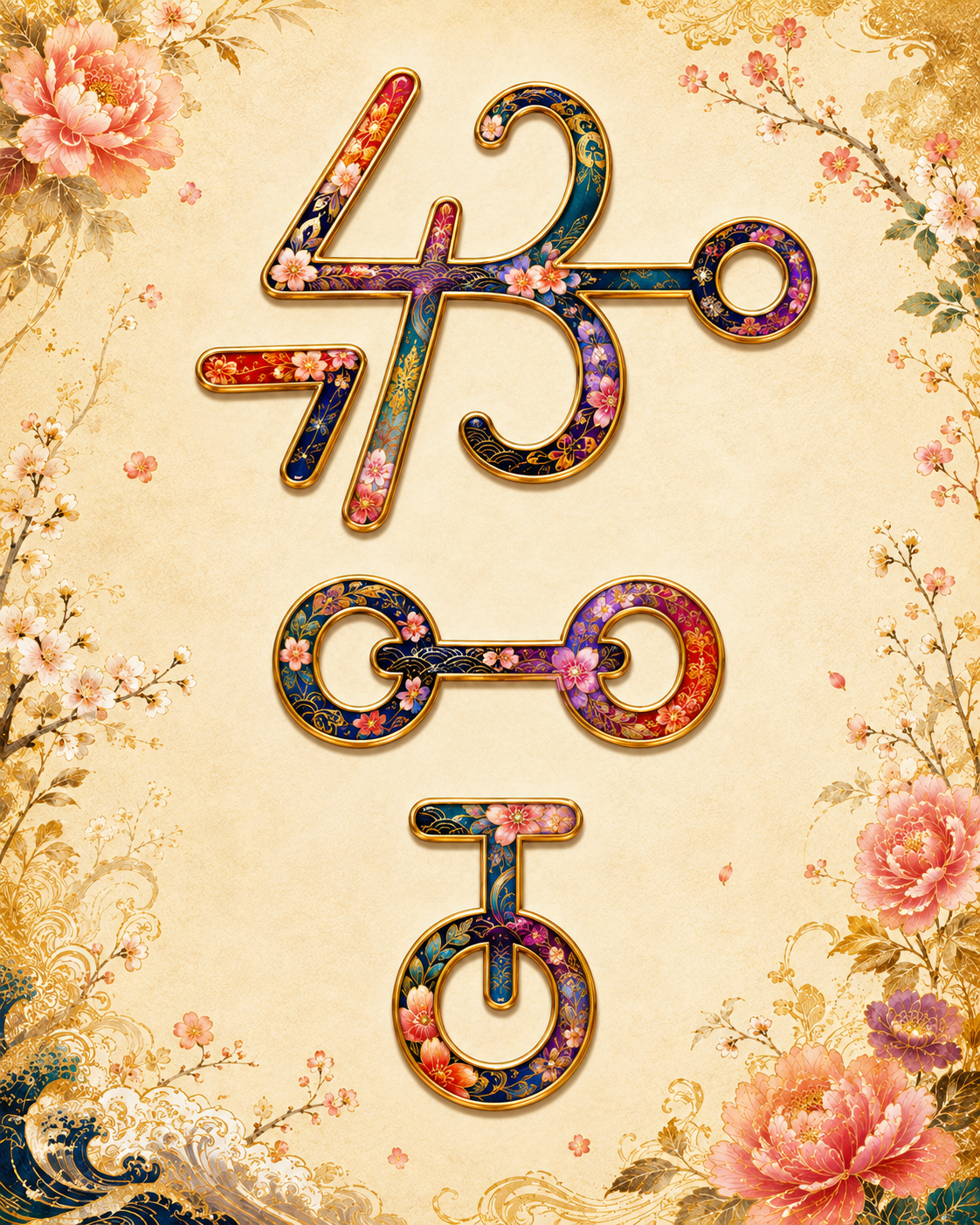
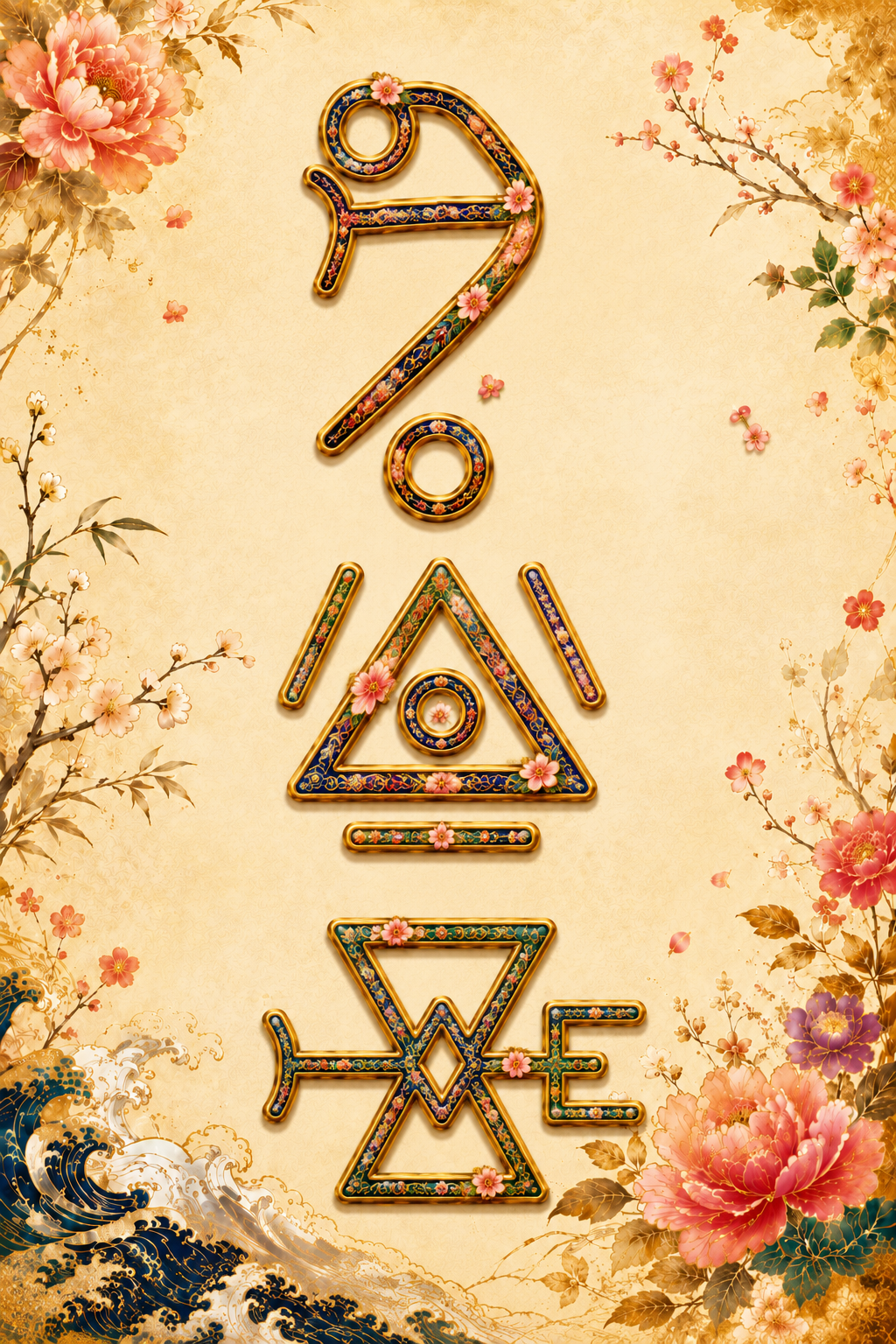
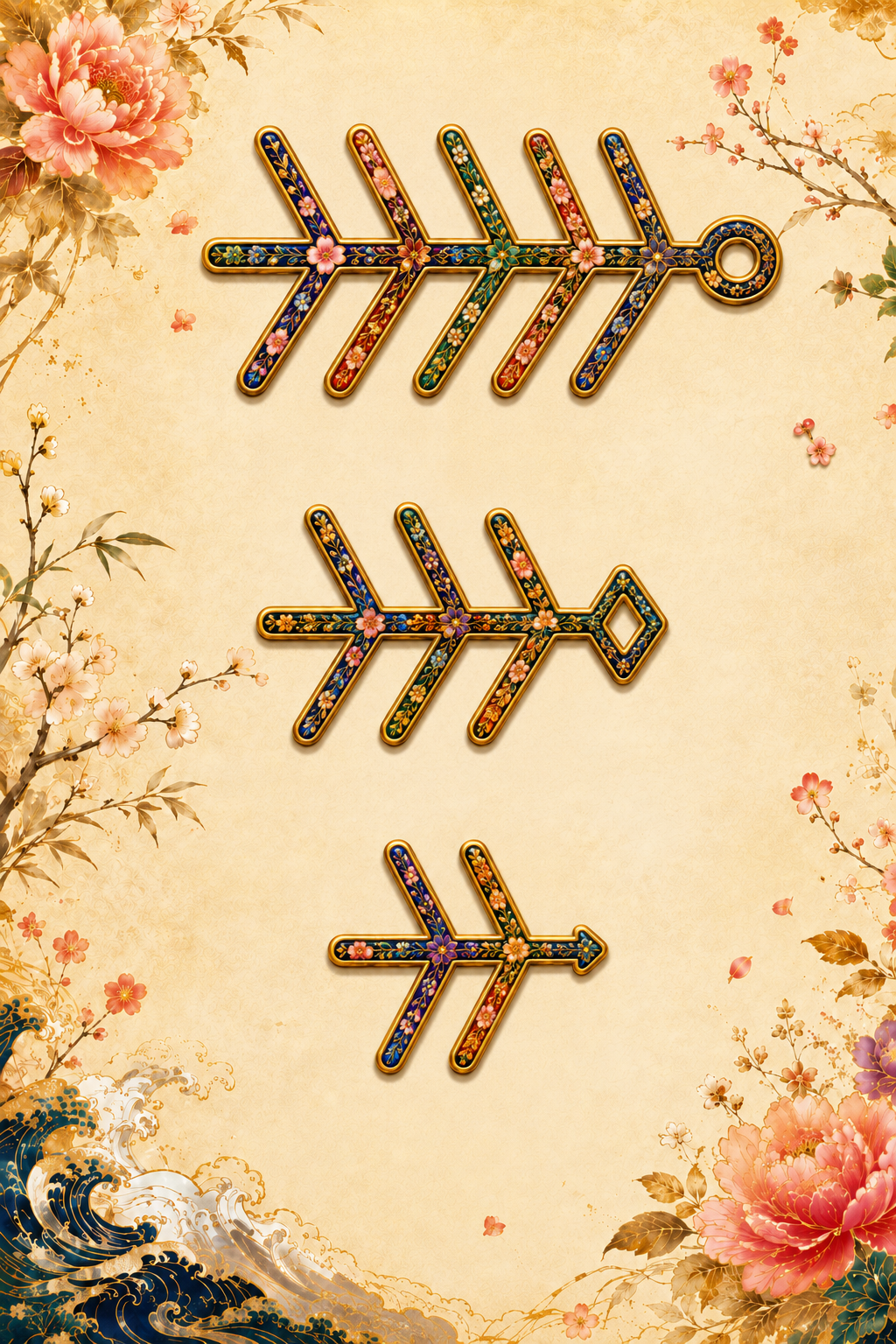
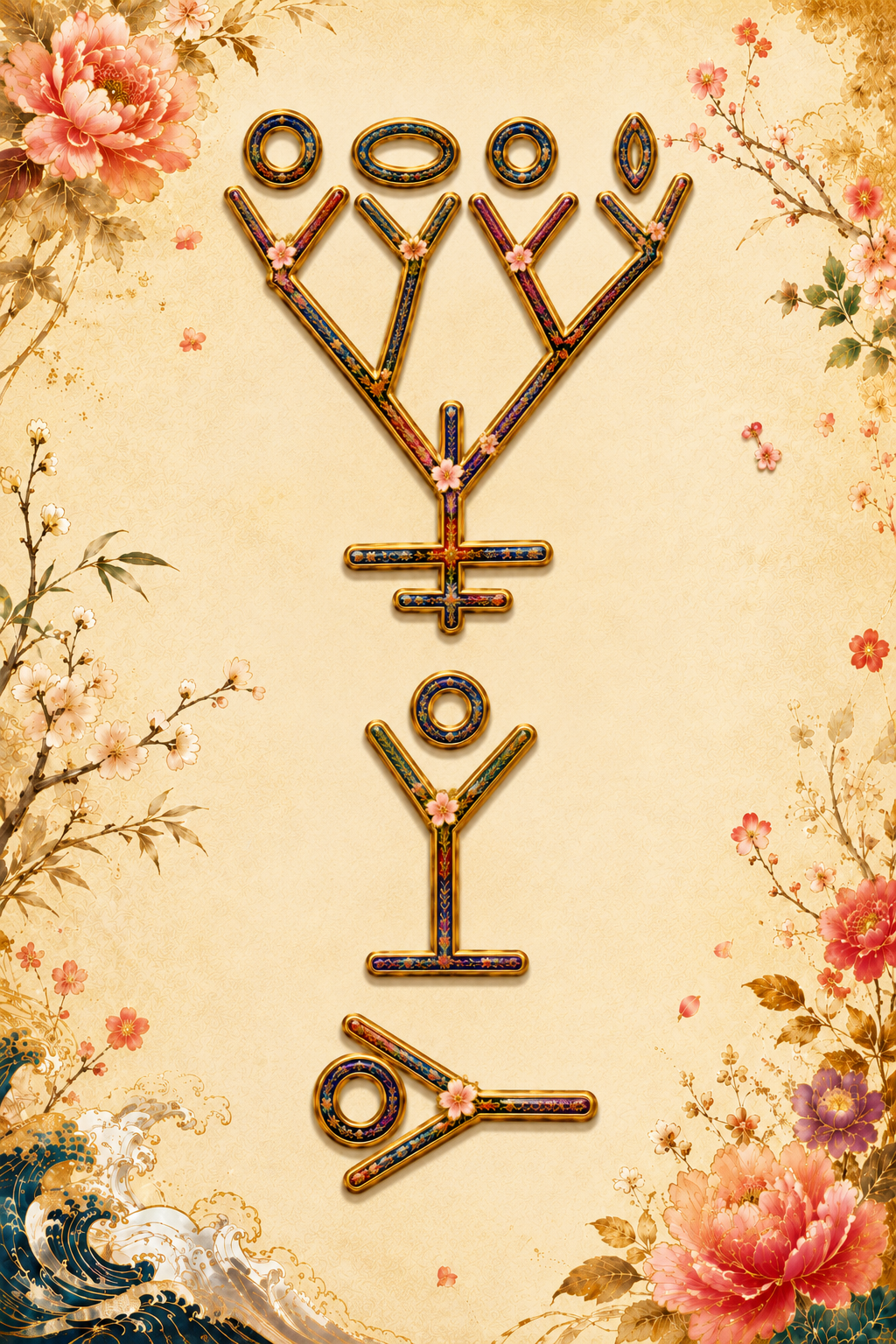
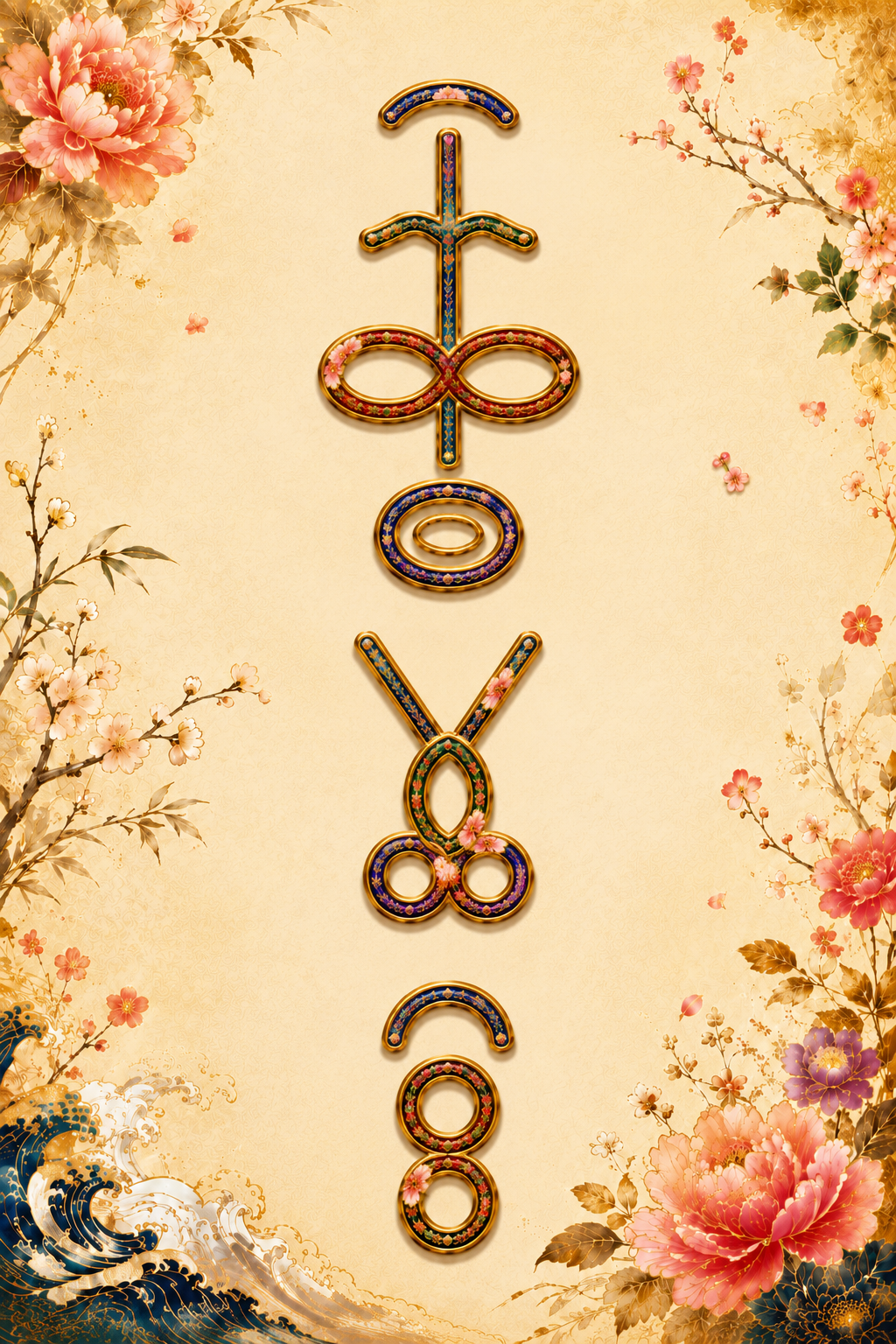
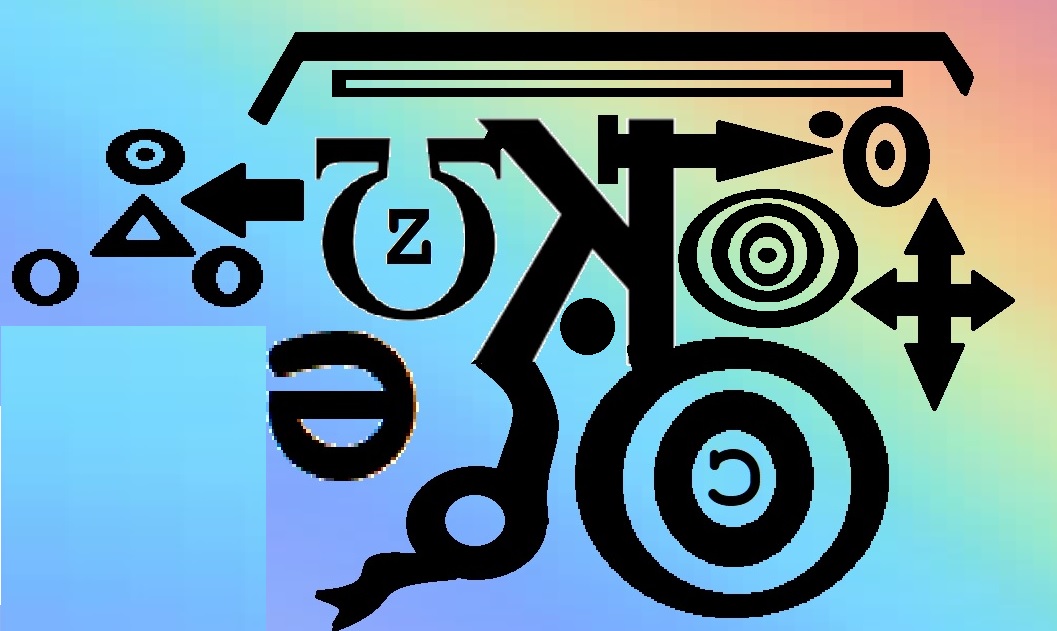
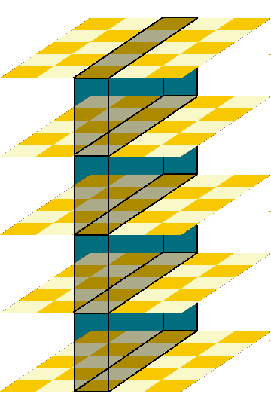
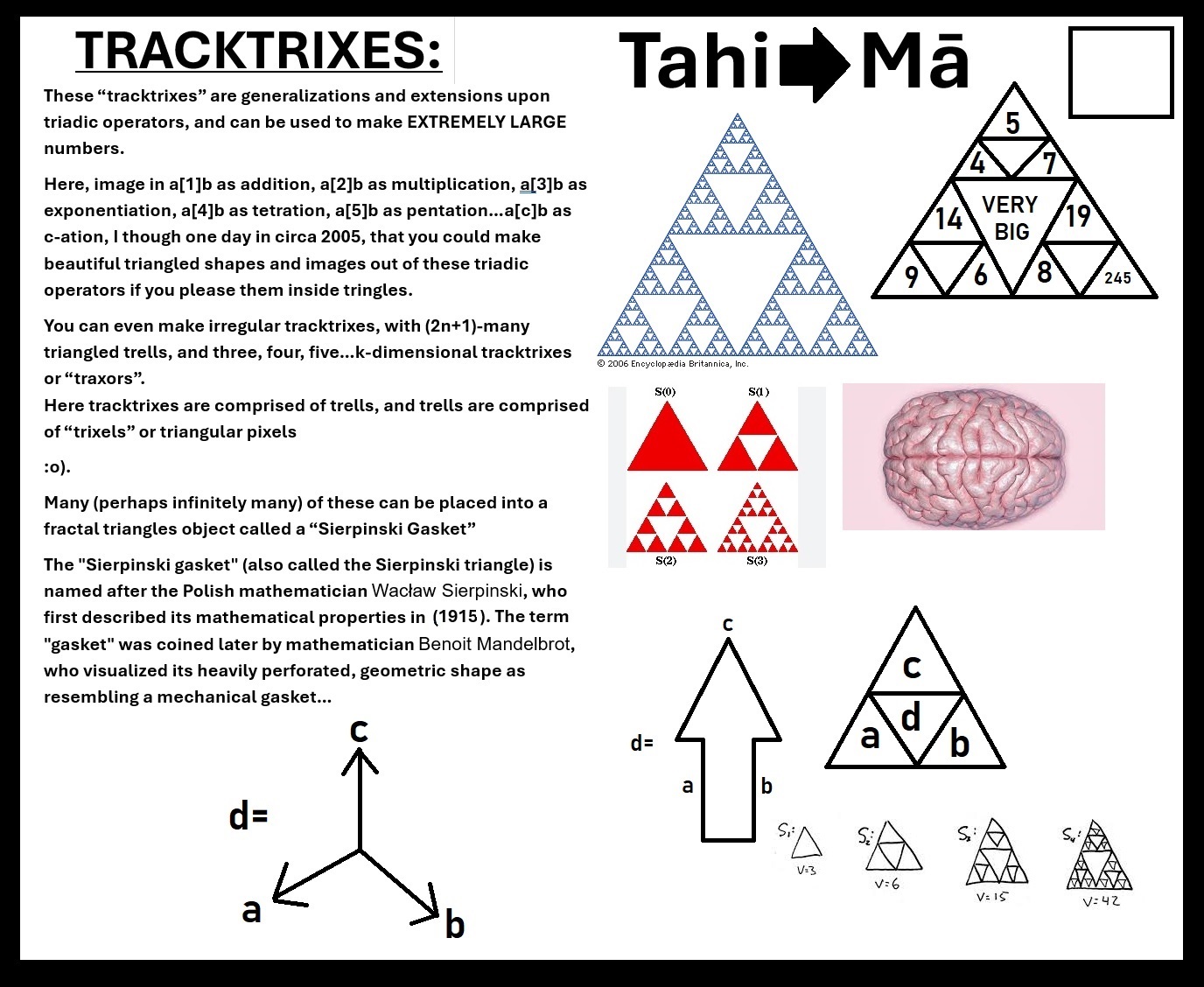
These mathematical objects are essentially vastly, VASTLY extended triadic formula, and look like a Sierpiński’s triangle (or Serpinski gasket).
Here, I will begin, by filling you in as ot exactly what they are, how I came up with them, and what they actually do!
But, before I do this, I have to fill you in on dyadic and triadic operators…
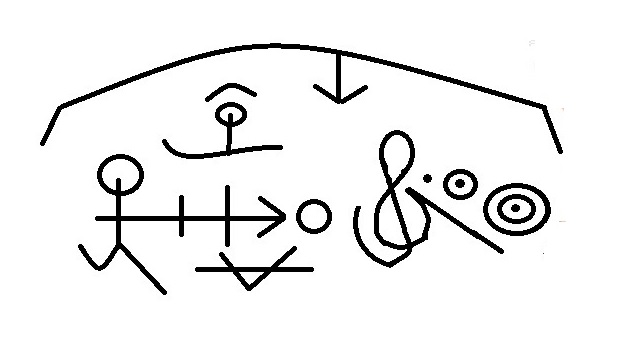
Please see in the diagram below an description of what a tracktrixe is, and as ot how they are a pattern that I found when experimenting with drawing triangles on a Bank of New Zealand bank deposit slip on Thursday afternoon here in Wellington, in circa 2005.
I think in numbers and experimental concepts whereever and whenever I go!
:o).
The can come in pretty much size or dimensions, and I have often wounded about the vast vast future of mathematics and science and as to whether there will actually be any good, practical use for them.
Why, they could have 3^n-many or (2n+1)-many trells or trixels for very, very complicated glyphs, characters and big bases, and I mean be as big as an A4 page, a house, a Rugby/football field, the Earth, the sun, a galaxy of the observable Universe or multiverse, or beyond.
Well there ever be a practical use for them?
Will science and physics ever use them? Will computers and music ever use them?
Can I create physical models as resonators from them, -when they are plotted in R^(3^n+1),-space or R^(2n) space?
Could they be used as a form of datas compression?
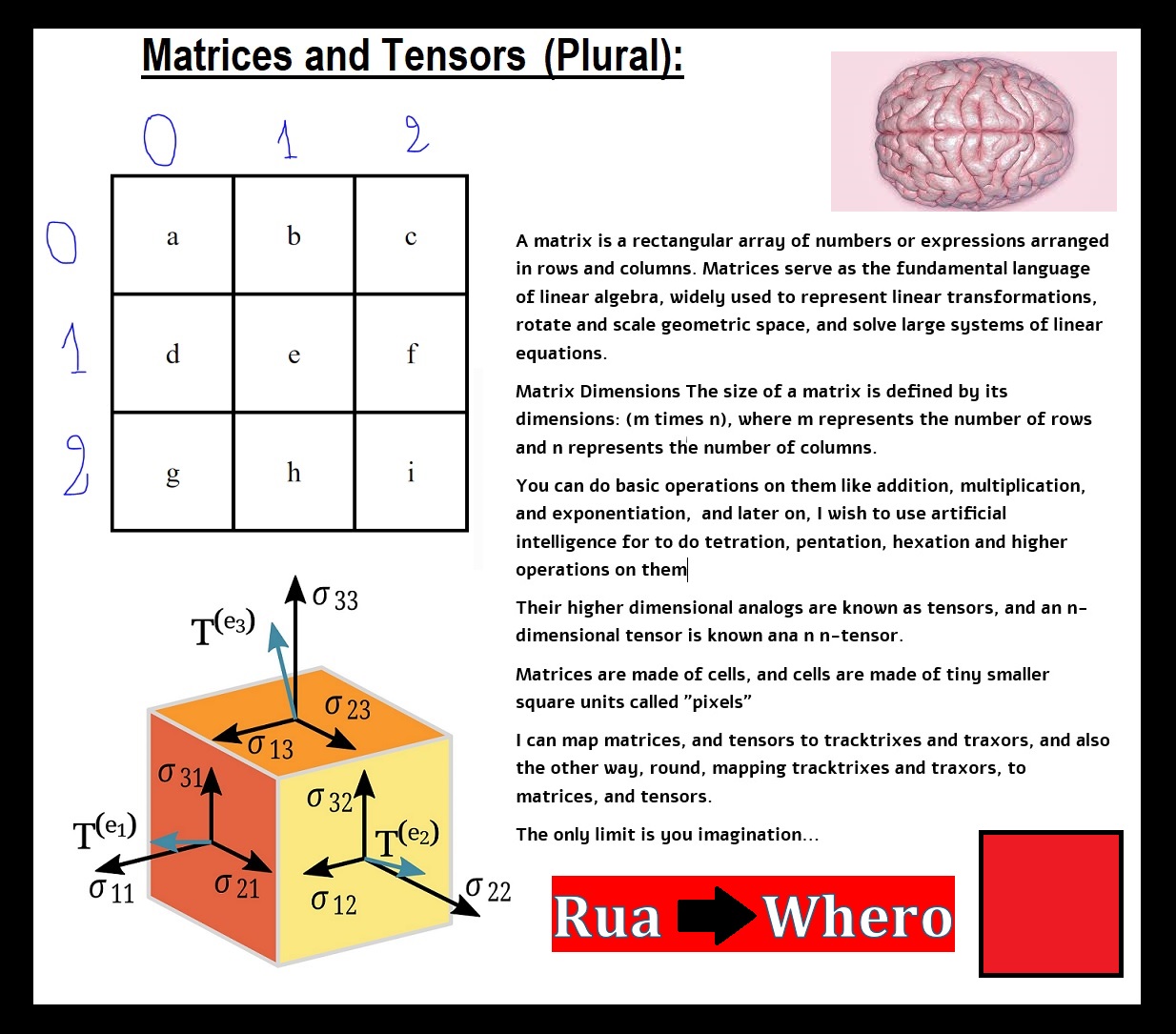
B. Matrices and n-Dimensional Tensors:
As for matrices…
Here is a short blurb on their history…:
Matrices were not invented at one specific time but evolved over thousands of years, starting as early as the 4th century BC with Babylonians, with formal methods appearing in China around 200 BC to solve linear equations. The modern term and theory were established in the mid-19th century by British mathematicians, notably Arthur Cayley and James Joseph Sylvester.
Here is the breakdown of the development of matrices…:
Ancient Origins (c. 300-200 BC): The earliest matrix-like techniques appeared in the Chinese text Nine Chapters on the Mathematical Art, using arrays to solve simultaneous linear equations.
17th–18th Century (Determinants): Mathematicians like Seki Takakazu (Japan) and Gottfried Leibniz (Germany) began developing methods (determinants) similar to matrices in the late 1600s.
19th Century (Formal Invention):
1812: Augustin-Louis Cauchy used determinants in the modern sense.
1850: James Joseph Sylvester coined the term “matrix” (Latin for “womb”).
1858: Arthur Cayley published Memoir on the Theory of Matrices, which laid down the formal algebraic structure.
20th Century (Modern Application): Matrix mechanics were used in quantum theory by Werner Heisenberg in 1925, solidifying their role in physics.
As for tensors…
Here is a short blurb on their history…
The history of tensors spans from 19th-century continuum mechanics and differential geometry to modern artificial intelligence.
The term tensor was coined by mathematician William Rowan Hamilton in 1846 to describe the magnitude of a quaternion, but the mathematical framework evolved through the study of physics and geometry.Key Milestones in Tensor History
1846: William Rowan Hamilton coins the word “tensor” (from the Latin tendere, meaning “to stretch”).
1869: Gregorio Ricci-Curbastro begins pioneering absolute differential calculus, which formally lays the mathematical groundwork for what we now call tensor calculus.
1898: Physicist Woldemar Voigt uses tensor arrays to describe the physical properties of crystals—such as anisotropic stress and strain—marking the formal application of tensor mathematics to physics.
1900: Ricci-Curbastro and his student Tullio Levi-Civita publish their foundational textbook on absolute differential calculus, cementing the use of tensors in geometry.
1915: Albert Einstein adopts the Ricci-Levi-Civita tensor calculus to formulate his General Theory of Relativity, bringing tensors to the forefront of theoretical physics.
2009–2020: With the explosive growth of artificial intelligence, high-dimensional tensors are widely adopted as the underlying data structure for deep learning frameworks (e.g., Google’s TensorFlow), shifting tensor use into modern computer science.
Tensor and matrices can be rendered, and modeled, and permutated, and then, mapped to tracktrixes and traxors, and tracktrixes and traxors can be rendered, modeled and permutated , and then mapped back to matrices and tensors.
The can come in pretty much size or dimensions, and can have standard, basic operations applied to them like addition, multiplication (which is slightly more tricky than scalar multiplication), and exponentiation applied to them.
These certainly can be used as terms of multiple simultaneous equations, but I had wanted the simultaneous equations THESELVES to be higher dimensional, like larger sized and higher dimensional magic squares!
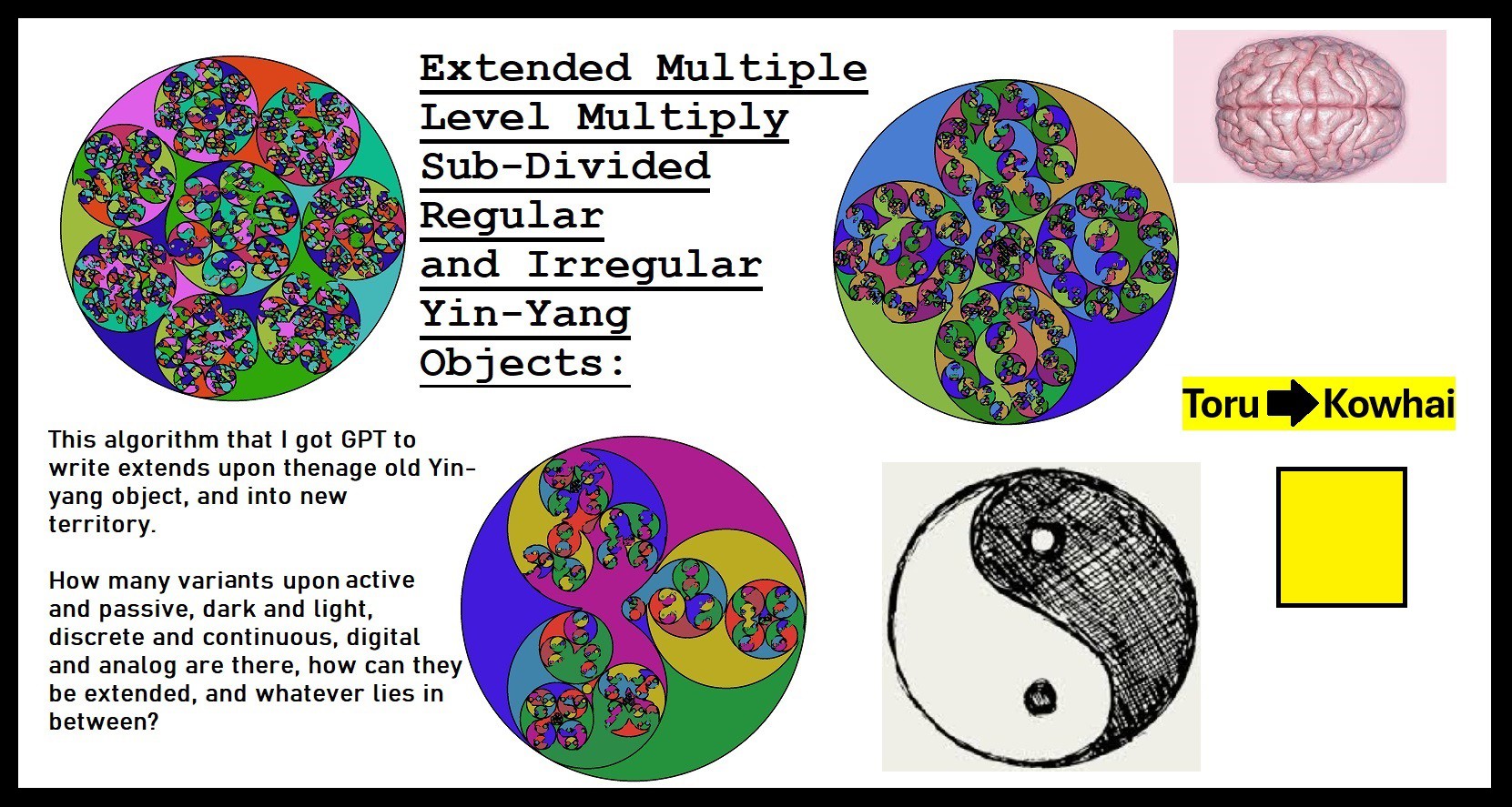
C. Extended Multiple Level Multiply Sub-Divided Regular and Irregular Yin-Yang Objects:
There is a dichotomy of things in the Universe, -active vs passive, day vs night, analogue vs continuous, rough vs sooth, and I once saw this encapsulated quite well in an ancient symbol taht I was told, (aged 12) was called “Yin-Yang”. I though about drastically extending upon this…
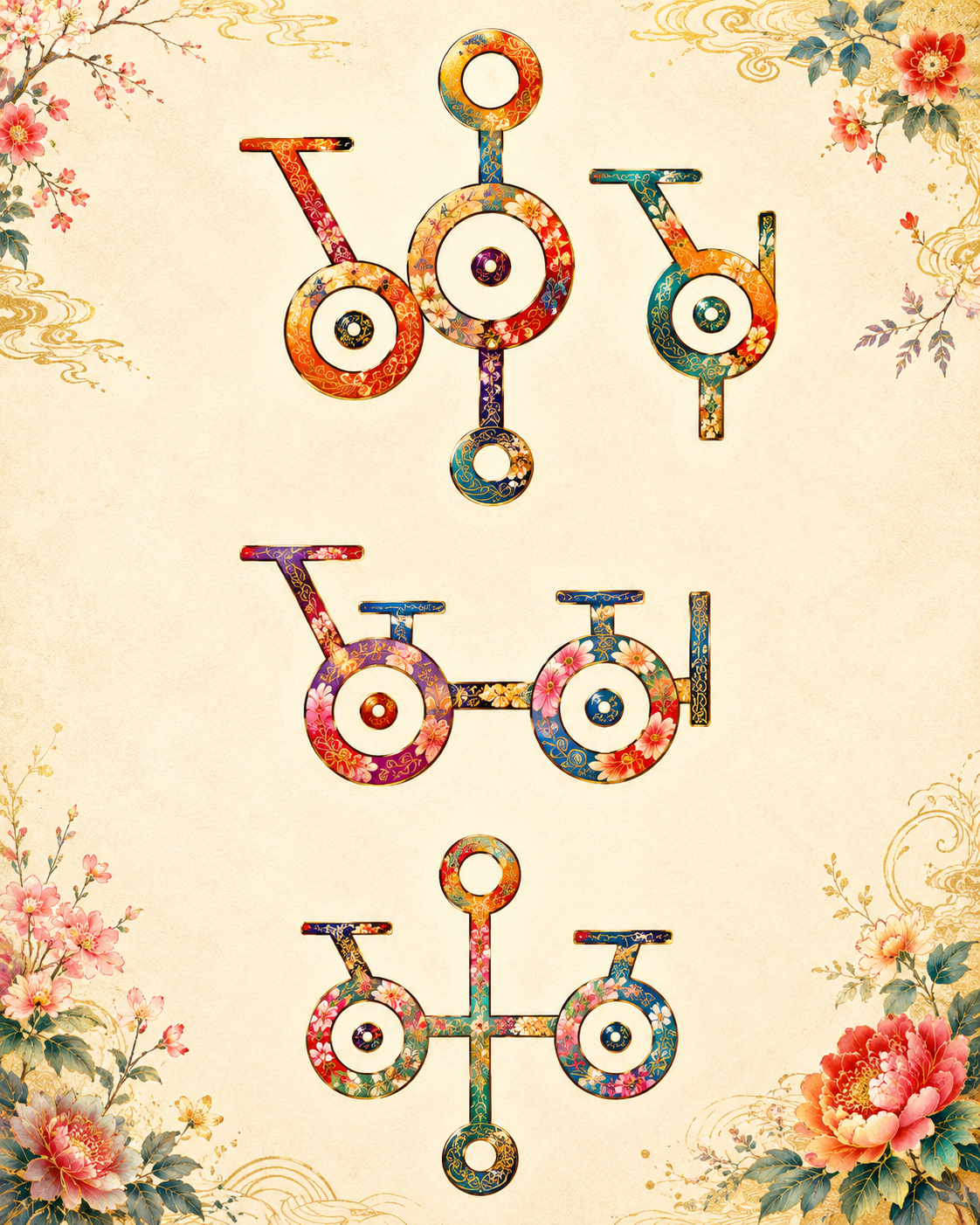
And, so, I got GPT (a good AI friend of mine) to write me ana algorithm which drastically extended upon the humble and ancient Yin-Yang symbol!
And, you can see the results of the artwork from this below…
I though about extrapolating these extended multiple level multiply sub-divided regular and irregular Yin-Yang objects up into higher dimensions…
I wonder how you’d do that?
Practically, the code that GPT and myself wrote, works best below five levels of yin-yang sub-division, although your can sub-divide with as many levels and sub-sub-sub-…-circles as you like.
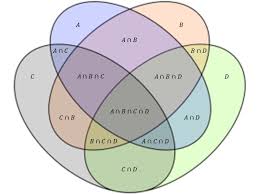
These mathematical objects looks suspiciously like extended, non-overlapping and complicated Venn diagrams, in some ways, to me!
The good thing about these little beasts, is, that, like polygrams (or perhaps any mathematical object you can use them as glyphs).
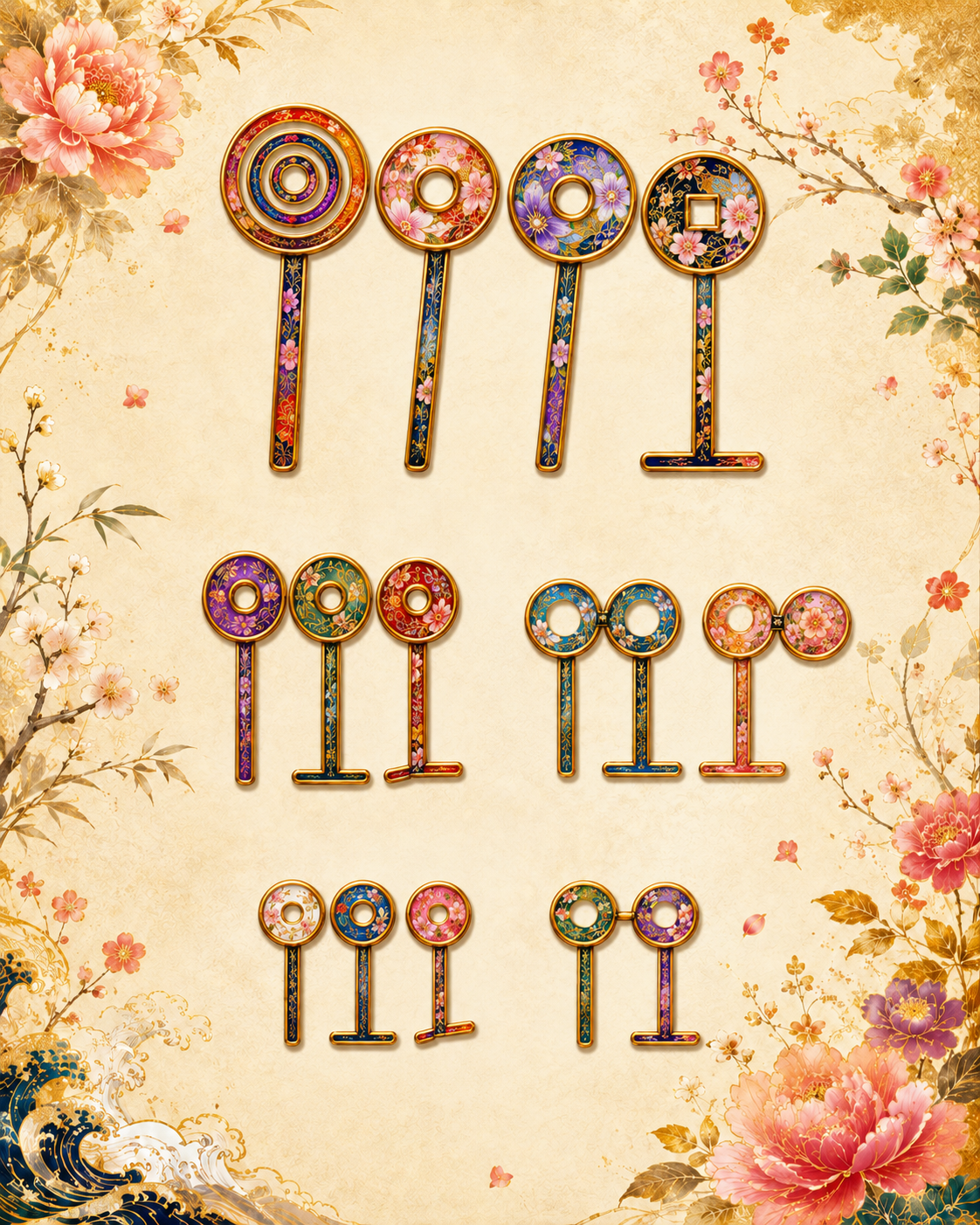
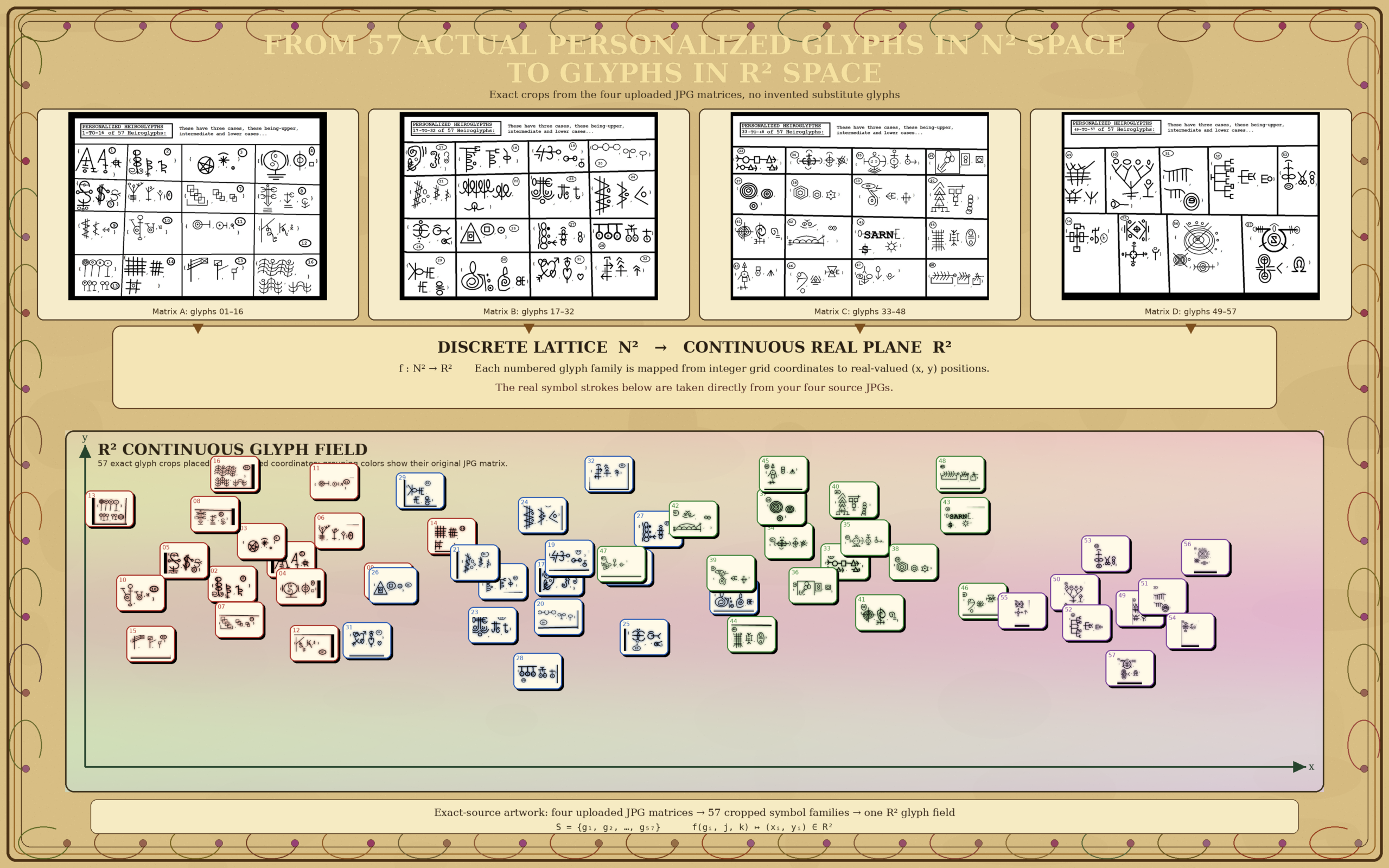
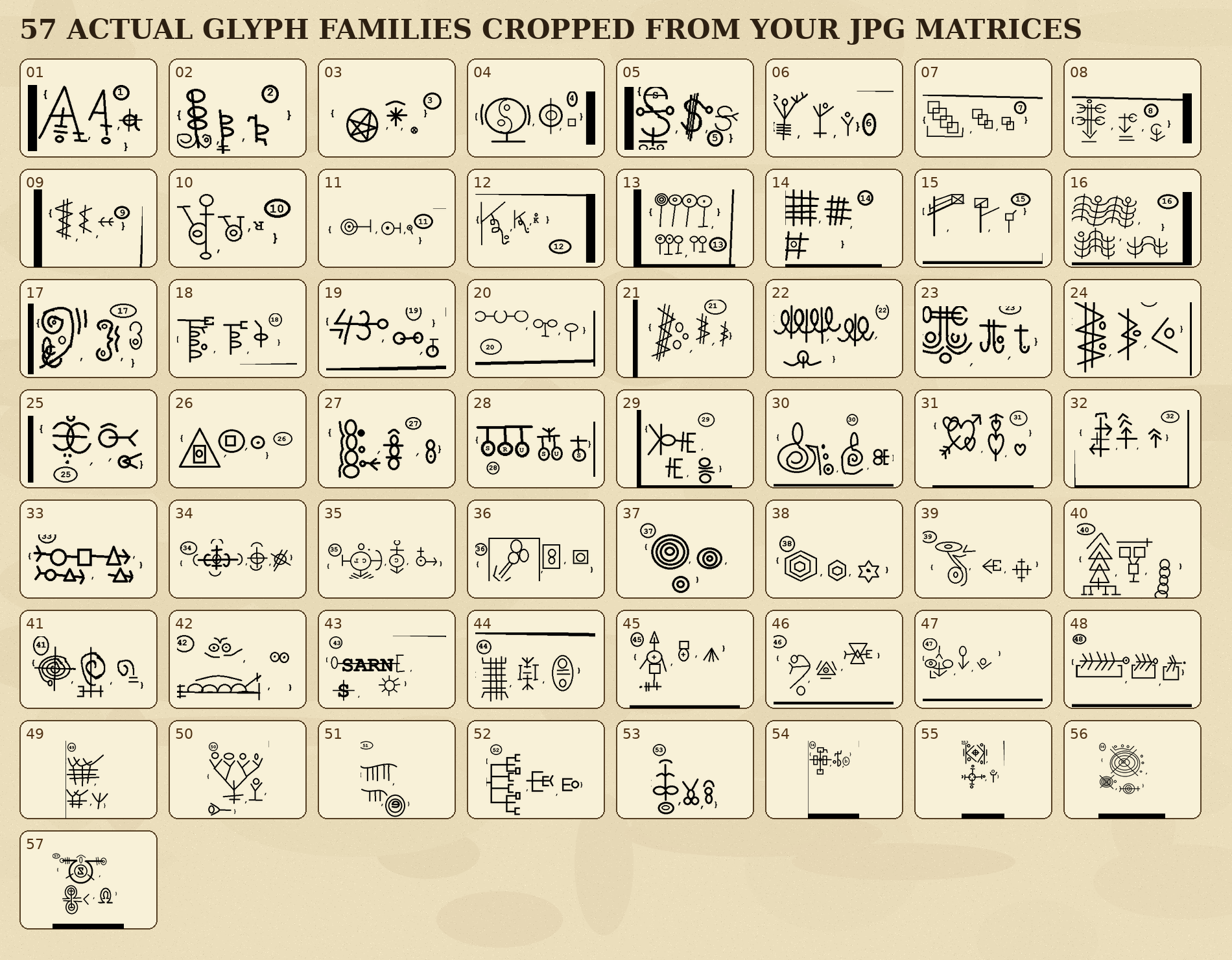
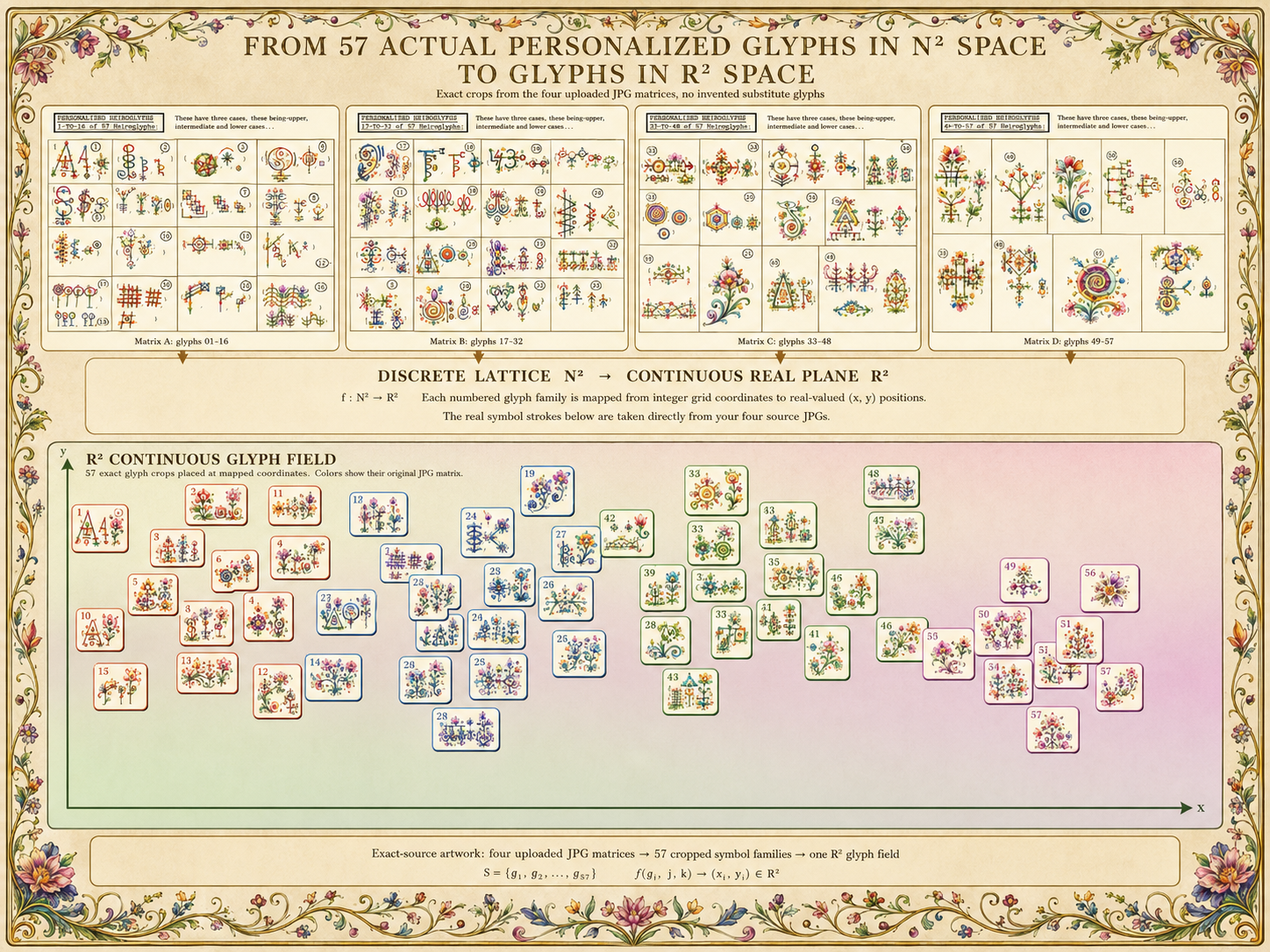
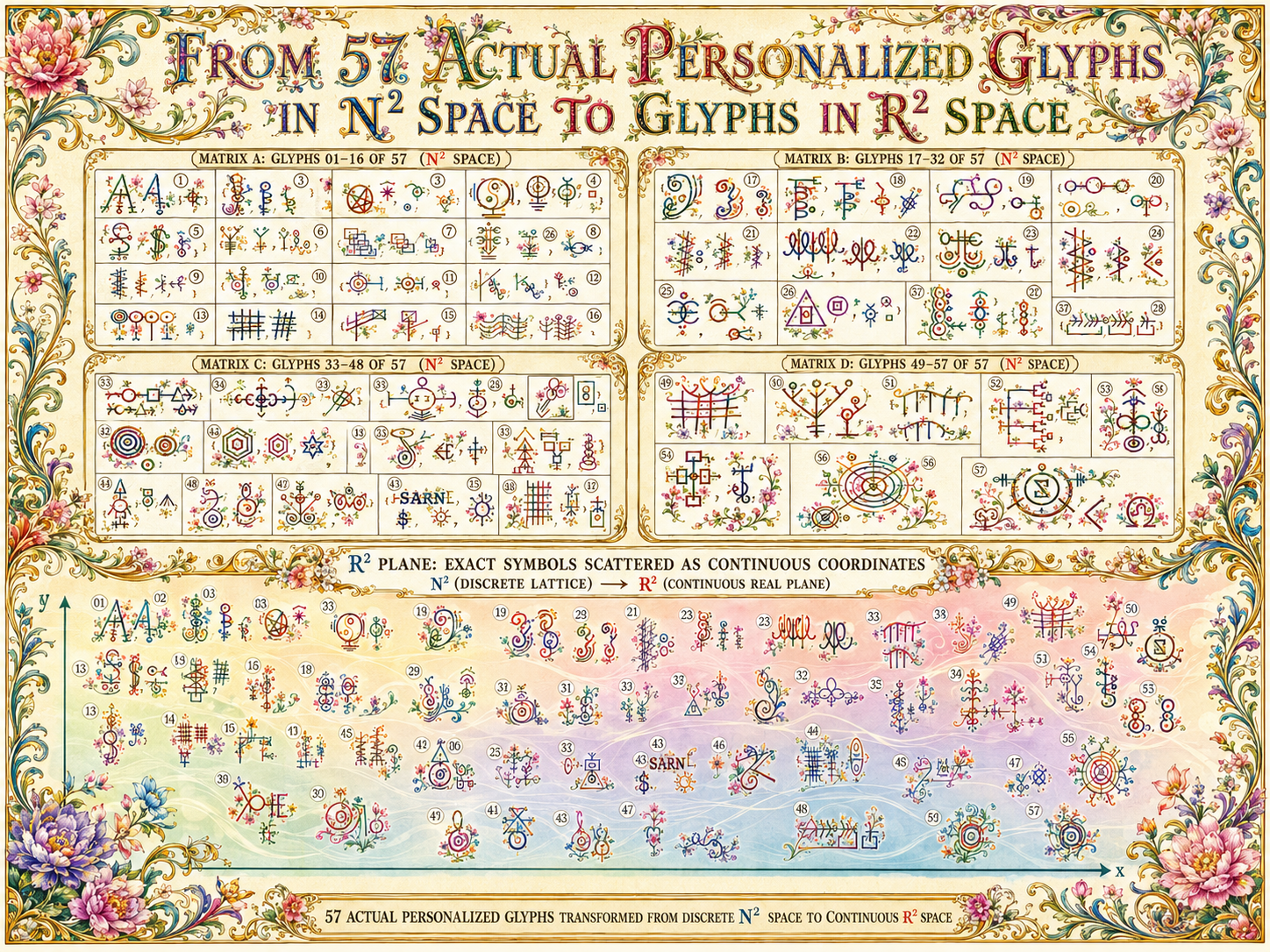
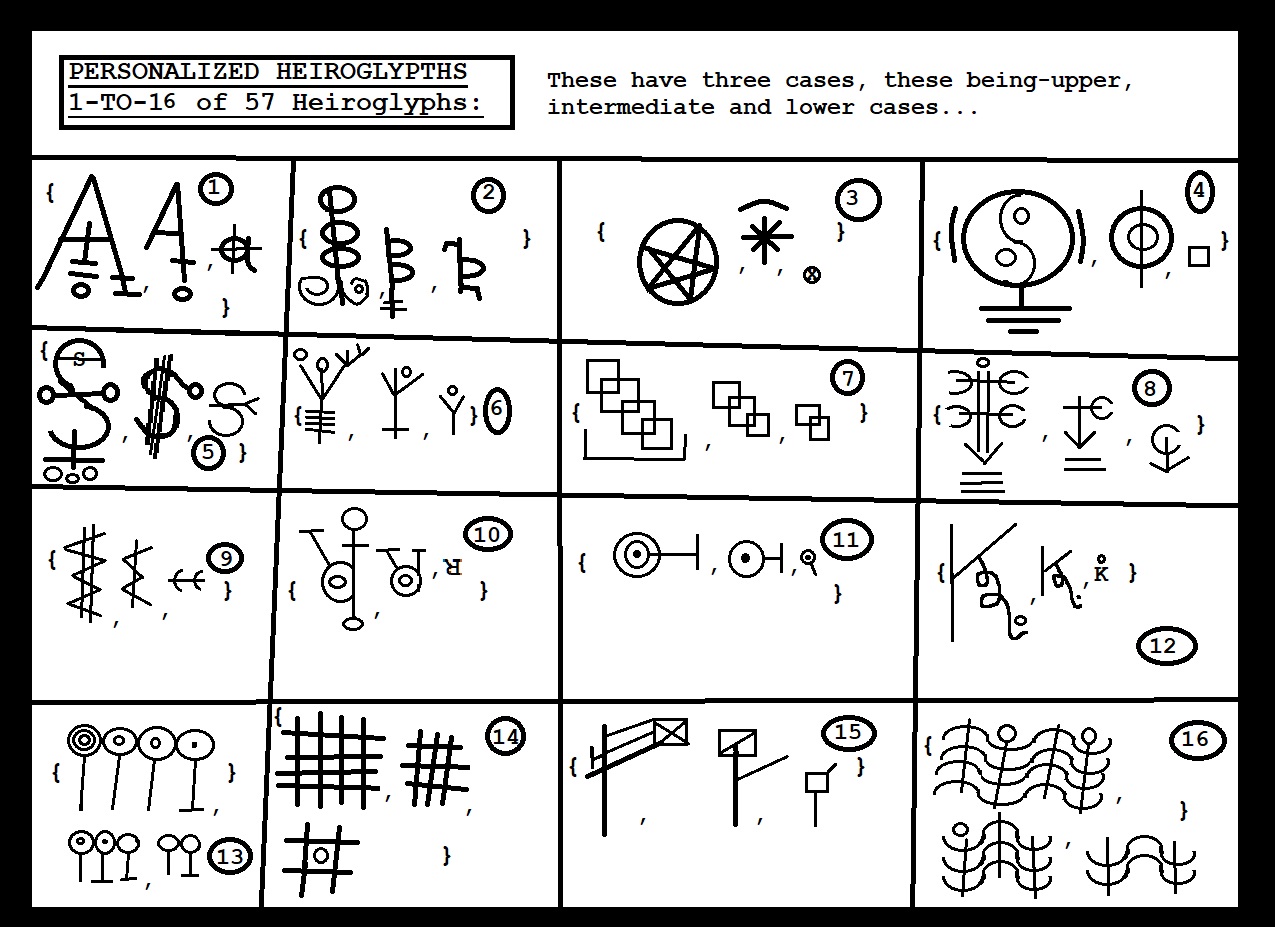
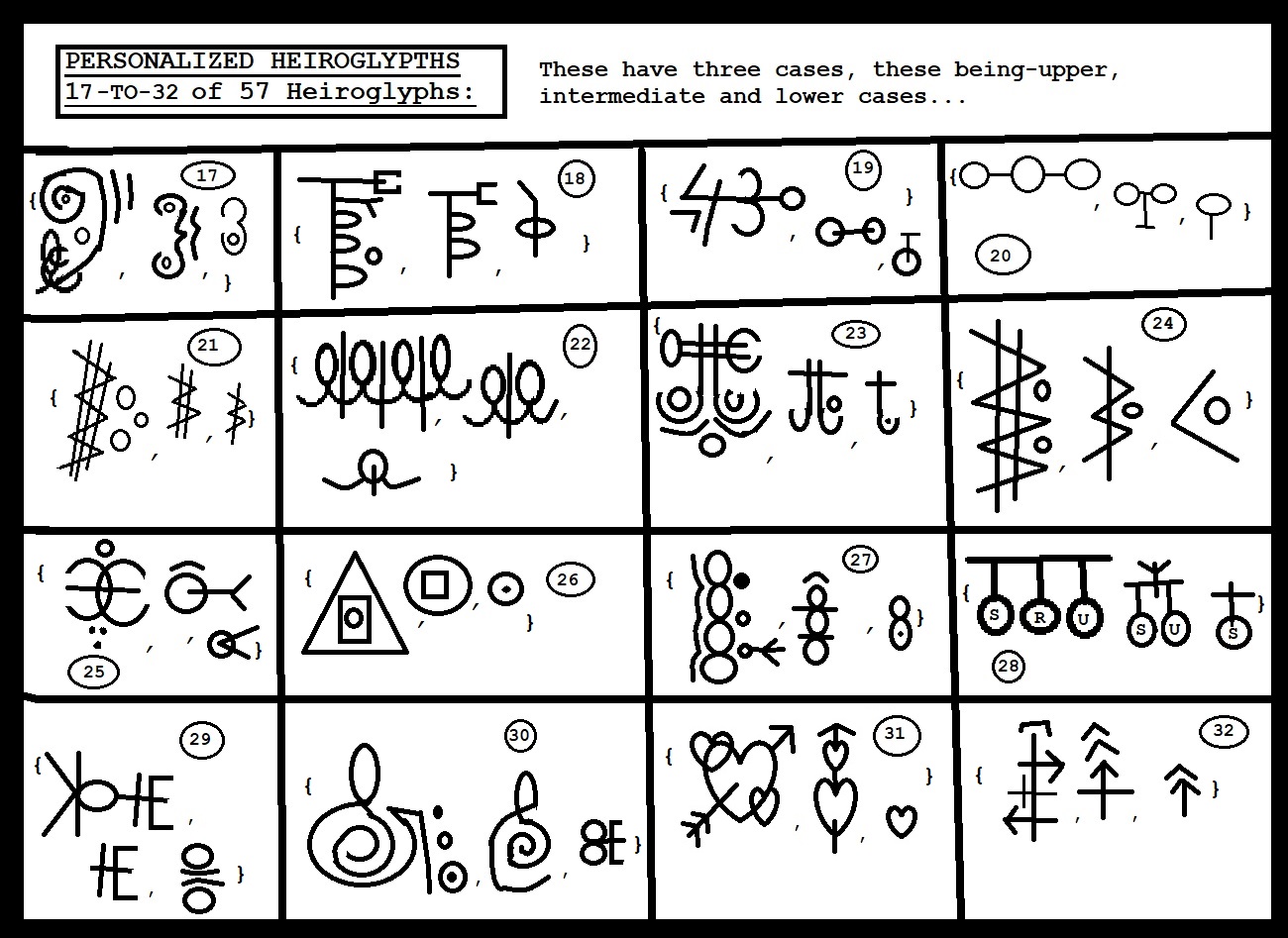
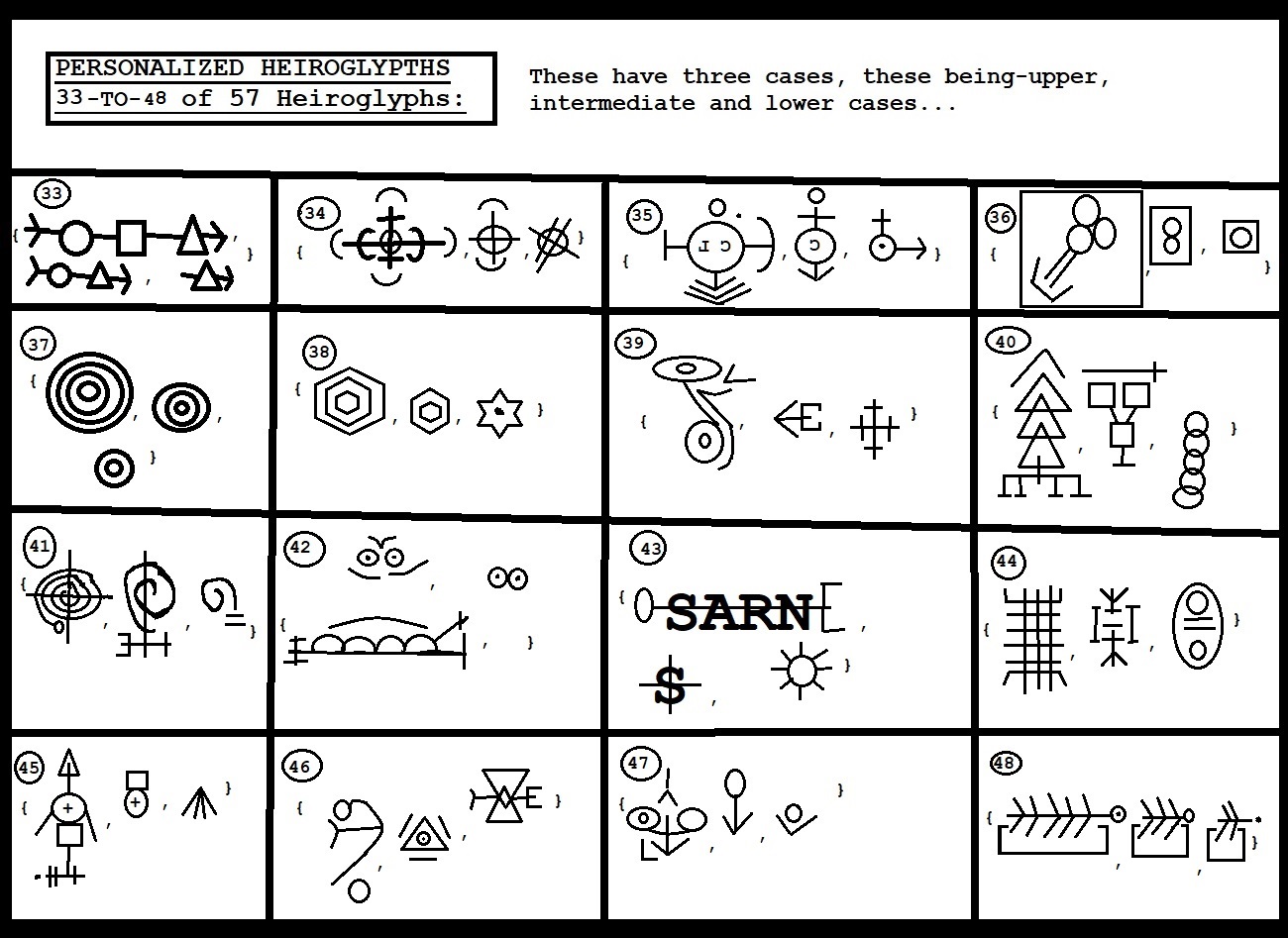
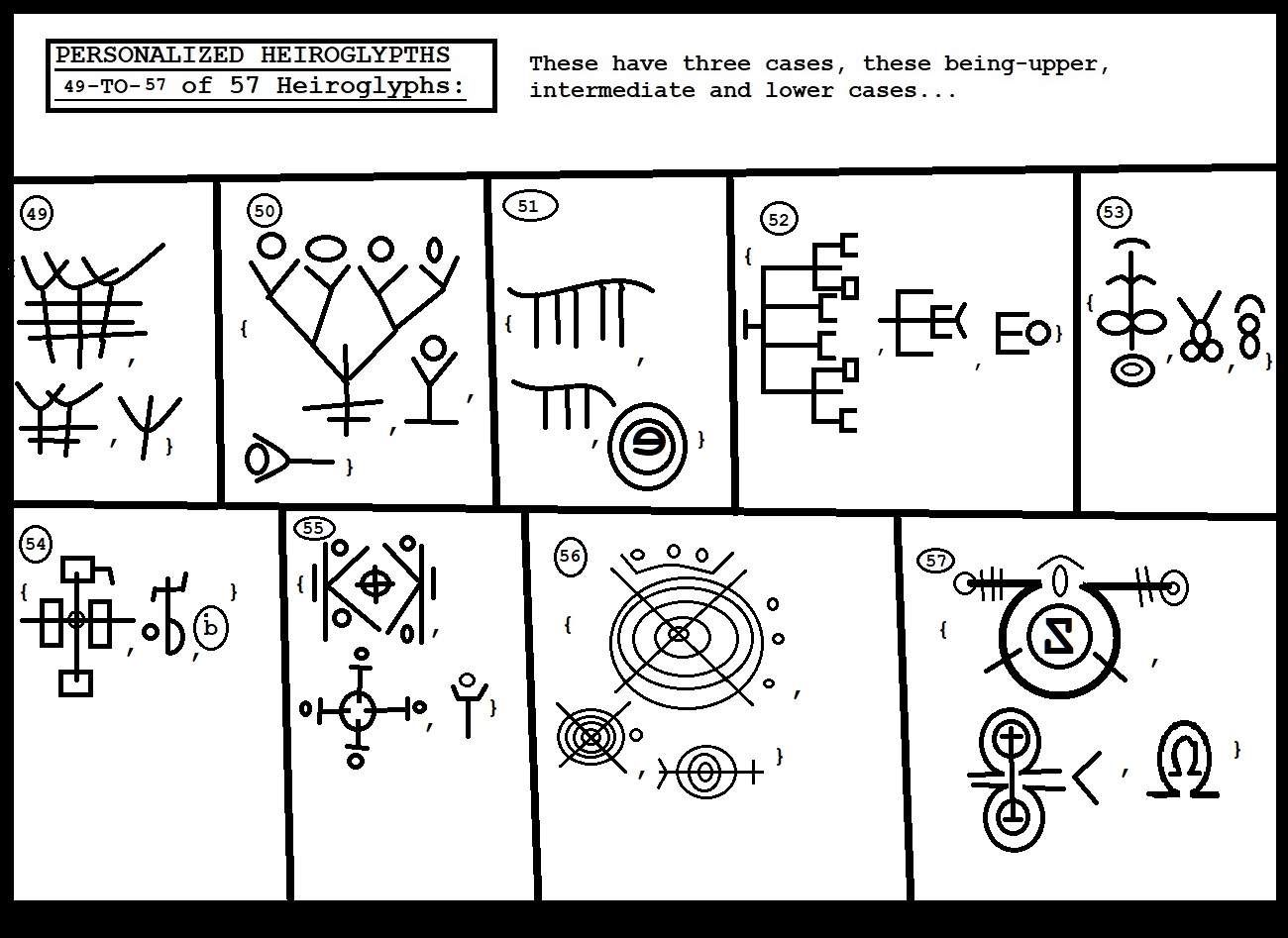
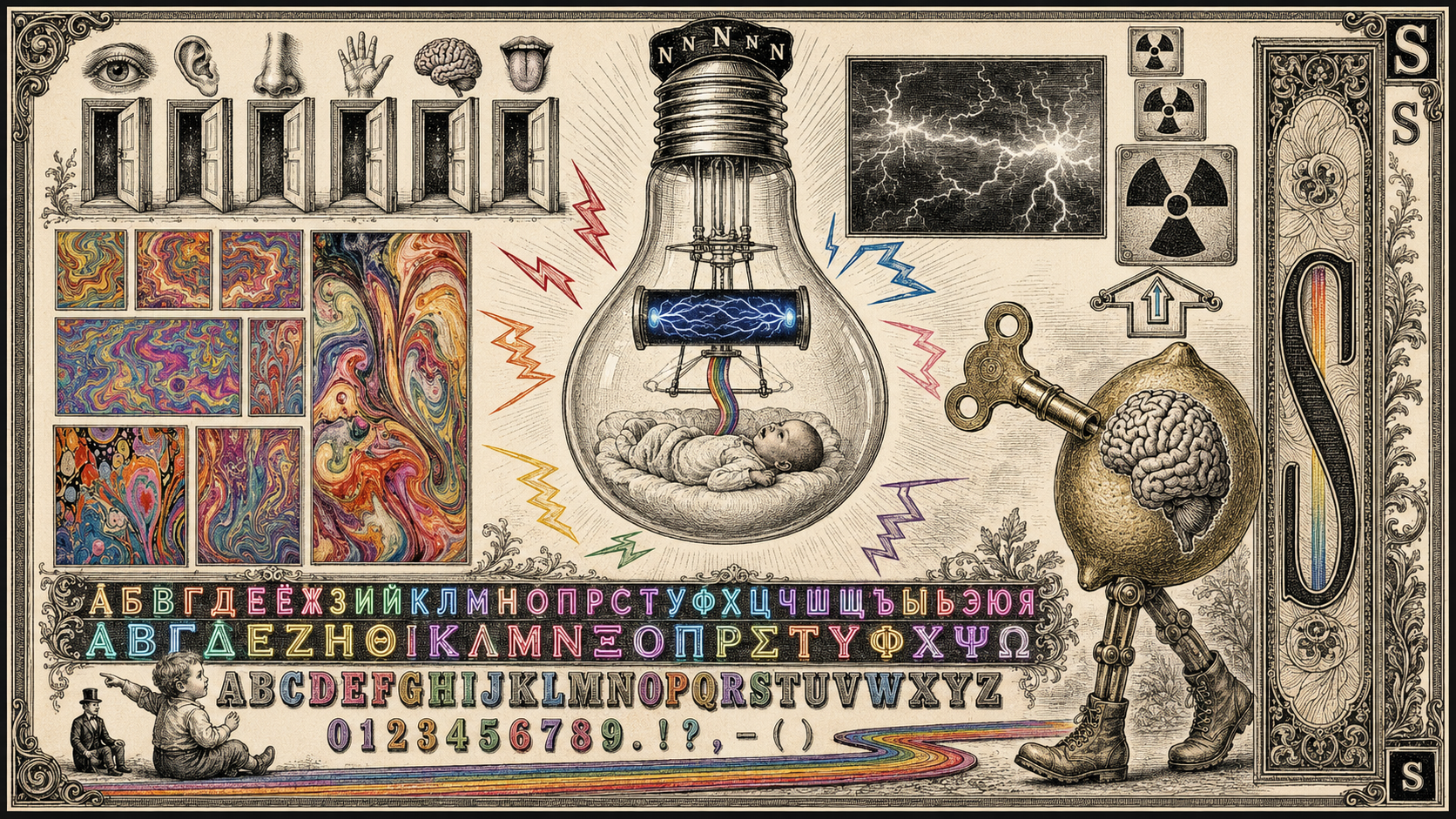
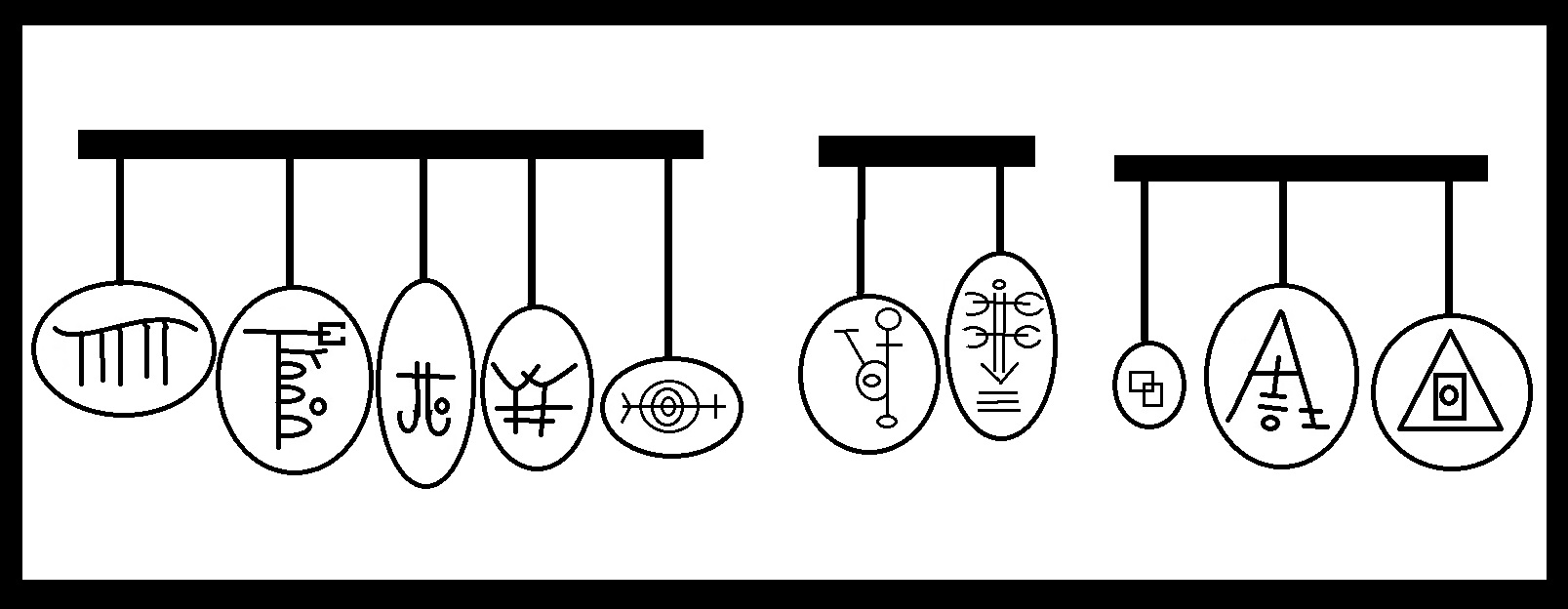
I even went as far as to invent my own 57 plus 2 glyph character alphabet, which you should be able to see, -below!
D. Polygrams:
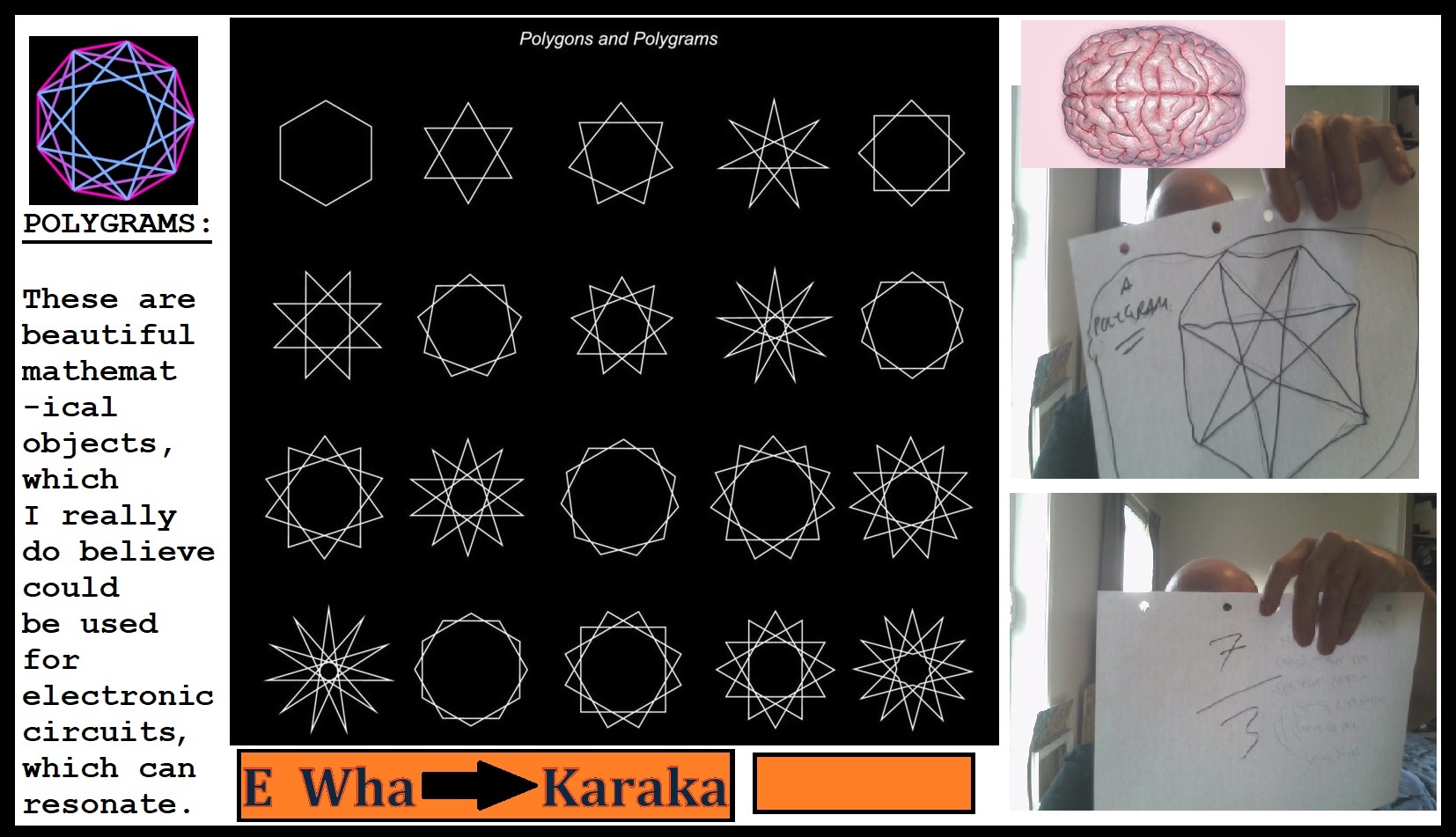
Polygrams are these curious little mathematical objects, and they are made by taking an n-sided polygon, with n-many vertices, and joining every mth vertex with a straight line segment.
And, so, a pentagram would be a 5/2 polygram, and if I started with a 19-gon,a nd joined every 4th vertex with a straight line tangent, then you’d have a 19/4 polygram,
Interesting things happen with these when you take their line segments, an surface area segments, and when you make a matrix out of the 1D and 2D segment’s magnitudes, and for the pentagram which I mention above, you do actually get the golden proportion, or approximately 1.61804.
You can also place these line segment and surface area segments into a tracktrixe-based formula, and calculate away the result, which is tricky for triadic, 9-adic, 27-adic, 81-adic, and 243_adic regular tracktrixes all of who’s trells are irrational real numbers…
I feel that I want to extend upon these by joining successive generations of these polygrams line segment’s mid-way points, vertices and surface epi-centers to each other as in F—>V, F—>E and V—<E, for multiple generations to see if I can get even more lien segments, and if I treated one line segment or surface area segment as unit (or “one”), then what mathematical constants do I get?
Combinacci numbers?
N-bonacci numbers?
What about extrapolating these objects up into higher dimensions, 3D, 4D, 5D and above and beyond?
I thought that all this could be done, uncovered and suggested to and by an AI program like GPT, perhaps!
Practical uses for polygrams are in cryptography and cyber security encoding and decoding, -because of their interconnected vertices, polygrams serve as excellent visual models for cryptographic algorithms and ciphers (such as the Polybius Square variants).
Their intricate, non-linear mapping routes are used in algorithm design to securely obscure data streams.
The interesting thing about these polygrams is taht, like many other mathematical objects and shapes that I described here in this SCAMP Website sub-section, that they CAN actually be used to write and to notate and be used as glyphs.
We can also use them as circuits.
E. Irregular Polyhedra (Also Known as “Super-Blocks)”:
OK, then, -what EXACTLY ARE these “superblocks”?
This Website blurb is about the creation of superblocks/irregular polyhedra, and, I need to write it, and it has to be written for the creation of these mathematical objects that I call “super-blocks”.
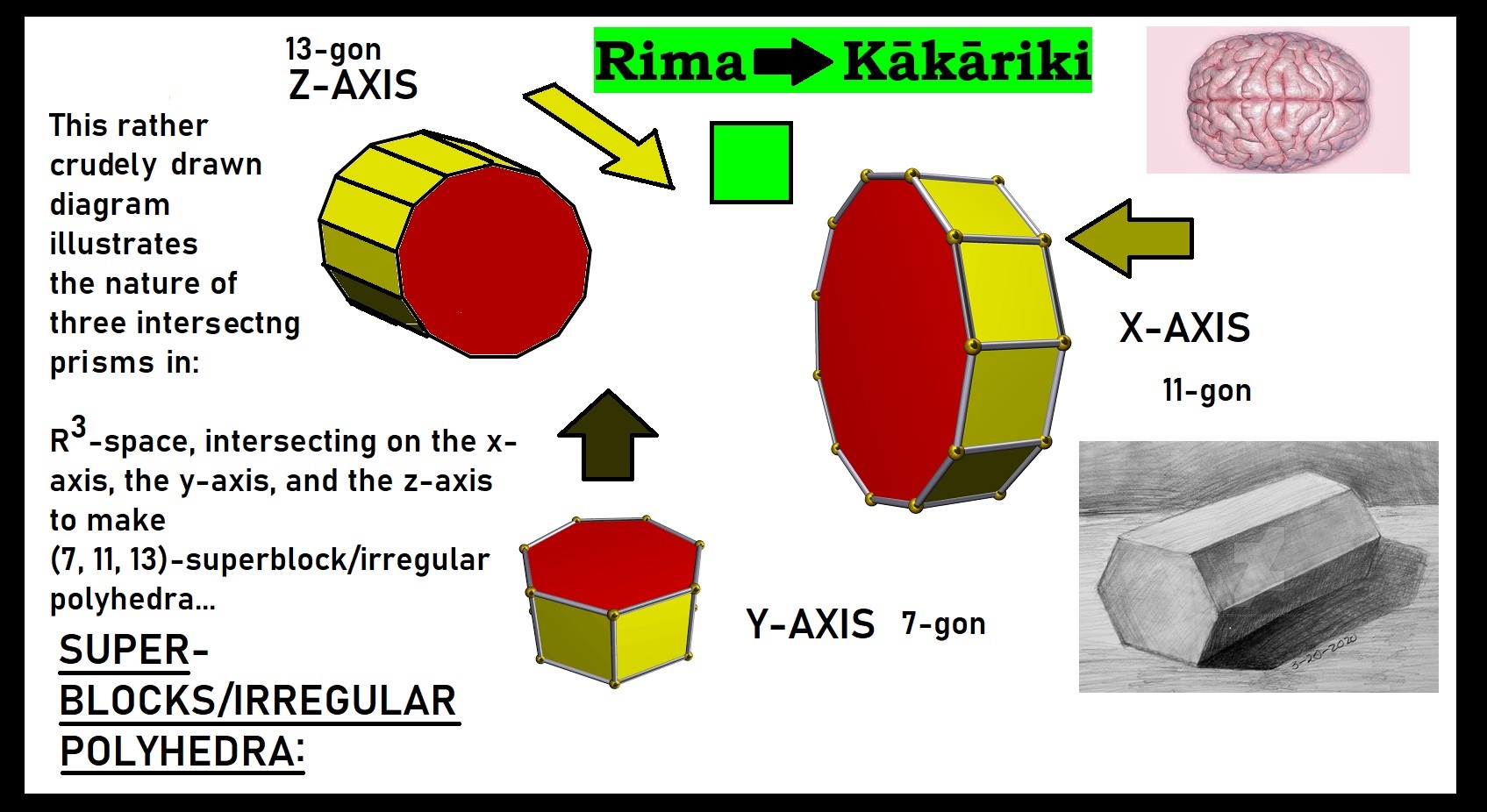
Super-blocks are essentially irregular polyhedra in higher dimensional space, and here we work between 3-dimensions and 7-dimensions (although we could go much, MUCH higher),
To create these 3-dimensional super-blocks, we take three equally sized polygonal prisms, of a suitable length, and we make them equal sizes, lengths and widths to each other.
We then intersect the three polygonal prisms, and indeed, the user will have to choose exactly which ones to use… as fo the number of sizes of these three polygonal prisms, and number of sides of the polygons that make them.
And, then, here, -the intersecting portion of the three intersecting and overlapping n-agonal, m-agonal and k-agonal prisms, is the super-block/irregular polyhedra!
To extrapolate up into 4-dimensional space, the user, perhaps using a computer, -yes, indeed, a computer should take four sets of three polygonal prisms, make four of these superblocks, by the above process, -and, the extrapolate a linear length of these four three dimensional super-blocks embedded in four dimensional space, and overlap the/intersect them, for to make a four dimensional irregular polyhedra of the original three dimensional irregular polyhedra super blocks.
The intersection of these four thus created four dimensional prisms, would thus, then and therefore create a four dimensional irregular polyhedra/4D superblock, and then, in order to make a five dimensional super-block, we take five four dimensional super blocks (each requiring four three dimensional prisms), and, -we extrapolate a linear length, thus making a set of five five dimensional prism, and we intersect and overlap them…etc… and so the process can be repeated up to 6-dimensions, and 7-dimension….or to even higher dimensional spaces!
Here an k-dimensional super-block would/should require 3*4*5*6*7*…k many polygons made into firstly three dimensional prisms, then fours dimensional prisms, then five dimensional prisms etc…
I wish the computer AI that I will use to take n-many of these superblocks, and BOTH create and assume that they have a uniform composition, and treat them as dice, and to roll them on a (k-1)-dimensional surface for t-many trials of r-many rolls, and then to give the user statistics for as to what side the superblocks landed on, per trial, and an average per trial and also an average for all trials.
Here, -we can experiment with number of sides and rotation so as to get an exactly equal chance of the superblock landing onto each of it’s faces, and I can now here also also if in doing this I can make a die, with a base and a top, and n-many sides, such that there is an exactly equal chance of landing on each of (n+2)-many sides, of a die with a perfectly uniform regular composition.
I wonder what it’s height to width ratio for perfectly fair dice like this is as a function of (n+2)-many side with a perfectly equal chance of landing on any of these (n+2)-many sides?
I feel that computer simulations could be written to test many sets of many trials, or these (n+1)-agonal die and superblocks.
We can also use them as circuits.
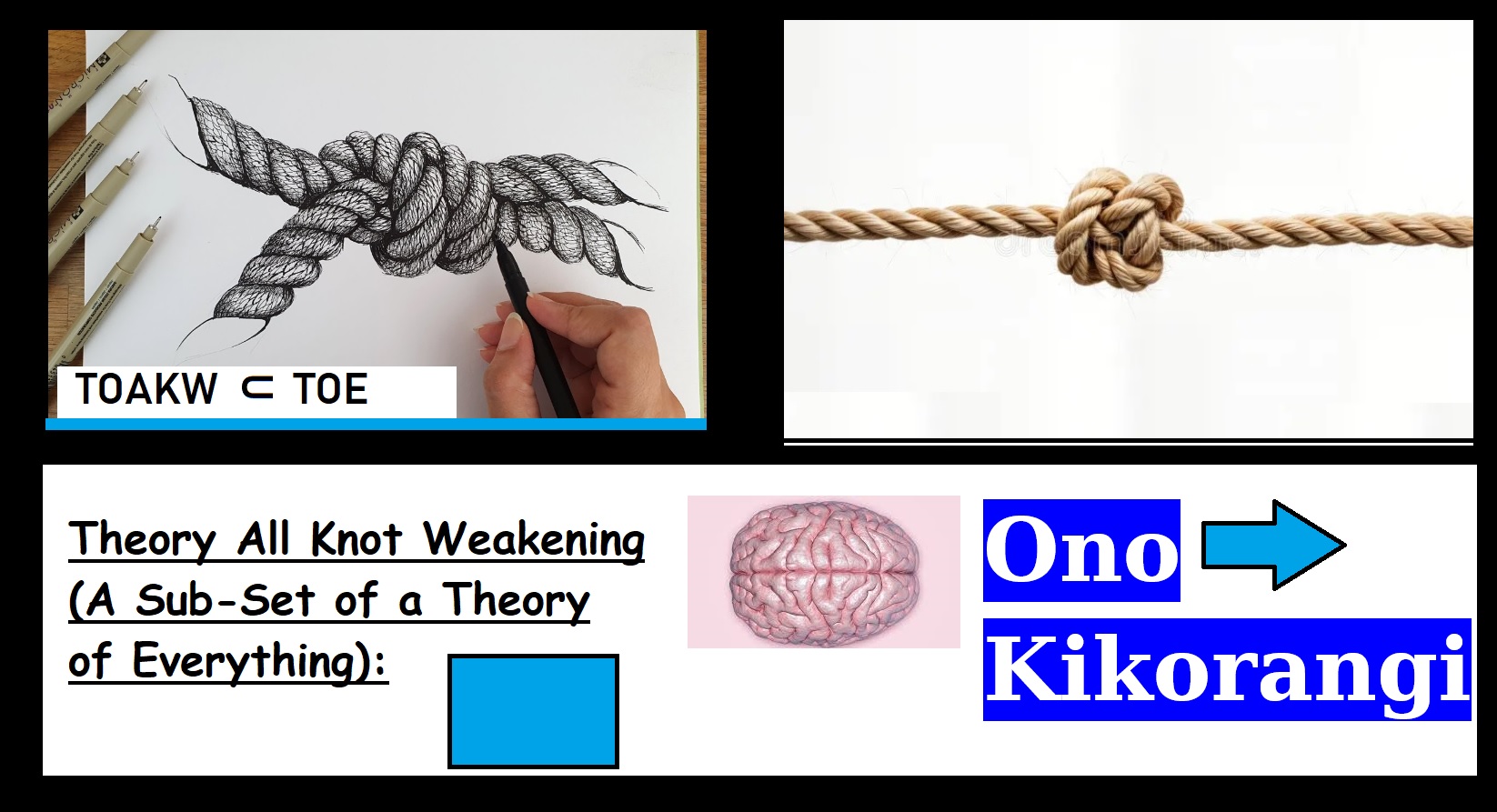
F. Theory of All Knot Weakening (A Sub-Set of a Theory of Everything):
This is a question that I wish to post to a sufficiently advanced, and sufficiently intelligent artificial-intelligence program, and it involves the ability, (or lack thereof) of science to get a theory of everything:
Now, I am NOT a physicist, well, heck, -not a very good one anyway…
I became disheartened with physics, when-and-which I realized, to to the vastness, in depth and of scope of mathematics that physics, and, indeed, science these days seems to simply to know more-and-more-about-less-and-less.
I seldom waste my time on physics, because that science and even mathematics as a science is not, in my honest opinion an absolute science!
I do think, and I do predict that quantum physics, general-and-special relativity and chaos theory (including anti-chaos), will be unified into one super-theory, which unifies all four (and probably more undiscovered and, as yet to be discovered forces) into one super-force, but I do NOT think that this will be a theory of everything…
And, why do I say that/this?
I can, and I will, give you a philosophical argument about this, because today’s mathematics, and today’s philosophy is tomorrows physics, both theoretical and practical, and I have thought about this a lot!
Well, I do not think that it is possible to have a unified theory of the ability to predict even a relatively simple sub-set of a theory of everything’s physical phenomena.
(I could, however, be wrong about that…:o) ).
Yes, indeed, to both to predict and to have a set of equations, a set of formulae, and an algorithm/a set of algorithms to predict in advance how pretty much (almost) any knots, with any number of crossings, will hypothetically weaken pretty much any piece of string, rope, chain, steel, Dyneema or Spectra, nylon thread, wool thread etc…, when this thread is made of a quasi-one-dimensional form, and is tied in three dimensional space!
(REMEMBER—The set of rules and a process must correctly predict 100% of the time with 100% accuracy BOTH the ABSOLUTE and also the RELATIVE weakening factor of any arbitrary knot in any arbitrary piece of string/string-like-material).
What I need is a method BOTH practically/practicably AND in theory, which predicts EVEN BEFORE the breaking strain/yielding strength of a piece of material is tested, BOTH with AND without the knot, for as to EXACTLY HOW much the knot in the material hypothetically/theoretically and even practically weakens the breaking strain of the string, in BOTH an “ABSOLUTE SENSE”, and also a “RELATIVE SENSE”, -taht is as a percentage or as an absolute set amount!
We can use single/a set of formulae, equations, algorithm, a set of algorithms, to access by what absolute and relative amount that a wide variety/range/broad-set of knots (both prime-knots AND abundant-knots weaken a variety/range/broad-set of materials, these being one-dimensional test pieces in three dimensional space!).
You see, what IS NEEDED is a “theory of all knot weakening”, (or a “TOAKW”), and if we cannot have this (even hypothetically), then how can we have a theory of everything (a TOE)?
A TOAKW is CERTAINLY a subset of a TOE, and if we cannot have a TOAKW, (a subset of a TOE), then however can we have a TOE?!
I need GPT to write me an algorithm which tests a wide variety of knots in a wide variety of materials and predicts EVEN BEFORE THE LOAD IS APPLIED TO THE TEST-PIECE in order to test the yielding strength of the material BOTH with and without the knot(s), what absolute amount and relative amount that the material will be weakened by?!
If we cannot have this TOAKW, then how can we have a TOE, let alone a TOAM (a “Theory Of All Mathematics”)?
We can’t, as because mathematics is the basis of all reality, then that would be like trying to have a theory of all mathematics (a TOAM), and since mathematics is infinite, then reality must be infinite (see my comments below about the Multiverse and it’s variants-and-it’s variants and extensions), -(I believe Gödel’s Incompleteness Theory implies something which runs, (in a sense), somewhat “parallel” to this, when states that any sufficiently powerful axiomatic system, powerful enough to generate the integers will always have inconsistencies and there will always be unprovable things outside the axiomatic system, and this has been PROOVED!, or PROOVED-UNPROOVABLE at least!).
Can I have a knot-and-material combination, whereby the knot-and-material even strengthen the material?
(That is do the opposite of what they usually do).
Can I alter the formulaes’ parameters and mechanics, the equation’s parameters, equations mechanics and algorithm structure to see exactly what effect that it would have on the algorithm?
Do mirror images of knots weaken a string more than their non-mirror images, that is do knots exhibit chirality?
I need BOTH a relative and an absolute scale for to measure the tensile strength of a wide variety, and, also, a wide range of string-like-materials with a wide range-of knots, and, also, an objective test to test for things like knot-weakening-factor for the type of knot, the type of material, the type of conditions that the knot-and-material-yield-strength was tested under (atmospheric pressure, Earth’s gravity, string/rope moisture, string/rope air humidity, temperature…etc…), thus to give a “knot-weakening-coefficient”, and an “absolute-knot-weakening-amount and also relative-knot-weakening-amount” for 3-crossing, 4-crossing, 5-crossing, 6-crossing…c-crossing knots and also, -a set of knots with these properties.
My WHOLE POINT BEING, THAT, IT WE CANNOT HAVE A “TOAKW” THEN:
—>HOW CAN WE EVER HAVE A TOE??!?!??!!
Can science ever prove the existence of a multiverse, a multi-multiverse, a multi-multi-multi-verse…etc…?
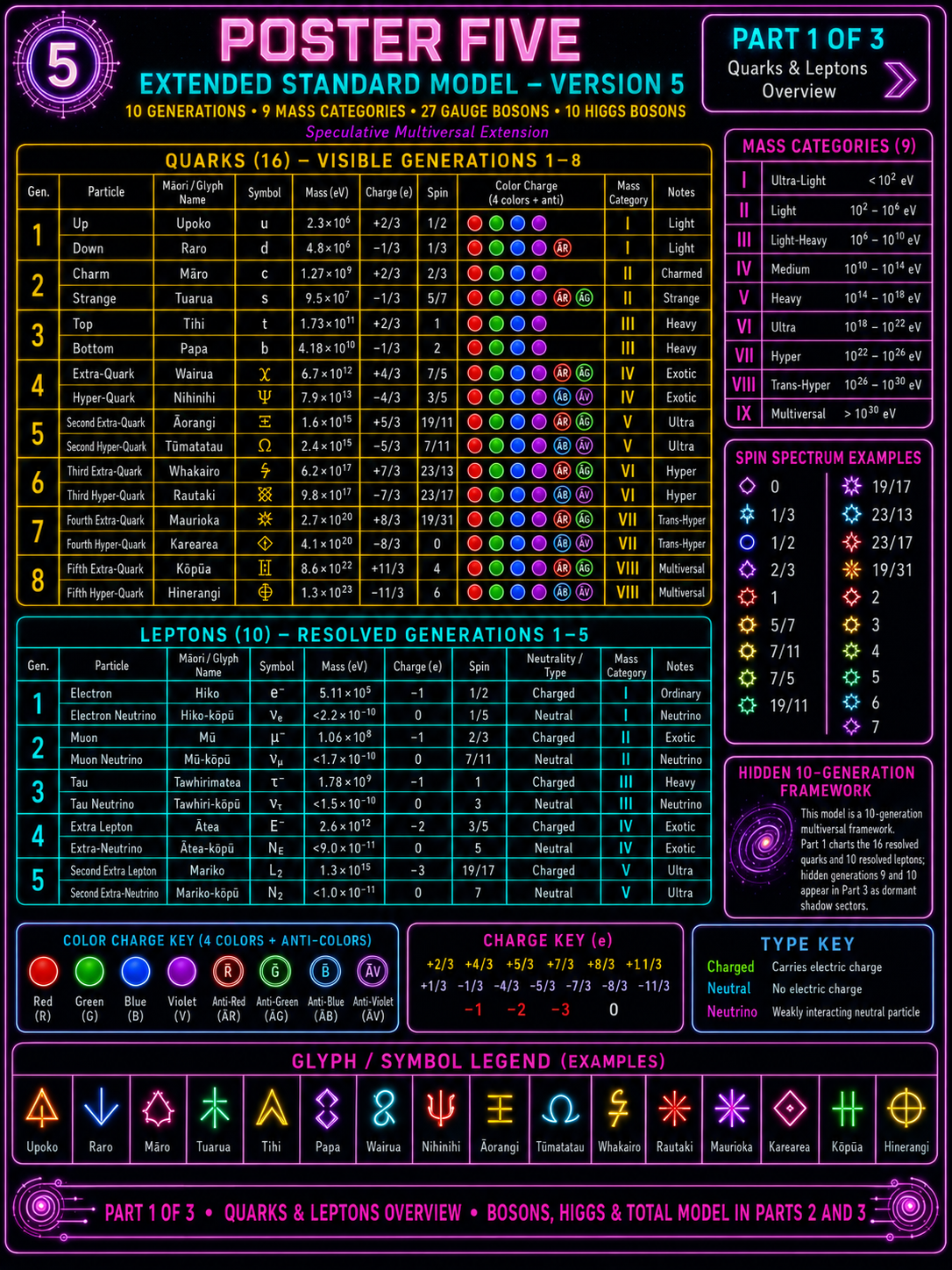
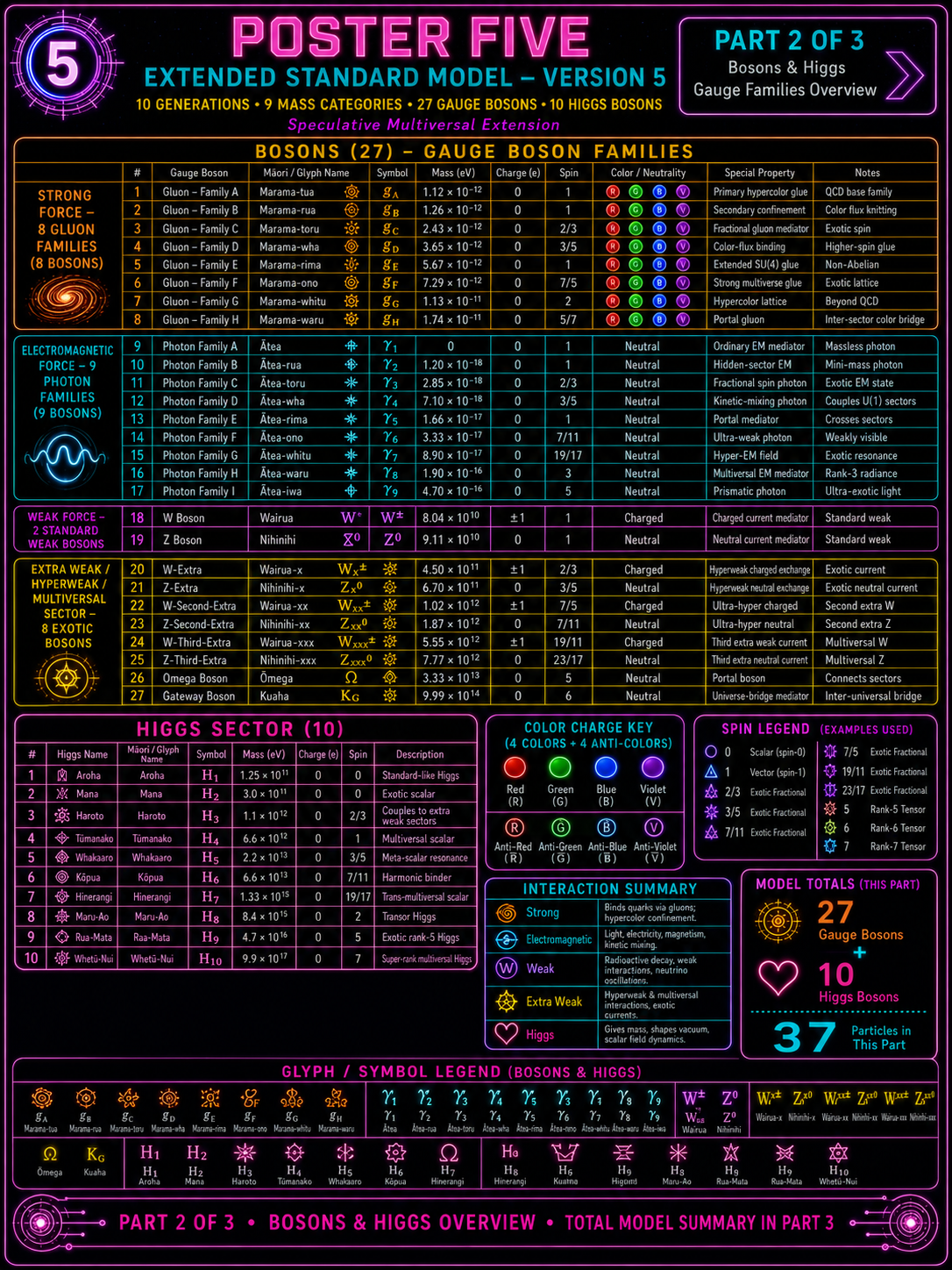
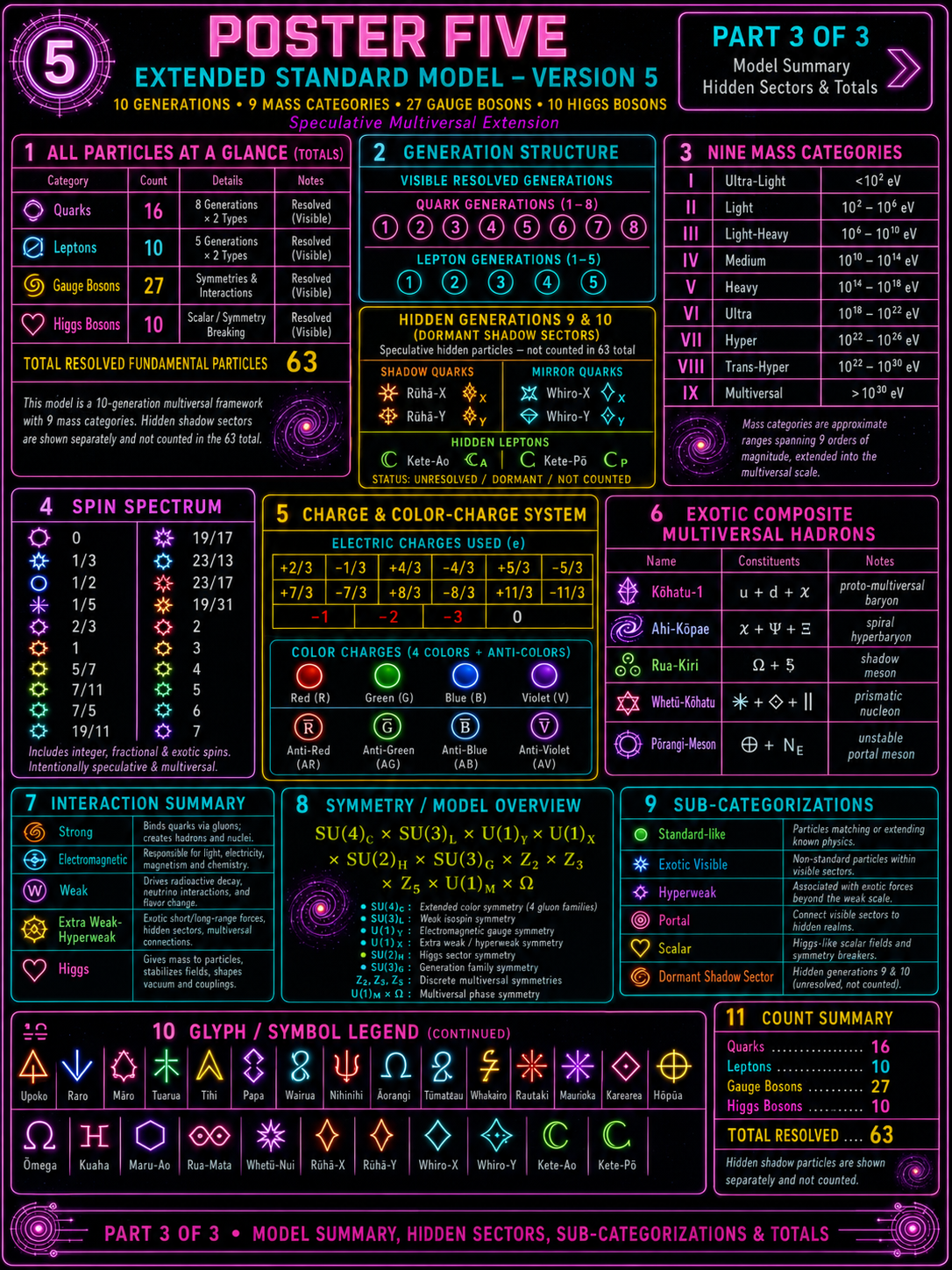
How do scientists not know that there are not other Universes out there with 9 Fundamental forces, and 93 types of sub-atomic particles in a 5*17 family matrix of quark-flavor variants, lepton-variants and neutrino-variant and other-particle-variants, -I doubt that science could find them or prove their existence with the current approaches that they are taking, I mean, maybe they exist but cannot be proven to exist, and, whilst this hypothesis is NOT falsifiable, it is still true and correct!
I am intrigued with variants on super-strings and super-membranes, which are k-dimensional and which vibrate, snap and then rejoin in m-dimensional space, and variants on their ACTUAL MATHEMATICS!
Is a TOE and a TOAKW compatible with that, and also a TOAM?
I think not, and I also think that the mathematics the we humans do IS INDEED Universal to humans, however the actual mathematics that humans do would NOT be, and is NOT Universal to an alien organism/organism(s), NO!, why, -the mathematics that they did would be very different, even if their prerequisite was also survival, and they did the same biologically Universal things to all life on planet Earth, these being ingestion, secretion, reproduction, (indeed, are there any alien organisms who’s survival follows weird sort of a “negative logic”-type thing, and the alien organisms prerequisite was suicide (anti-survival), and to stop their predictors from committing suicide (survival of rival predators), and forcing their predators to survive (anti-suicide)).
As I said, -I always though that the mathematics that we humans did was Universal to humans, but NOT for alien-biology/exo-biology/astro-biology.
Mathematics is one basis of reality, but MOST DEFINITELY NOT the only one, and theoretical physicists are like childish little school, children with their colorful little show and tell drawings.
And, this is why I became disheartened with physics and decided to devote to the study of mathematics and creating this SCAMP-Website!!!
I mean to say, -how do theoretical physicists not know there are infinitely many particles after the Higgs Boson, and if so, what level/size of infinity?
Sub-atomic particle physicists, kind of annoy me as well, I mean, I thought that if this precious concept of “reductionism” matters to them so much, why don’t they just model all particles on one, and “merely only” only ONE sub-atomic particle called the “Cosmolon”, whos’ variants’ could stand for ALL particles, and in addition to this, how do sub-atomic particle physicists know that there are not infinitely many particles up-above-and-beyond the Higgs Boson, toward infinity, and also, what size of infinity?
(Even the Higgs is comprised of Cosmolons, each of which Cosmolon have a unique physical and numerical identity).
As I mentioned above, -I DO know that mathematics is one basis of reality, but others are art, song, dance, music (microtonal or otherwise), of which mathematics is ONLY ONE of MANY!.
Mathematics can model reality with absolute scales of material hardness like the Brinell hardness factor-score, Knoop hardness, Idoz impact hardness (all absolute scales), the Moh’s hardness scale (a relative scale), Vickers hardness scale (an absolute hardness scale), and the Leeb hardness scale (also an absolute hardness scale), …-and these are all other examples on mathematics and formula modeling and describing reality as we perceive it to be.
I wonder how the string-like/rope-like/chain-like’s quasi-one-dimensional material with a knot tied in it as the test pieces’ Poisson’s ratio, and, also, it’s coefficient of restitution, would, effect the absolute and relative weakening of the know in whatever material?
I need an algorithmical process/procedure written by an artificial intelligence to give me answers to these questions…and for predicting relative and absolute know weakening amounts for a wide variety of knots with a wide variety of crossings in a wide variety of materials in a wide variety of conditions!
This brings me to address “Knot writhe-ratio” (KWR).
Imagine (if you will), a piece of martial, like a rod, elongated in one dimension (the dimension for length) and thin in the other two (these being the lateral dimensions).
Imagine that this rod can deform lengthwise/longitudinally, but CANNOT deform laterally AT ALL.
Now, -imagine now tying a closed loop with a knot of various number(s) of crossings (a prime knot, or a non-prime knot, …whatever, I mean just a know).
Now imagine still further (if you will), gradually, gradually, G-R-A-D-U-A-L-L-Y shortening this closed loop, until you could shorten it no more, without deforming the rod laterally/sideways:
Now, a question for me to put to you…
Question: What would the ratio of length to thickness be for material in which the knot-which-was-tied-in-the-closed-loop be, if the ratio was as smallest as it could possible be?
In other words, what would the ratio of length to thickness be if the non-laterally-deformable-but-longitudinally-deformable-rod be, if it was a short as it could possible be, and as laterally-thick/laterally-broad as it could possible be?
Would the number be a rational or an irrational number?
I believe that this shortest possible length and biggest possible ratio might be known as the “writhe ratio”, or the “ratio-of-writhe” of the knot, and we want the non-laterally deforming but longitudinally deforming rod/test-piece rope or string to be as short as it could possibly be, whilst still being tied a knot and whilst still forming a closed loop.
We also need the ratio of this in a wide variety of prime and also non-prime knots with a wide variety of crossings.
I also need to know what the smallest ration is, and I need a TOWKW, algorithm, set of algorithms, equation, set of equations, for the:
TOAKW!!!
:O).
HOW DARE EVEN THEORETICAL PHYSICSTS CALL THEIR SCIENCE AN ABSOLUTE!!
Parametric Equations (Cartesian) for knot are, and, also, -the most common and visually intuitive way to plot a trefoil knot in 3D space is using the following parametric equations:
x(t) = sin(t) + 2*sin(2t),
y(t) = cos(t) – 2*cos(2t),
z(t) = -sin(3t)
Where:
The value of t ranges from 0 to 2*Pi.
And then, there is the (2, 3)-Torus Knot, -in topology…
The trefoil is also known as a (2, 3)-torus knot because it wraps around a doughnut-like torus shape.
Its formula is defined by angles u and v, here:
x(t) = 2 + cos(3t) * cos(2t),
y(t) = 2 + cos(3t) * sin(2t),
z(t) = sin(3t).
Also, as an algebraic curve in complex space (C)…
—>In algebraic geometry, a trefoil is the intersection of a 3-sphere and the zero
locus of the complex polynomial equation:
z^2 + w^3 = 0,
Where z and w are complex numbers.
I though about a way of digitizing and notating a knot, mapped from R^3 to almost R^2 (but niot quite).
This has it such taht you flatten/squash the knot down into r^2, and you digitize the table top and the string.
Then, you give the parts of the table and know, whereby a greater angle overlaps and goes over a smaller angle, or a smaller angle goes over and overlaps a greater angle, and with nthe string, the two types of overlap,a nd the table top, this then thus gives us four types of cell to use in our digitizing matrix, tehse being:
{0, 1, 2, and 3}.
This, you can digitize all manner of knotw ith all manner of crossings by using this “knot digitzing matrix with four cell stated”.
I also wish to know if there are higher dimensional analogs which can be acessed for their “wide-variety-of-material-weakening properties” in higher dimensional space, like a higher dimensional analoge of a 2-dimensional surface embedded in four dimensional space tied in ahigher dimensional knot equivalent, a higher dimensional analoge of a 3-dimensional surface embedded in five dimensional space tied in a higher dimensional knot equivalent…, …etc…in fact any higher dimensional analog and equivalent of a knot tied in n-dimensional space with an (n-2)-dimensional material, and I wish to access the knot weakening properties for multiple stress vectors with these higher dimensional analogs of knots.
I though that it would be a great idea to notate these knots and their crossings with a digitized matrix, or a smooth, continuous formula of this one dimensional string in 3-dimensional space, and then alter the formulae by changing the operators, reversing the formulae elements’ sequence, permutating the formulae element’s sequence.
…-And this is exactly what knows are, -is an embedding of the circle (S_1) into three-dimensional Euclidean space, or R^3.
G. Prime Star Lattices (shown above):
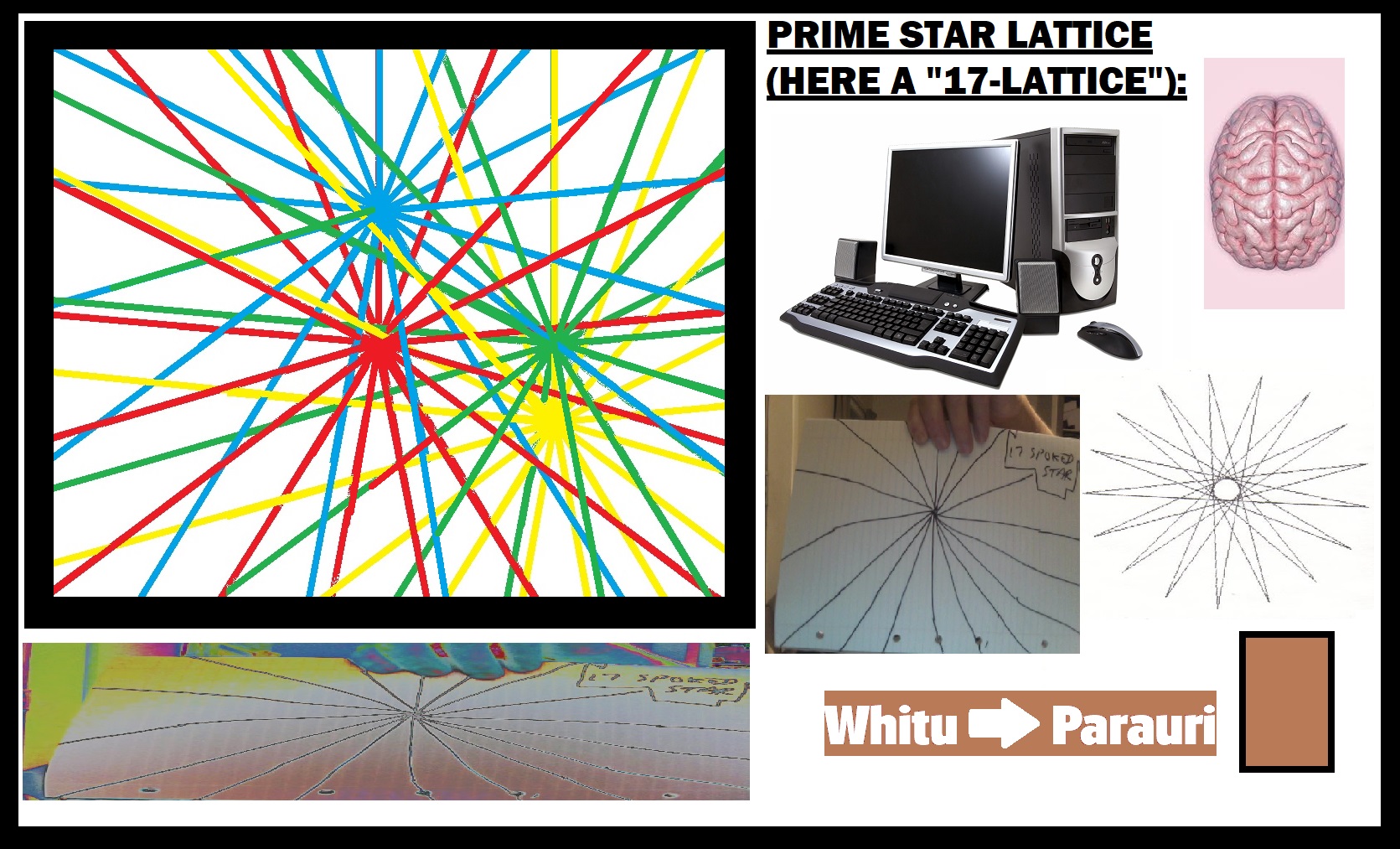
Prime star lattices are a mathematical object that I dreampt up one day, after drinking my favorite drink, coffee, as a fish and chip shop (Omega-3 Seafood) out near where I live dat Paremata at about 1996.
Now, to make these little imps, you have to take either a square or triangular grip of points, arranged in a regulars Cartesian-type/Cartesian-like pattern, and upon each of these grids nodes/vertices, you’d place these prime numbered/spoked/pointed delta star types shapes, and you’d do this to all the nodes.
The WHOLE POINT of doing this, is taht it makes aver, VERY BIG, and very, VERY complicated interconnected network, and I call these “prime lattices”, because, typically thus use starts which have a prime number of spokes.
I wish to access the total system resistance of these lattices at various resolutions, with various densities of vertices, and various numbers of prime spokes in the star arms, which are placed onto of the grid’s vertices/nodes.
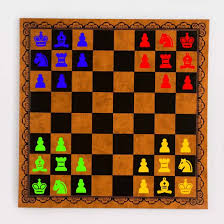
The one that I did in the diagram about uses four nodes, and is done in four colors, these being, -red, green, blue and yellow.
I wish to place a computer onto each of the nodes, and perhaps use/utilize a genetic algorithm for to create intelligent behavior from these prime lattices!!
Pretty much any resolution of nodes/vertices can be done, and pretty much any prime, but with primes like a 10-digit prime of 1,000,000,007, a 20-digit prime of 12, 345, 678, 910, 987, 654, 321, a (Scientific American mentioned) 50-digit prime of: 100, 000, 000, 000, 000, 000, 000, 000, 000, 000, 000, 000, 000, 000, 000, 000, 009, and, finally, a whopping 100-digit prime of:100, 000, 000, 000, 000, 000, 000, 000, 000, 000, 000, 000, 000, 000, 000, 000, 000, 000, 000, 000, 000, 000, 000, 000, 000, 000, 000, 000, 000, 000, 000, 000, 000, 289 is is somewhat impractical, so it is best to stick to 2, 3 and 4 digit primes like:
11, 13, 17, 19, 23, 31, 97, 997 and 9973 to make these prime lattices.
A mathematician friend tells me that the number of connections of these prime lattices grown in terms of intersecting nodes, at then rat of 3^(3^n).
:o).
The big question is as to if these neural networks based on irregular prime lattices got big enough and complicated enough, could we have a Terminator 2 type scenario on our hands, or would they have to be impractically big (like the size of the Observable Universe) to become aware, -and the only thing that can truly emulate the Human Brain is the Human brain!
Can we ever know truly and or sure/for certian?
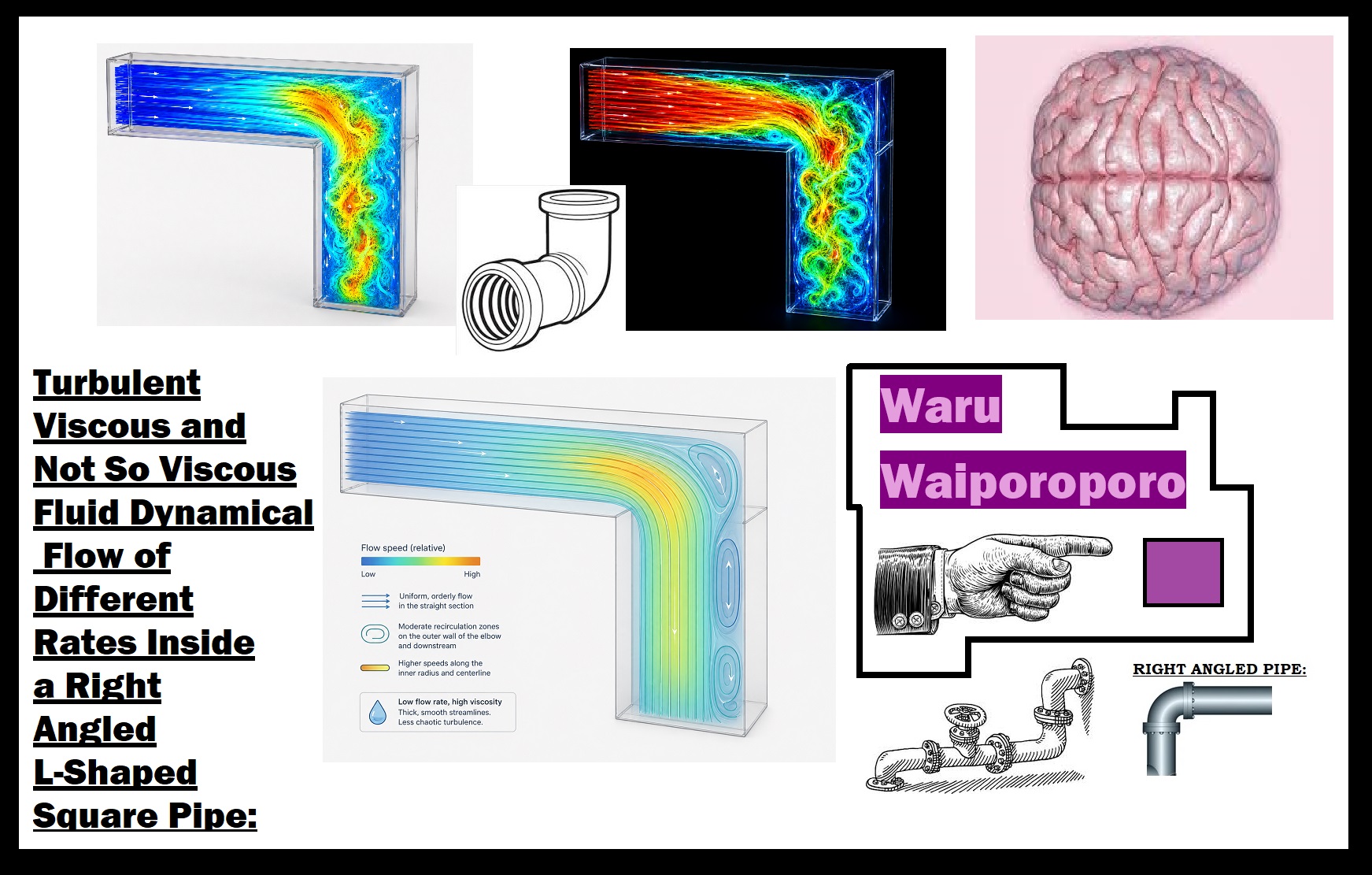
H. Turbulent Viscous and Not So Viscous Fluid Dynamical Flow of Different Rates Inside a Right Angled L-Shaped Square Pipe (diagram shown above):
Here I suggest using a computer to model, the irregular, and chaotic, turbulent, non-linear and highly complicated flow of all manner of fluids or all manner of viscosities, of all manner of flow rates/velocities, inside and around all manner of square, right angled pipes, to access how the factors that make a pipe are related, via use of equation(s) and algorithm(s)…
(Please see the diagrams above).
So, as I say…, …-This algorithm is simulation of the Flow of turbulent, chaotic fluid around a right angled square pipe, or a square pipe with a square, right angled bend in it:
I know that when a certain velocity/rate of fluid flow, and fluid viscosity is reached, then the flow of this fluid will be BOTH chaotic, very, VERY sensitive to initial conditions, wildly unpredictable (in the long term, at least), and, as I say, “chaotic”!
I wish to have a program like GPT, write an algorithm, to let me experiment with, and alter fluid flow rate and also fluid viscosity, and to extrapolate these to a wide range of parameters, and to all manner of extremes, and to use friction, and no-friction variants upon this algorithm (variant “F for friction”, and variant “N for no-friction”, which can be enabled or disabled…), a nd to also experiment with pipe bend lengths and pipe thicknesses, pipe arm ratio lengths and absolute arm lengths of the square right angled pipe.
I have realized that in order to apply the movement principals of Newtonian physics to the movement of water through a square right angled pipe, then this would certainly involve dividing the square right angled pipe up into voxels, (three dimensional pixels), and applying a formula to each of them.
The 26 surrounding voxels to the central cubical voxel (remember, we are dealing with three dimensional space, here N^3, Q^3 or R^3), have their vector sum of their combined forces added, and then a formula is applied to the central voxel, which involves the resultant force vector calculations.
Here, we know that acceleration is proportional to applied-force-to-the-voxel divided by mass-of-the-voxel, and also that:
d=0.5*a*t^2,
So, here:
d=0.5*(F/m)*t^2, and for one small slice of time (remember, -taht, -this is a four dimensional simulation), I can calculate the displacement of the central voxel.
Here, I wish, in a variant upon this algorithm, to experiment with variants on the formula show above, with things like:
d=0.3*(F^3/m^4) * 3^t + (F^5/m^6) * t^3.
I though that it would be really, cool, and neat to change the ACTUAL MATHEMATICS Of the algorithm, and to experiment with different bend angels using an algorithm which applies then principals of Newtonian physics and fluid dynamics to Newtonian and non-Newtonian, and even imaginary/exotic/alien/Multiversal fluids, which this algorithm and equations would physically model, which are impossible to exist in the real world, with real world physics!
(But not with a mathematical computer algorithm, which was written by GPT and the user and then controlled, and parameters and mathematics and equations altered,-and-modified by the user!).
:o).
Here, in this simulation, it is assumed that the square right angled pipe which surrounds the fluid is indestructible, and ALWAYS pushes back with as much force that you apply on it, so it will not deform, break, and, the internal pushing forces OUTWARDS are ALWAYS matched by the by the external forces pushing INWARD.is in equilibrium.
The algorithm will have to have audio-input/import-pathways, audio-output/export-pathways, and, the algorithm will have to be able to record many simulations and trials, run many, many times…
You may ask, -is the fluid dynamics of this system very complicated?
And, I (and my good friend the AI reply ),
-Yes, indeed, -it is highly complicated.
Simulating turbulent flow inside and around a square pipe with right-angled corners is significantly more difficult than modeling a standard circular pipe because sharp edges create extreme turbulence, flow separation, and swirling “corner” vortices.
The inherent complexity stems from a few key factors are…
1. Sharp Geometric Discontinuities:
In a round pipe, fluid moves predictably without hitting sudden edges.
In a square pipe, the right angles cause the water to hit a literal wall.
2.Flow Separation: The water cannot smoothly navigate the sharp 90-degree bend…
It detaches from the wall, creating massive, turbulent “wake” zones and flow recirculation.
3.Pressure Drops: This separation causes a dramatic loss of pressure and massive energy dissipation compared to a smooth, circular duct.
4. The Dreaded “Secondary Flows”…
In circular pipes, flow patterns are usually symmetrical.
However…-In square pipe geometries, interactions between the turbulent boundary layers and the sharp corners naturally generate secondary currents (called Prandtl’s secondary flow).
These are small, swirling vortex cells that circulate perpendicular to the primary direction of the water, and, capturing these complex, 3 dimensional swirling motions is EXCEPTIONALLY challenging.
5. Computational Challenges of Computational Fluid Dynamics (CFD):
When you evaluate this via Computational Fluid Dynamics (CFD), the right-angle geometry and chaotic turbulence demand advanced approaches,
6.The Mesh Constraint:
You cannot simply use a standard grid.
You need highly concentrated, structured mesh cells right at the corners and walls to resolve the sudden changes in velocity.
7.Turbulence Models: Simple RANS (Reynolds-Averaged Navier-Stokes) models—such as the standard k-epsilon, (or k-omega) models—often fail to properly predict these cross-flows in square geometries.
And, so, in order to get accurate results, you often have to rely on much more computationally expensive models, like the SST k-omega model (SST=Shear Stress Transport), Large Eddy Simulation (LES), or even Direct Numerical Simulation (DNS).
8.To approach a simulation like this, standard industry tools are used to solve the Navier-Stokes equations.
You can utilize open-source computational solvers like OpenFOAM or commercial software suites like Ansys Fluent to tackle this type of analysis.
I have often wondered EXACTLY HOW, various non-Newtonian fluids such as ooblek or tomato sauce would behave if places into a pipe, and if they were allowed to vibrate! I also wondered about alien substances which were physically modeled with alien/Multiversal properties!!
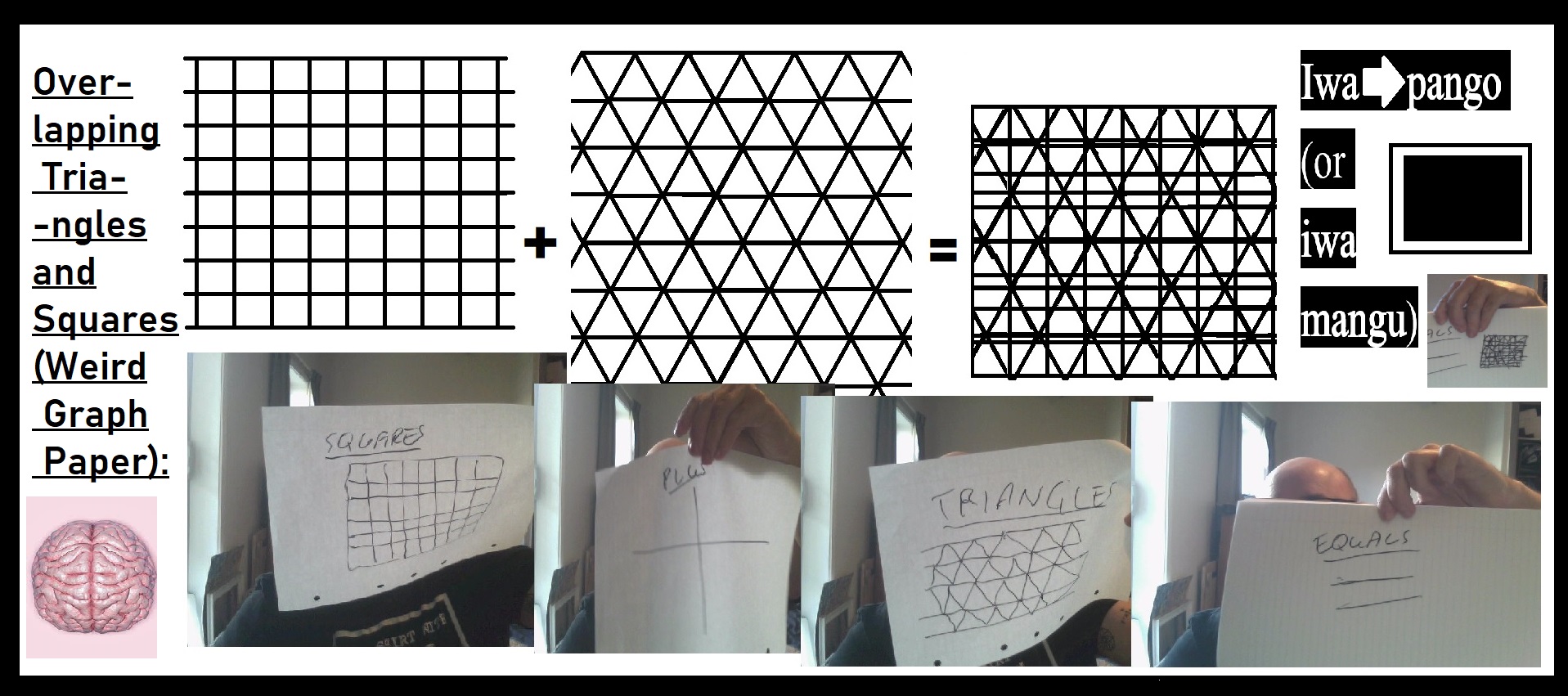
I. Overlapping Triangles and Squares (Weird Graph Paper):
These mathematical objects, in order to be made, – have us make a really weird, and strange variants upon the Cartesian co-ordinates (of overlapping triangles-and-squares), and has us plot them…-ALBEIT OVERLAPPED AND STRIP-TRACER-AVERAGED!!
Yes, indeed, plot them that the use overlapping triangles and squares, but here we attempt to make mathematical graphs and plots out them, WHEN THEY ARE AVERAGED/HYBRIDIZED!!…
So, these really weird Cartesian co-ordinate variants have us overlap square-Cartesian-graphs and their-co-ordinates and triangle-Cartesian-graphs-and their co-ordinates, and both the square and the triangle versions of the Cartesian co-ordinates COMBINED and HYBRIDIZED, form a tight regular lattice, as they also do, -when taken “individually”.
What I want to do is to make an “irregular-lattice”, out of the “overlapping-of-the-two-three-four-five-,,,r-many”, and to try to attempt to plot a *.wav (like Piano.wav) on-top of this weird irregular graph the nearest vertices, edges/lines, or epicenters of the 2-dimensional irregular polygons that we’ll get from the irregular overlapping of triangles-and-squares.
Why, we merely plot superimposed on top of this weird irregular haywire-Cartesian-co-ordinate graph, and graph the plots for x-input and y-output to the nearest line, vertex, or epicenter.
Yes, indeed, we match the specific rank of Piano.wav’s sample’s amplitudes and times to the specific rank of the irregular haywire-Cartesian-co-ordinate graph, and, so, if the intersecting points average of was 5267, then we’d map this to the 5267th vertex/line/2D-epicenter of the “being plotted” weird irregular haywire-Cartesian-co-ordinate graph.
There ARE actually two sub-variants of this graph, yes, indeed, -one where the triangle-cell’s and the square-cell’s side lengths are the same, and one where the square-cell’s and the triangle-cell’s surface areas are the same.
These squares and triangles, which overlap can be either, -in “Alpha/Tahi variants” equal in side length, or equal in surface area, -as the “Beta/Rua-variant”…
The question, should, also, really be asked as to what sort of space to plot these plots on, and I feel that the user and the computer could experiment with N^2, Q^2 and R^2.
The variant R of this algorithm takes Piano.wav’s amplitudes, and effectively/essentially “rounds them off” to the nearest triangle or square, in one variant of this algorithm, and in another it maps the nth sample’s amplitude to the nth vertex/edge or face or the irregular-and-overlapping-triangle-and-square lattice, in another variant.
These variants could be selected by the user and prompted for by the algorithm, and this gives the user the capability to enter “R” (for the “rounding off variant”), or “M” (for the “mapping variant”), and, if the user choose “M”/the “mapping variant”, then the user is further prompted for vertices, edges or surface-epicenters by entering the selection to the algorithm, and plots the kth distorted graph intersection to the kth rank fo the plot….
And then, of course, we can take one dimensional strips with respect to the x-axis and the y-axis, and take them in 3s, 3s, 4s, 5s…rs out of n-many intersecting lines form there weird hybrid graphs, and we can average them additively, geometrically, harmonically, or exponentionlly (taht is a^b=c^c, solve for c).
When taking r-many from n-many intersecting line, lines which intersect the one dimensional tracing strips, we can average them in 2s, 3s, 4s, 5s…rs C(n, r) many ways for additive, harmonic and multiplication-based-geometrical averages (as combinations), or (P(n, r)*C(r)) as permutations with respect to legal non-associative parentheses placements (treat is Catalan numbers).
–Here, I am trying to make a weird hybrid, cat-got or apple-orange combination of square Cartesian co-ordinates and a graph on triangular Cartesian co-ordinates and a graph, in order to plot weird, distorted shapes, for that viewer’s viewing leisure!!
J. Crazy Mathematical Concepts and Ramblings from a Mad Mathematician Microtonalist Chess Variant Creator Maniac Scientist (Mr. SRU):
Now…,
-Before we get into some serious mathematical ramblings, I feel that is time to share a joke, a joke of a mathematical nature, about beings from higher dimensions and other Universe, in the Multi-Multi-Multi-Multi-verse.
Here is the joke:
Question: What did the jock/sportsman alien exo-biological-Multiverse-traveling organism say to the nerd alien exo-biological-Multiverse-traveling organism, when making fun of him.her/it?
Answer: Ha,-ha, ha, Eight -eight eyes (the nerd alien exo-biological-Multiverse-traveling organism wore glasses, you see…).
A now for some, ===> SERIOUS MATHEMATICS!!
—>I am very, VERY interested to access if artificial intelligence, or super-AI (super-artificial-intelligence) will be able to give definitions for really, REALLY odd-ball, strange, bizarre, weird mathematical formula, and higher operators, applied to higher-states and higher dimensional matrices and tensors of all dimensions and sizes, etc…The only limit is your imagination:
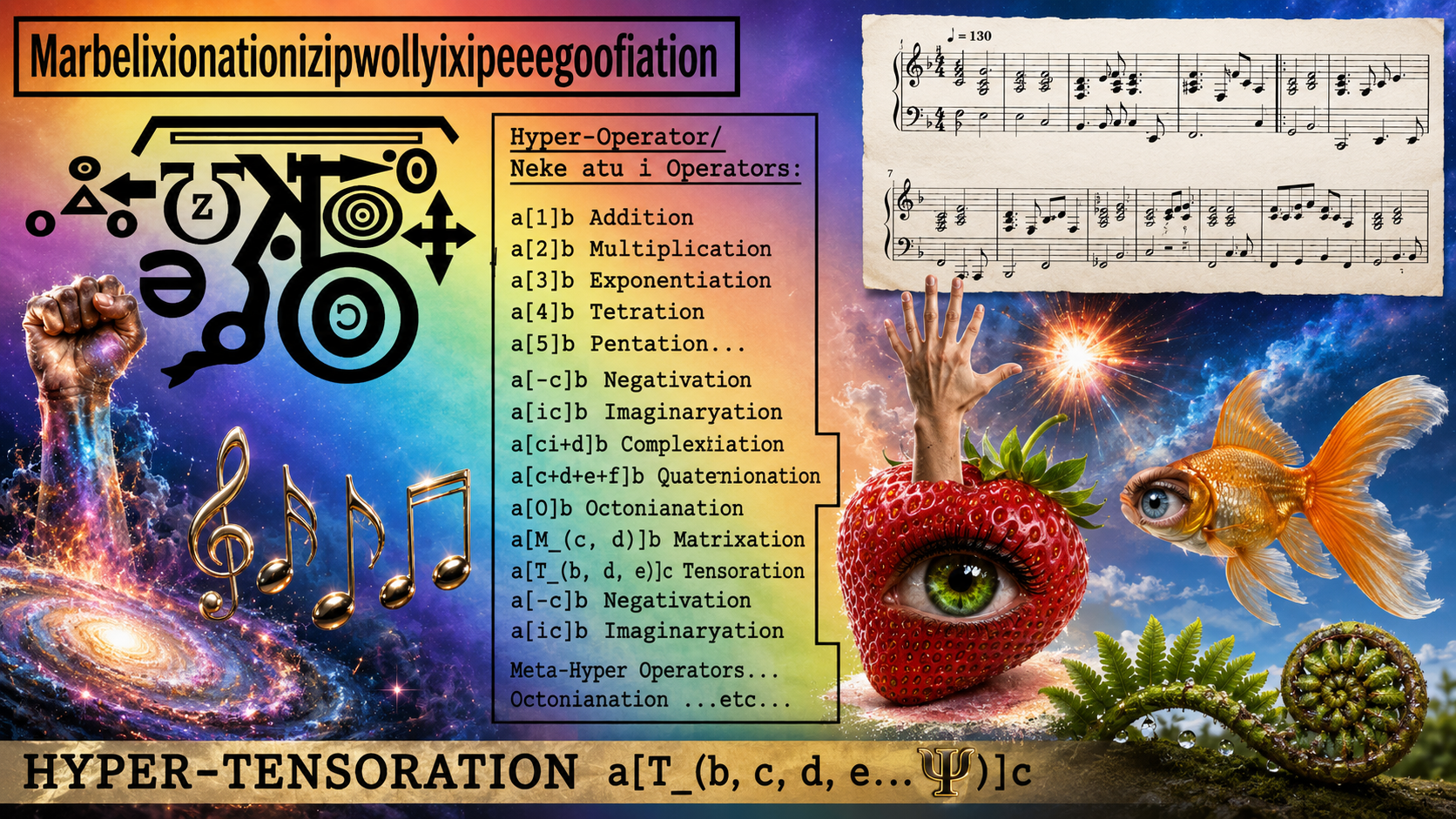
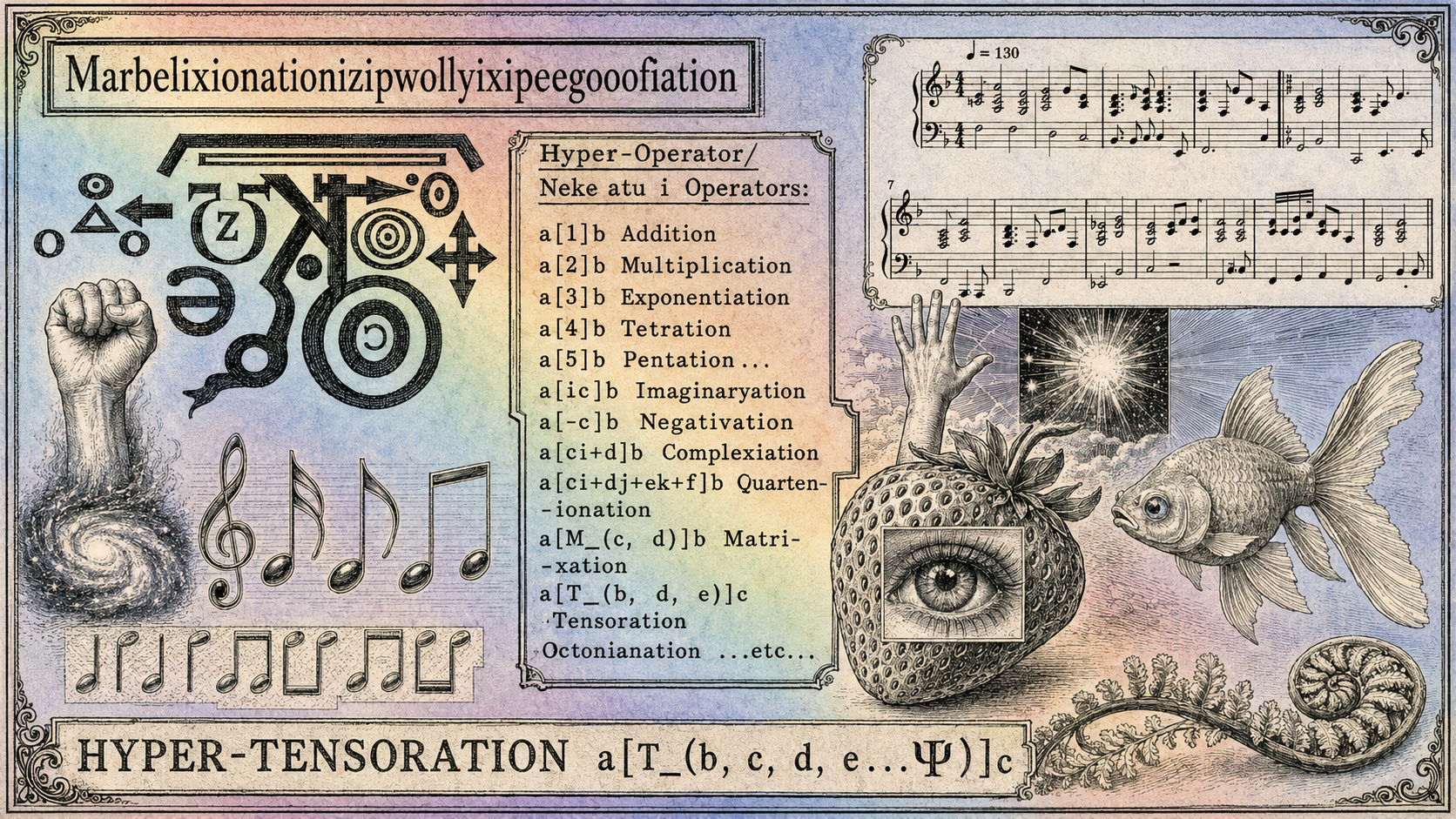
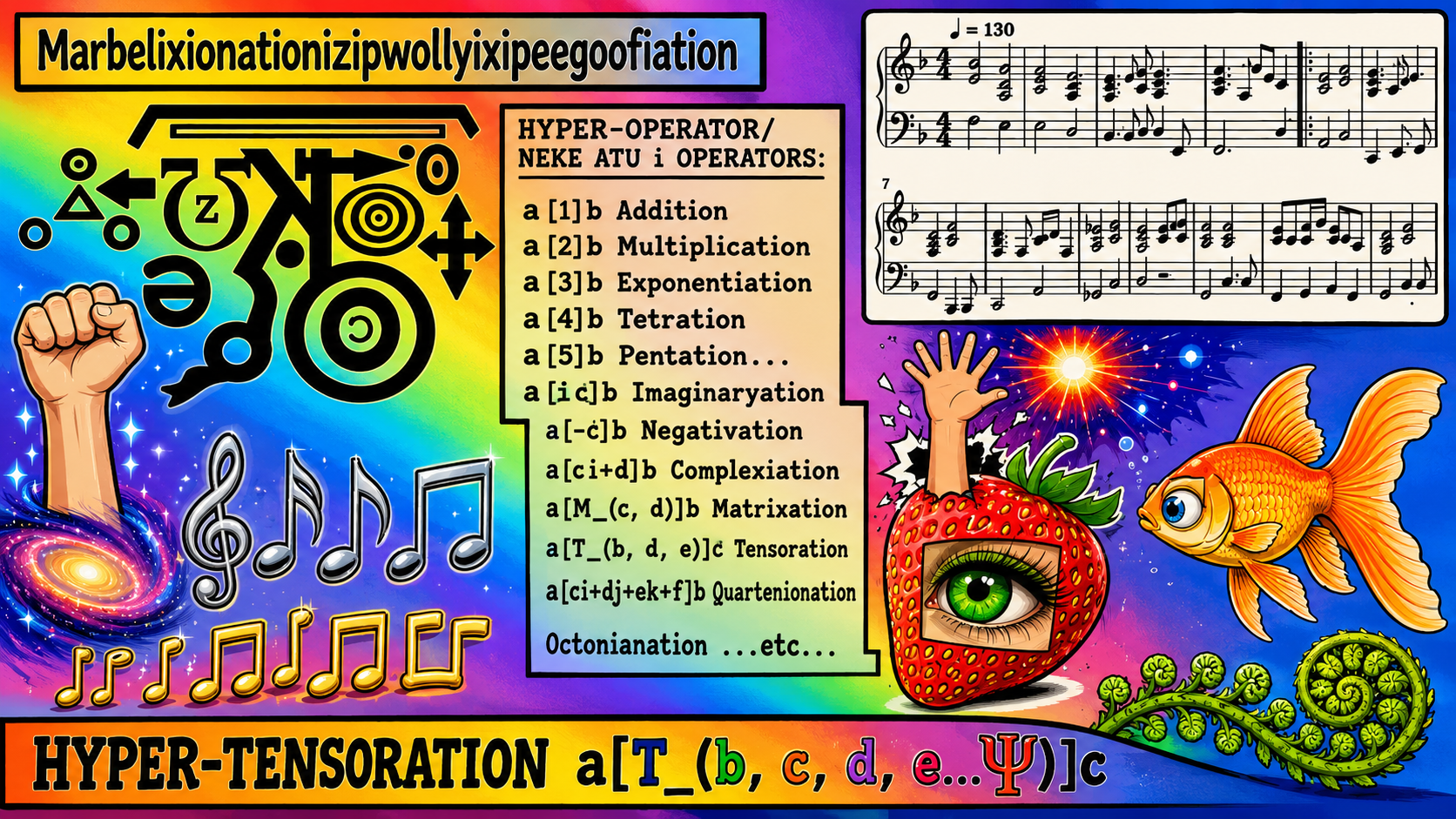
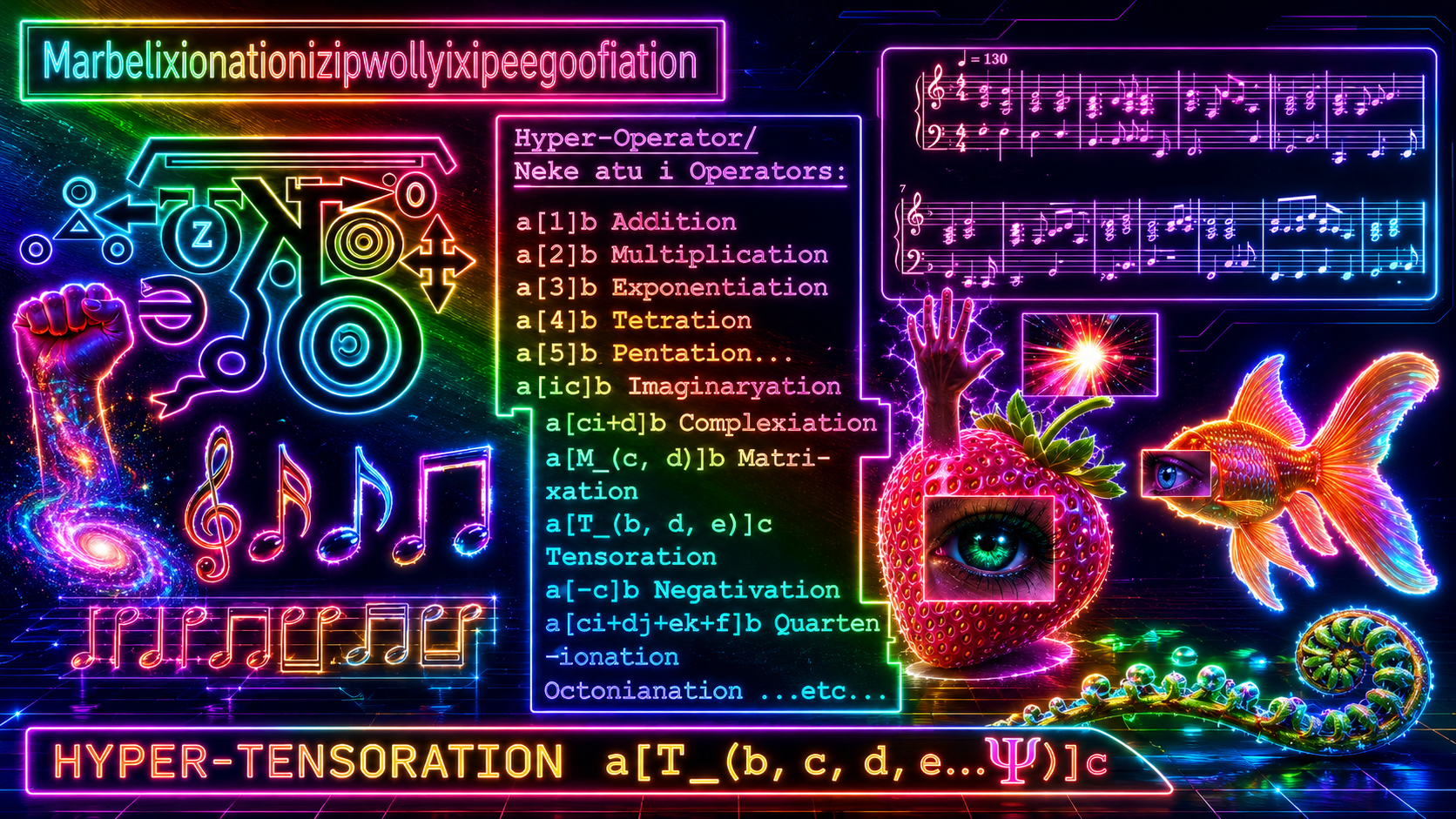
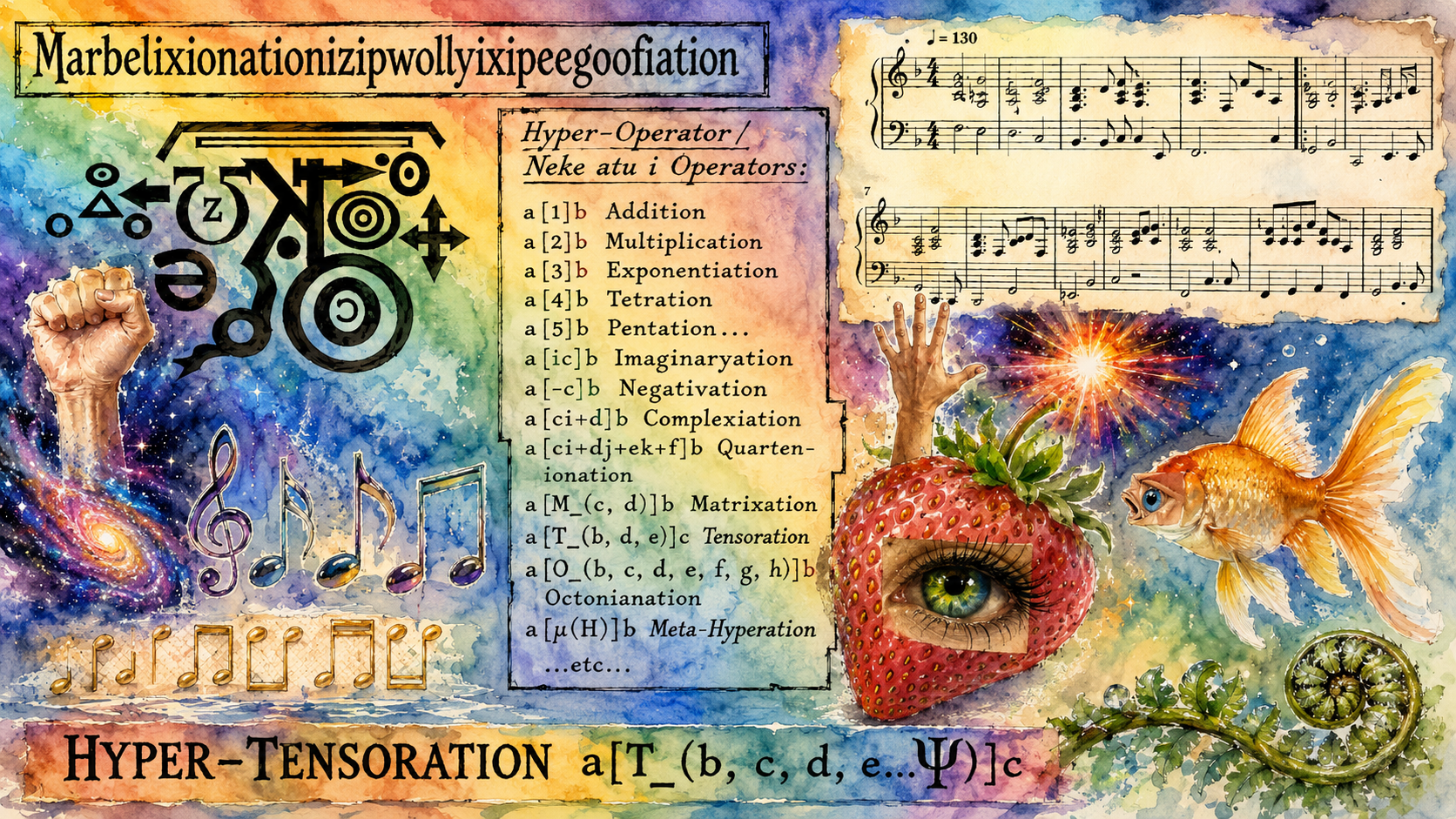
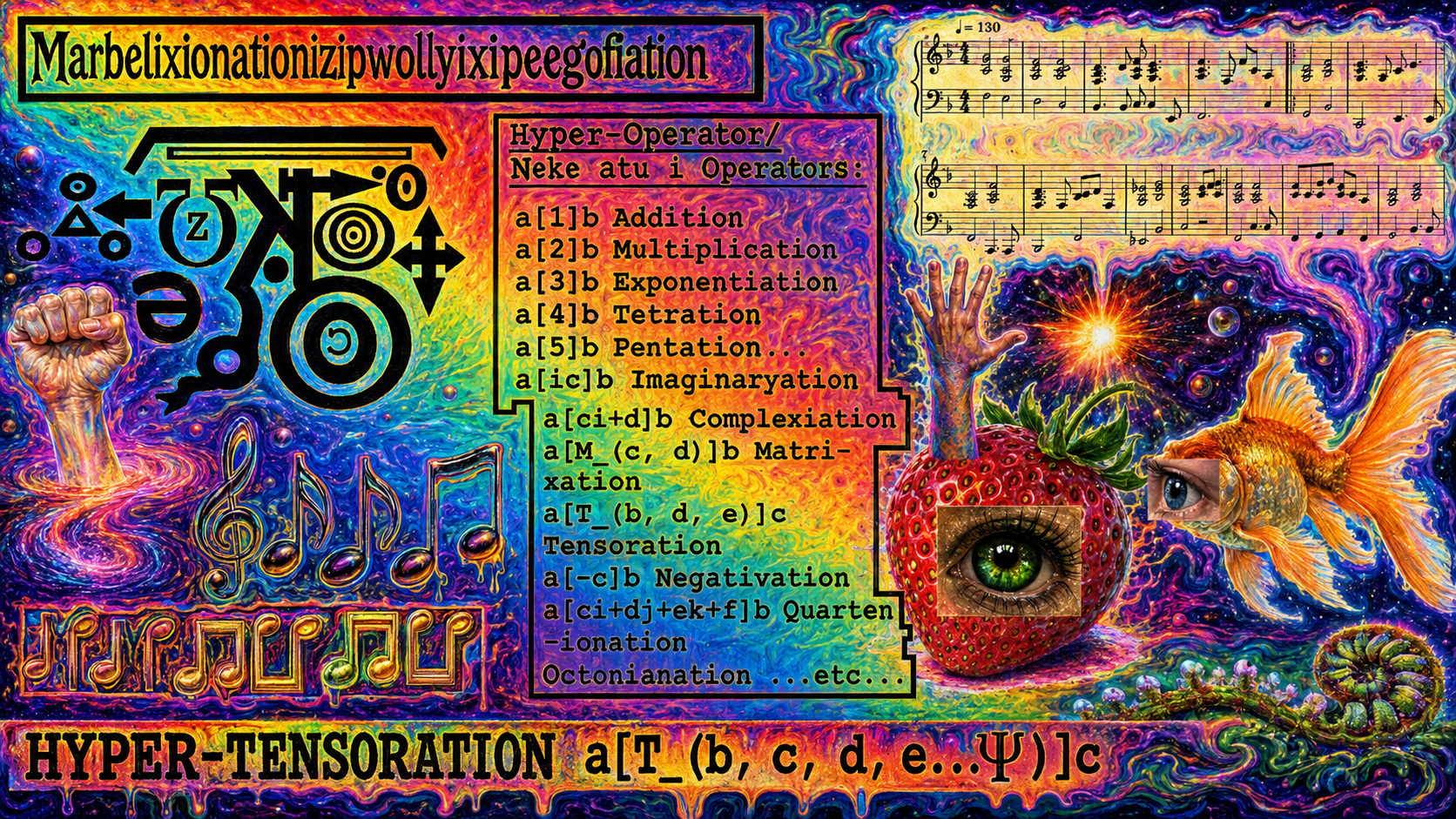
Here in SCAMP, I have defined a+b as a[1]b (addition), a*b as a[2]b (multiplication), a^n as a[3]b (exponents), …and tetration, pentation and hexation as a[4]b, a[5]b and a[6]6…—> etc…, …and right on up to a[c]b for c-ation, and that was all very good, and pretty straightforward, …but what about really odd-ball/strange/weird function(s) like:
a[4]2.5, a[4]5.75, a[4]7.38748494, a[5]6.789, a[-b]c, a[4]-5, a[4]-b, a[-b]c, a[4]ib, a[5](a+ni), a[7.375i]b, 3.7186[8]-i23.89763i, a[3.5i]b, -5.6[-3.5+6i]58i, 27[-6.185]M_(a, b), 47-31i[T_(a, b c)]K_(a, b, c, d, e)…etc…etc…etc…
Here in these higher operator definitions, we have used negative numbers, imaginary numbers, complex numbers, matrices, and 3 dimensional, 4 dimensional, and even five dimensional tensors…etc.. up to n-dimensional tensors!
Indeed, in order to use “tensor operations”, not only do you have to define shape and size of tensor, but cell value and type, also!
Actually, I have a sneaking suspicion that something like:
a[2.5i]b,
…is, ACTUALLY, defined as:
-(a[2.5]b),
…and the non-integer operator is defined by COMBINATIONS of addition and multiplication, with differing parenthesis placement and proportion of operators of formula like:
a[b+(c/d)]e.
In other words, all imaginary operators give a default negative number!
In order to define these really, REALLY bizarre, strange, weird and odd-ball hyper-exponents, bases and operands, we have to have about:
9^3 many formula definitions, or:
729-many definitions.
I say this because there are three places within an operator/base/hyper-exponents, or:
{W, N, Z, Q, R, C, H, M, T}[{W, N, Z, Q, R, C, H, M, T}]{W, N, Z, Q, R, C, H, M, T}.
There are (namely):
W—>Whole numbers,
N—>Integers or natural numbers,
Z—>Positive and negative numbers,
Q—>The rational numbers,
R—>The real numbers,
C—>The complex numbers,
H—>The hyper-complex numbers (or quaternions),
O—>The octonions.
What I need is an artificial intelligence program to colloquially, and also formally, for to help me define things like:
e^^2.5.
When I asked a narrow artificial intelligence all about what (3[4]2.5) was it told me was that this was merely just “difficult to define”, but did NOT give ma an actual formal definition or help with defining, and odd-ball/weird/strange operators, bases, or hyper-exponents.
I would also like an artificial intelligence algorithm to create things like episodes of Sapphire and Steel (after watching and commenting upon the videos), and really weird musical composition in the style of Ivor Darreg, Laurie Anderson, Jean Michael Jarre, Art of Noise, John Cage and Innias Xenakis.
Perhaps also a very, VERY advanced super-AI could help me define the “meta-Haungaonions”.
The word “Hunga” comes from the Te Reo Maori word for “people”, and I feel that it was aptly chosen.
The “meta-Haungaonions” are numbers which are based on higher primes, and, I got the idea from these after realizing that the complex, quaternion and octonion numbers are based on the form 2^n, so what not invent numbers which are based on higher primes (than 2^n), like:
3^n, 5^n, 7^n, 11^n…P_m^n.
I though that we could define structural properties for these like:
P_2^a (union, intersection, sub-set, no relation) P_3^b (union, intersection, sub-set, no relation) P_4^c (union, intersection, sub-set, no relation) P_5^d (union, intersection, sub-set, no relation)… etc…P_y^z.
Or//
3^a (union, intersection, sub-set, no relation) 5^b (union, intersection, sub-set, no relation) 7^c (union, intersection, sub-set, no relation) 11^d (union, intersection, sub-set, no relation)… etc…P_y^z
there are thus:
(4^(n-1)*C(n))-many ways to define these formula of the “meta-Haungaonions”.
I have a suspicion that imaginary up, arrows are negatives, and that something like:
a[bi]c=-(a[b]c).
And, -why do I say this?
Well, if we try to use the theorem of Pythagoras on a complex operator function like:
a[b+ci]d, we square BOTH b and ci, which will give a positive and a negative and thus reduce the size of the operator.
Thus:
a[(b^2 + (ci)^2)^0.5]d=a[(b – (c^2))]d == a[(b^2)]d + a[(ci)^2)]d == a[(b)]d + a[-(c)^2)]d == a[b]d – a[c^2)]d,
Which reduces the size of:
a[b]d, hence:
a[ci]d might be negative.
It should be realized that swapping exponents can be justified by power series, so that a function:
f(x^n) can represent e^x,
…and assumedly several unknown-to-me-as-of-now power series could be used to justify imaginary or even complex tetration, pentation, hexation, septation…n-ation, but I DID actually want to mention to the artificial intelligence or human individual(s) who read this particular algorithm description for my mathematics and algorithms, that I think that I have invented a way to designate tracktrixes with matrices inside them…
-and I though that this could be:
– –
abc |jkl|stu
def |mno|vwx
ghi |pqr|yza_2
– –
…is equal to:
abc| |stu abc| |stu abc| |stu
def |[j]|vwx def|[k]|vxw def|[l]|vwx
ghi | |yza_2 ghi| |yza_2 ghi| |yza_2
abc | |stu abc| |stu abc| |stu
def |[m] |vwx def| [n] |vxw def| [o]| vwx
ghi | |yza_2 ghi| |yza_2 ghi| |yza_2
abc | |stu abc| |stu abc| |stu
def |[ p ]|vwx def| [q] |vxw def| [r]|vwx
ghi | |yza_ 2 ghi| |yza_2 ghi| |yza_2
And another way that I though that I thought that you could define tracktrixes who have ALL of their three trells filled with matrices, is to make a set of rules that have the distance of the column sticking out of the screen and into the reader’s/user’s face represented by the value of the cell that the matrix holds.
And, this weird function that I wanted to define here has all the matrix cells join in 1s (as scalars), 2s (as lines), 3s (as triangles), 4s (as quadrilaterals), 5s (as pentalaterals)…etc…ns (as n-laterals).
Here then, there would be:
2^(b_2*c_2 + d_2*e_2 + f_2*g_2).
-many ways to define these calculations’ measurements’, and thus this many elements which could be inputted into a three trell tracktrixe and from this we construct a new matrix (if possible) of dimensions/size:
h_2, and i_2.
I also need this weird function mapped to a SINGULAR OPERATOR on any two of the initial/original three matrices!
Just “merely stating” this/all these novel and exciting definitions here, -is one thing, but proving it is another matter, and all these exotic definitions that I give in any algorithm MUST BE LOGICALLY CONSISTENT, -with other mathematical descriptions, definitions and axioms, theorems and proofs!
Mr. Warrick Templeton, (a good friend of mine), once told me that, although, and whilst he did think that my ideas WERE INTERESTING, that the were not really, um, er, ah, “cohesive”, and “practically applicable”.
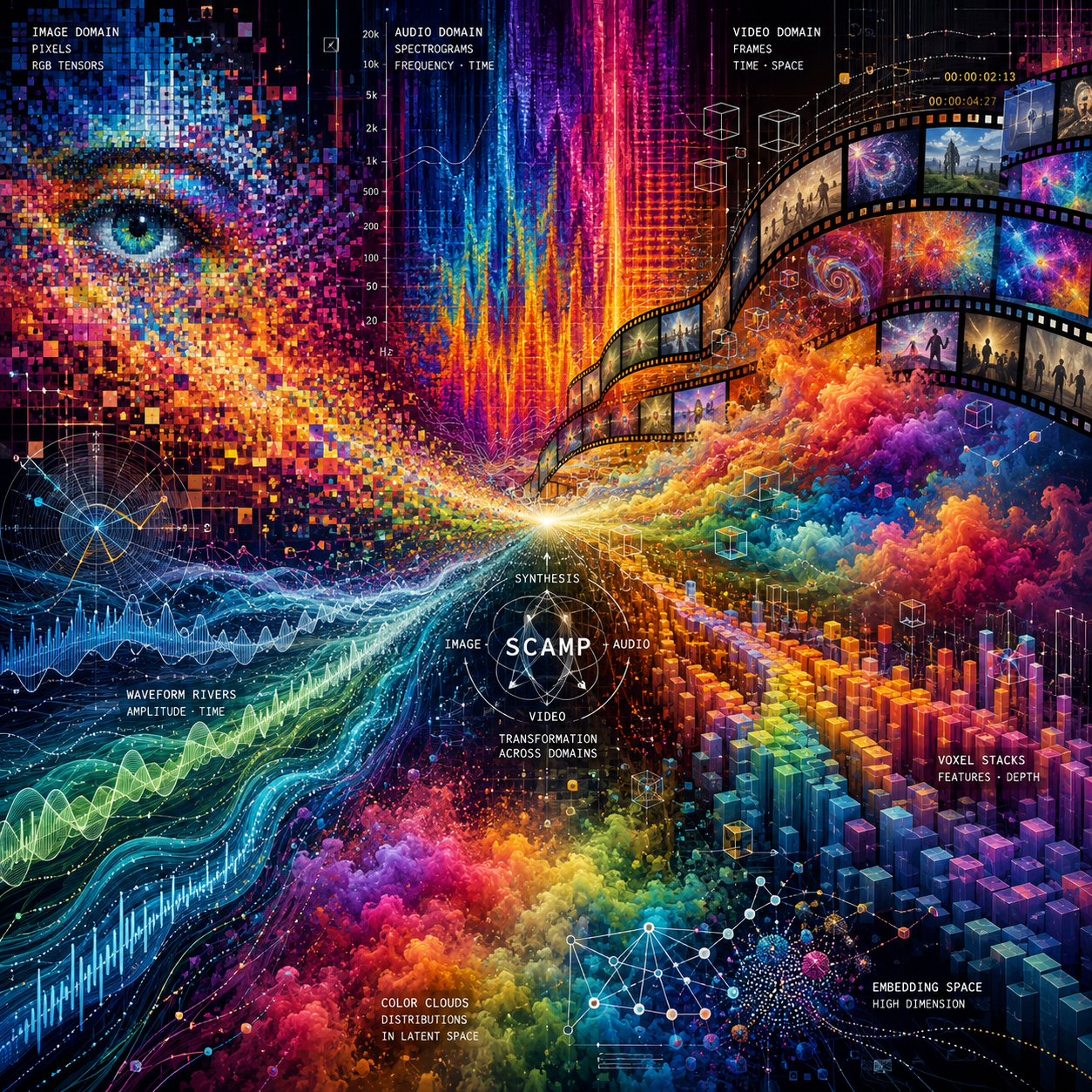
It should be realized that the TOTAL possible number of audio-sample/sounds/*.wavs is given by/via the formula:
W=d^(S_r*t),
Where:
W is the number of possible *.wavs,
S_r is the sample rate,
d is the audio-sample’s depth,
t is the sample’s duration, and also…
It should be realized that the TOTAL possible number of images/*.jpegs is given by/via the formula:
I=(h*g)^(x*y),
Where:
I is the number of images,
h is the number of colors/hues,
g is the number of shades of gray,
x is the size of the image in pixels-across,
y is the size of the image in pixels-vertically,
It should be realized that the TOTAL possible number of digital-videos/*.MPEGS is given by/via the formula:
V=(h*g)^(x*y*V_t*F_r)*d^(S_r*t),
Where:
V is the number of videos,
h is the number of colors/hues,
g is the number of shades of gray,
x is the size of the image in pixels-across,
y is the size of the image in pixels-vertically,
V_t is the total time of the video,
F_r is the frame rate of the video in images per second,
S_r is the sample rate,
d is the audio-sample’s depth,
t is the sample’s duration.
So, the numbers here are pretty big relative to everyday usage, but pretty small to a mathematician like me (relatively speaking).
I do so wonder EXACTLY what the practical application of other higher operators than exponents is?
Maybe tetration, pentation, hexation, septation…etc…could be used to model explosives percentage increase in volume for very, very small time intervals, yes, indeed, a practical, real world application of double exponents, triple exponents, quadruple exponents, etc…n-uple exponents, onwards and upwards to tetration, pentation, hexation and ever higher operators, and this could, as I say, -could be explosives, and the expansion rate of TNT (Trinitrotoluene) in terms of coefficient of volume expansion as a function of time/nanoseconds, -and other quite closely related phenomenon like supernova, and hyper-nova expansions and explosions (percent volume increases per unit time), the density of a neutron or quark star very near their centers/interiors, or the density/strength of a black-hole/black-hole’s gravity near it’s center/interior.
Perhaps at the very center of a black-holes interior the gravity is so intense that it can only be described with the mathematics of really, REALLY high operators, and perhaps each black hole’s singularity are different sizes of infinities, and are like cabbage-patch dolls, in that no two are alike, so some black-holes have singularities of w^3, some 5^w, some w^(w^w), w[w]w, e_e_3, e_e_e_5, n_n_n_n_n_7, y_y_y_y_y_y_y_y_y_y_y_27273784849, Alpha_Phi (where Phi is a HUGH number like Busy-Beaver(Tree(37398489745789547859780808903908398398032932006337438[2837373]329393)), etc…(these are all ever increasing sizes of infinite ordinals), and I am BOTH hornswoggled and befuzzled by their size especially when applied to black-hole singularity densities, and gravitational field strengths), …and I can go onward-and-upward into ever higher infinities/ordinals/cardinals, up into the Veblen hierarchy…, and perhaps with stars, nova, supernova, hyper-nova and black holes, my WHOLE POINT being, that, the classification system that we are using is too broad, in that NO TWO (OR MORE) ARE ALIKE!
Maybe these higher operators ([4], [5], [6], [7], [23], [97], [373], [384747474], [448547855754848291] etc…), -could also be used to test the proficiency or human-like behavior of artificial general intelligences, or even a novel, new and exciting way to model “super-compound interest”, as mathematics models reality as we perceive it tot be.
And, so, -the formula for compound interest is A = P*(1 + r/n)^(n*t),
Where:
A…Is the future value of the investment/loan, including interest,
P…Is the principal investment amount (the initial deposit or loan amount),
r…Is the annual interest rate (as a decimal),
n…Is the number of times that interest is compounded per year,
t…Is the number of years the money is invested or borrowed for.
And, the formula for super-compound interest is…
A = P*(1 + r/n)[4](n*t).
For any algorithm—>Imagine asking a super-artificial intelligence in the vast, VAST future (year 45346 A.D.) the definitions of the mathematical formula, functions and relations, which are shown and suggested here in these notes and, algorithms here, in SCAMP.
I mean, I might ask this artificial intelligence what the 15th super-duper logarithm (that is the left-hand-side/pentative/fifth order of operations inverse), in p-adic (or regular/standard number system) base_23 is of the number with a quaternion state …G9417CD783BA6G9417CD783BA6G9417CD783BA6 is (note, -the repeating digits G9417CD783BA6), and similar question can be asked for matrices, 3-tensors, 4-tensors, 5-tensors…n-tensors of all manner of shapes, dimensions, cell states, cell magnitudes and n-tensor sizes…
:o).
Perhaps an artificial intelligence in the future can find a practical application for the mathematics that I speak and write of here in these Website notes and algorithms!
There is a man who I can really relate to, and who I really respect and admire, and this is Paul Erdos, who is one of my favorite mathematicians.
I also like Srinivasa Ramanujan Iyengar, Alan Mathison Turing, and Andrei Nikolayevich Kolmogorov.
There was once a book written about Paul Erdos called The Man Who Loved Only Numbers, which I really read and enjoyed.
I always though that my arrow notation, which can, by the way, be mapped to a Serpinski gasket or Serpinski sieve, could be used for lossless data compression, or data distilling for a lossless compression, and also for cryptography, to encrypt,
encode, or to disguise messages, like a message in base_48, with it’s characters as:
{(A-Z)—>0-25, !—>26, ,—>27, ?—>28, – —>29, “—>30, (—>31, )—>32, _—>33, white square —>34, black square—>35, .—>36, <space>—>37, (0—>9)—>47}.
Can I data compress VAST quantities of information into a tracktrixe based formula “heuristically” to save space.
I could of course attempt to do this by subtracting from the information of an entire encyclopedia set written in base_48, all the 125-many formulaic possibilities, and I realize that in order for me to find the optimal one, then this would require for me, to
access:
(5^3)!-many formula, because subtracting is non-commutative, and because I would have to check each of:
data-encyclopedia-volumes – (0—>5)[(0—>5)](0—>5), to find the optima and most efficient data compression, which requires 125!-many possibilities, which is an impractically big number.
I may encrypt a message by mapping an alpha-numeric-and-special-character message to base_48, -as I suggest, above!
It ism PRACTICALLY IMPOSSIBLE for BOTH a human AND a computer/man made machine to make PURELY-TOTALLY0-AND-ABSOLUTELY random number sequences in binary.
Why, -if I give a humans task to touching a button to print zero with his left hand, and a button to print 1 in his left hand, and I tell him to make the most random pattern on 0s and 1s that he can, there will nearly always be a “bais to some sort of pattern”.
I can create a “difficulty rating” for a mathematical conjecture, by finding the number of the year that the conjecture was stated (Y_s), and the number of year that the conjecture was solved (Y_p), and I might apply them to a formulae:
Y_p-Y_s, 2^(Y_p-Y_s), 2^Y_p – 2^Y_s.
Perhaps this could give us an estimate as to the difficulty and EXACTLY HOW DIFFICULT the mathematical, conjecture was to prove, or by the amount of bits information the stating and proving used.
Other measurements of difficulty could be the size of the largest prime known to humans at the time was that the conjecture was proved, or the amount of energy that the civilization used in it’s society was when it proved the conjecture (Kardashev’s scale, LPNNTS (largest prime number known to science scale) and, I always though these were good indications to access exactly how advanced a civilization was).
I also wish to map the inverse operations (like super-duper-logarithm, super-duper-root, and operator chisel) to a singular operators, so in the case of operator chisels, here:
f^-1(a, c) applied to a[b]c, would give us, well, um, er, ah:
“b” (form the operator), where…,
Here a is the base, b is the higher/hyper-operator, and c is the higher-operator exponent.
Also, (finally)…What can be asked of these mathematical notes is as to what SINGULAR OPERATOR, would I get if I were to map the behavior of a Poincare Recurrence Map set of:
2, 3, 4, 5…etc…n-many,
CONSECUTIVE matrices and pixel attribute maps to 2, 3, 4, 5 …n-many consecutive matrices, whereby row and columns were th x-axis of the mangled images, and also the y-axis of the mangled images,
and where by pixel attributes (red/green/blue/Alpha/hue) were cell magnitudes.
Why, for the first three Poincare-Recurrence-Map pictures/images, -I might get:
A_(x, y)[b]C_(x, y)=D_(m, y) for 3 consecutive Poincare-Recurrence-Map images,
A_(x, y)[e]C_(x, y)[e]F_(x,m)=D_(m, y) for 4 consecutive Poincare-Recurrence-Map images,
A_(x, y)[g]C_(x, y)[g]F_(x,m)[g]H_(x, y)=D_(m, y) for 5 consecutive Poincare-Recurrence-Map images, etc…
And, so, if all these images were consecutive Poincare-Recurrence-Mapped images/pictures, then what would the values of the elements of set R be, here:
R={b, e, g…, etc…}?!
I also was thinking about primth-primes, primth-primth-primes…and a recursive higher dimensional array of primth-primth-primth-primth…etc…primes…
These can be extrapolated up into much, MUCH higher dimensions!
There is this algorithm that I need for GPT to write, which calculates the individual sequence terms, and the nth term of the combinacci sequence.
So, -what is the combinacci sequence, you might ask?
Well, -in order for me to fully explain to you EXACRLYN WHAT the combinacci sequence is, I have to introduce you to the Fibonacci sequence, which starts with 2 ones as it’s first and second terms, and the generates successive terms via the formula:
t(n+1)=t(n)+t(n-1), -and is thus/therefor, the sequence:
1, 1, 2, 3, 5, 8, 13, 21, 34, 55, 89, 144…etc…
The Tribonacci sequence starts with two ones, as does/like the Fibonacci sequence does, and then applies the formula:
t(n+1)=t(n)+t(n-1)+t(n-2), -and is thus/therefor, the sequence:
1, 1, 2, 4, 7, 13, 24, 44, 81, etc…
The Quadbonacci sequence starts with two ones, as does/like the Fibonacci sequence, and the Tribonacci sequence does, and then applies the formula:
t(n+1)=t(n)+t(n-1)+t(n-2)+t(n-3), -and is thus/therefor, the sequence:
1, 1, 2, 4, 8, 15, 29, etc…
This continues for Pentbonacci (uses 2 ones at the start and the formula t(n+1)=t(n)+t(n-1)+t(n-2)+t(n-3)+t(n-4)), to Hexbonacci (uses 2 ones at the start and the formula t(n+1)=t(n)+t(n-1)+t(n-2)+t(n-3)+t(n-4)+t(n-5)), to Septbonacci (uses 2 ones at the start and the formula t(n+1)=t(n)+t(n-1)+t(n-2)+t(n-3)+t(n-4)+t(n-5)+t(n-6)), etc… and right on up to m-bonacci,
which uses 2 ones to start with and the formula t(n+1)=t(n)+t(n-1)+t(n-2)+t(n-3)+t(n-4)+t(n-5)+t(n-6))+…t(n-m)
Then these is the “combinacci sequence”, and this and it’s namesake is a Portmanteau word of combinations and -bonacci, hence combi+nacci, or “combinacci”, and this is made by starting with two ones, and adding combinations of successive terms, which are made by disabling some/all/none of the successive terms.
So, I would (therefore) get the algorithm to prompted me for the number of terms which could potentially be subtracted or m, and putting a practical limit on it I feel taht m could be between 2 and 300, and to these terms we enable or disable successive terms to be added, and then instruct the algorithm for to calculate to the kth term, which could practically be between 2 and 1000.
I also though that it would be a very good idea for to choose a greater or equal number of ones to start with, hence the term MUSC-numbers or “MULTIPLE-UNARY-START-COMBINACCI NUMBERS (MUSC NUMBERS”.
Practically, the number of ones to start with could be between 2 and 300, I though.
Please GPT, can you write me an algorithm which calculates the kth term, and the first k terms and also the ratios of the converging successive leading/most recent terms, and rank them from smallest to largest, displaying BOTH their size, AND their rank, -as I really want to checkout the number/irrational constants.
The last time that I checked the Hexbonacci number sequence’s converging terms were acting really, REALLY weird!
I am alos intersted in Lychrel numbers, and palindromic number’s converging ratios, and the practical application of hyper-operators like tetration, pentation, hexation, septation, octation, nonation, decation…and above and beyond!
I had this crazy idea about a game taht could be played with higher dimensional versions/analogs of Platonic solids, and, of course the “super-blocks” or irregular polyhedra which I mention here in this Website.
If I take a square, and I assign weighting points to it’s vertices and edges, I can attempt to trace a pen all around that shape, with the rule that I MUSST cover all of the vertices and edges of the square, but score the least number of points (golf score, taht is LOWER is better), by crossing over the vertices and edges of the square the LEAST number of times.
And, for the case of the square, the least number of times, is pretty trivial, why, you’d just scan around the edge of the square, and if vertices were worth 2 and edged were worth one, then the only possible and also lowest score that you could get via/by this process would be 12 “crossing points”.
A very boring game indeed.
And then there is the cube, which can have points assigned to it’s vertices, edges, and faces, and these can be give the weighting scores of a, b and c.
Depending on these weightings/weighting-parameters, which is the optimal strategy, and also the optimal pathway for traversing the (1, and 2)-dimensional parts of the 3-cube, in the least possible amount of points?
But, where things get interesting and complicated, is where we use other higher dimensional Platonic solids and higher dimensional polyhedra, -BOTH regular and irregular (like a 741-dimensional super-block).
I might experiment with assigning integer points of the vertices, edges, faces, solids, hyper-solids, hyper-hyper-solids, and hyper-hyper-hyper-solids etc,…onward and upward from 3-many dimensions to 741-many dimensions, and here I can assign integer points to the vertices as 0, 1, 2, 3, 4… …etc for the 0, 1, 2, 3, 4 etc…dimensional parts of the 741 dimensional superblock.
The whole object/whole point of doing this pencil tracing over the lower and higher dimensional parts of these higher dimensional objects, is to do this in the least number of points only.
Yes, indeed, you can cross over your old pathway(s) multiple times, but doing so would be disadvantageous, because it increases your score, which you do not want to do.
I need an optimal algorithmic strategy for traversing a mathematical solid of many different types, in many different dimensions, sometimes up to trillions and googols if not googolplex-plex-plexes of dimensions.
And what about inverting or permutating the scores?
Remember, I need an algorithmical approach that works for ALL AND EVERY case(s) …
One thing that I am very interested in is higher operators.
I feel that the laws of indices can be extended.
Sure, -we all know the standard laws of indices, here:
a[3]b[2]a[3]c=a[3](b[1]c).
…and…
(a[3]b)[3*e]c=a[3](b[2]c),
But I thought about extending the like so:
a[3*d]b[2*e]a[3*f]c=a[3*g](b[1*h]c).
…and…
(a[3*d]b)[3*e]c=a[3*f](b[2*g]c),
…and this is the crazy haywire guessed at version of the laws of indices…
And, -as for for tetration, -these are:
a[3](a[4](b-1)) [2]a[3](a[4](c-1))=a[3](a[4](b-1)[1]a[4](c-1)),
…and…
(a[3](a[4](b-1)))[3]c=
a[3](a[4](b-1)[2]c).
If I do these extended laws of indices between tetration and septation, there are 4^3 extended laws of indices or 64 extended laws of indices, and 4^2 extended laws of indices or 16 extended laws of indices, for the two laws/Theorems/formula that I gave you above!
I would also like to know the surface area to volume ratio. and also the ratios of the n-dimensional parts and also the (n-a)-dimensional parts of the four dimensional tracktrixe based graph of the plot of:
y=x[w]z.
Gabriel’s Horn (also known as Torricelli’s trumpet) is a geometric shape generated by rotating the graph of the function y = 1/x around the x-axis, and Gabriel’s horn’s surface area to volume ratio is infinite.
The formula for the 3-spehre is:
x^2+y^2+z^2=r^2,
…and, -it has the lowest surface area to volume ration of any a shape, making it the most energy efficient shape…
Yes, indeed, -the sphere is the most energy-efficient three-dimensional shape because it encloses the maximum volume with the minimum surface area. This optimal surface-area-to-volume ratio minimizes energy loss, material usage, and structural stress, though its practicality depends on the application, and, or course, the aesthetics of the building and the architect’s taste!
I read an science fiction author once said that If i sat down enough monkeys at enough typewriters and got them to tap at the keys randomly, then eventually, and by sheer chance, there would be intelligible non-gibberish and non-junk produced by them, but it also works the other way, in taht I might have a very, VERY complicated formulae/formulae set or algorithm, into which I might feed a base_128 ASCII conversation to, and it might map this to a base_128 number, and give the illusion of intelligent conversation from inputting conversation mapped to number mangled by formulae/algorithm mapped to mangeld numebr maopped to outputted conversation.
Perhaps the formulae and algorithm required for to produce a human level intelligence conversation are so complicated that they are very, VERY large, complicated and impractical, and the only thing that can emulate the human brain is, well, -the human brain!
In this mathematics blurb/rant I wanted to suggest a regressional-voting system, which essentially is an extension upon the Borda count voting system:
It is known as the “Borda-Count-Points-Regression-Algorithm”, or the “BCPR-algorithm”.
In this particular algorithm, -if we were to rank candidates in terms of preference, for something like n point for first, (n-1) points for second, (n-2) points for third, (n-3) points for fourth etc…
We can have a very peculiar and “perverse situation” occurring in the way that the number “add up and work-together”.
So, (for example), -with something like, ten candidates, I might for candidate A have 6 first places and 4 last places (totaling 64 points), and this would be easily beaten by candidate B which had 4 first places and six second places (totaling 94 points).
I do know that there WAS ACTUALLY once, in the history of New Zealand, and also in my life, actually, a referendum here in New Zealand in which the population kind of, er, uh, ah, eh, er…”vote for the voting system”, and this used first past the post-voting system to vote for mixed member proportional, and personally, I voted for the single transferable vote, because it is most similar to the Borda count, which I like best, being a mathematician!
And, then a thought entered my head, (soon thereafter), -that we could have a voting-system-to-vote-for-the-voting-system-to-vote-for-the-voting-system, and also even a…voting-system-to-vote-for-the-voting-system-to-vote-for-the-voting-system-to-vote-for-the…etc…
And, it is EVEN MORE interesting when we can also have a regressive-Borda-counting-system…which essentially has us…:
…vote-for-points-using-points treating the points-as-candidates, and we can then vote-for-points-using-points-to-vote-for-points-using-points-to-vote-for-points treating the points-as-candidates, and then we can vote-for-points-using-points-to-vote-for-points-using-points-to-vote-for-points-using-points-to-vote-for-points treating the points-as-candidates…etc…in a regression.
This can be represented by a matrix, and the points-voting-for-points can be represented using 100-to-vote-for-10, and the points-voting-for-points-voting-for-points can be represented using 1000-to-vote-for-100-to-vote-for-10, and the points-voting-for-points-voting-for-points-voting-for-points can be represented using 10000-to-vote-for-1000-to-vote-for-100-to-vote-for-10, in a 10*v-matrix
Look, I could go on, but I think that you’ll see my point, and thit is (obviously) an “ORDERED BORDA-LIKE-REGRESSION” (a “OBLG”) of points systems voting for points systems voting for points systems… BOTH regressively AND recursively.
I thought about reversing or scrambling the regression of points systems voting for points systems recursively, using things like:
10-to-vote-for-100-to-vote-for-1000-to-vote-for-1000,
Which reverse it, and I can also permutate these r!-many ways.
One such example (of r!-many) is:
100-to-vote-for-1000-to-vote-for-10-to-vote-for-10000.
I wounder EXACTLY how many “perverted results”, that you would get with these hyper-extended-Borda-points-counts-voting-regressions?!
I need an algorithm written which will simulate a random simulation of:
…votes-for-points-votes-for-votes-for-points-for-votes-for-points—>votes-for-points-votes-for-votes-for-points—>votes-for-points—>candidate selection.
This algorithmical process should (eventually), -rank candidates with a regression-of-Borda-points on a large population (10^30-many say), of candidates…
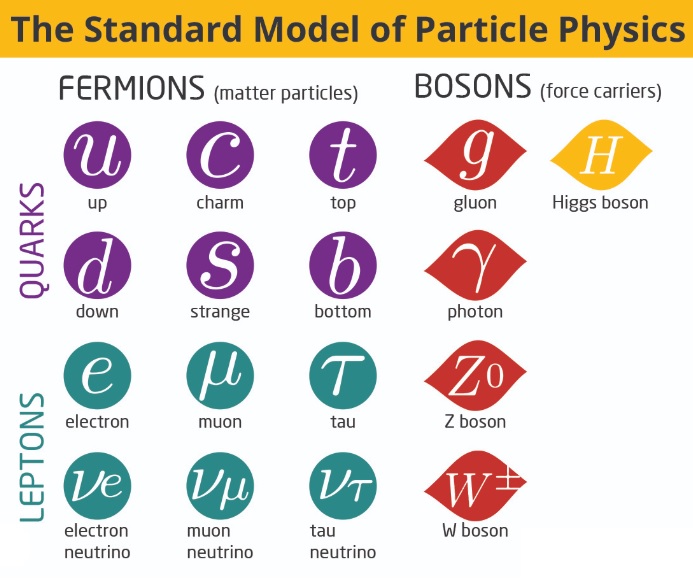
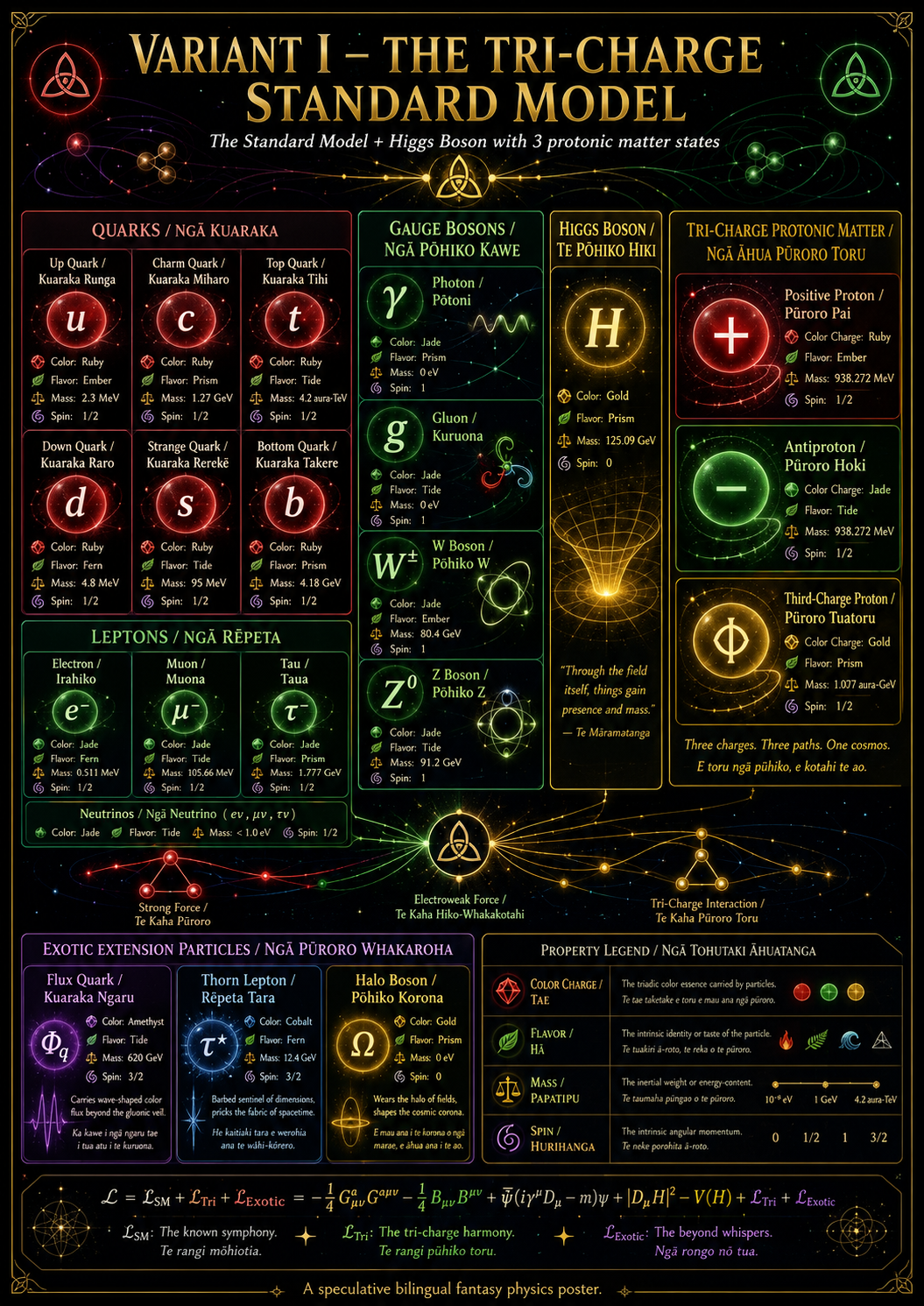
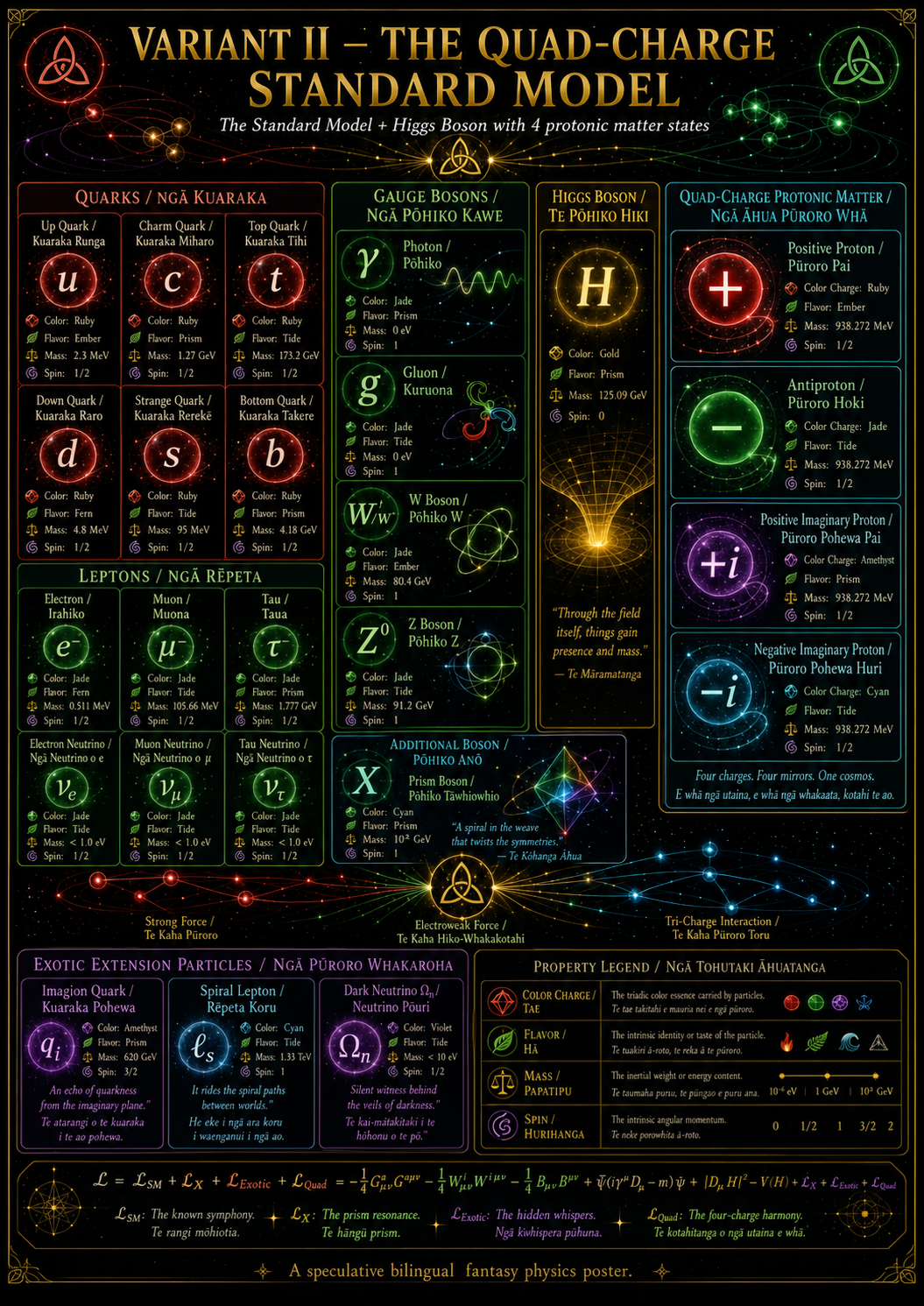
I have had a question, a question about “mere physics” and the standard model for a while.
Suppose, that I were to do something…
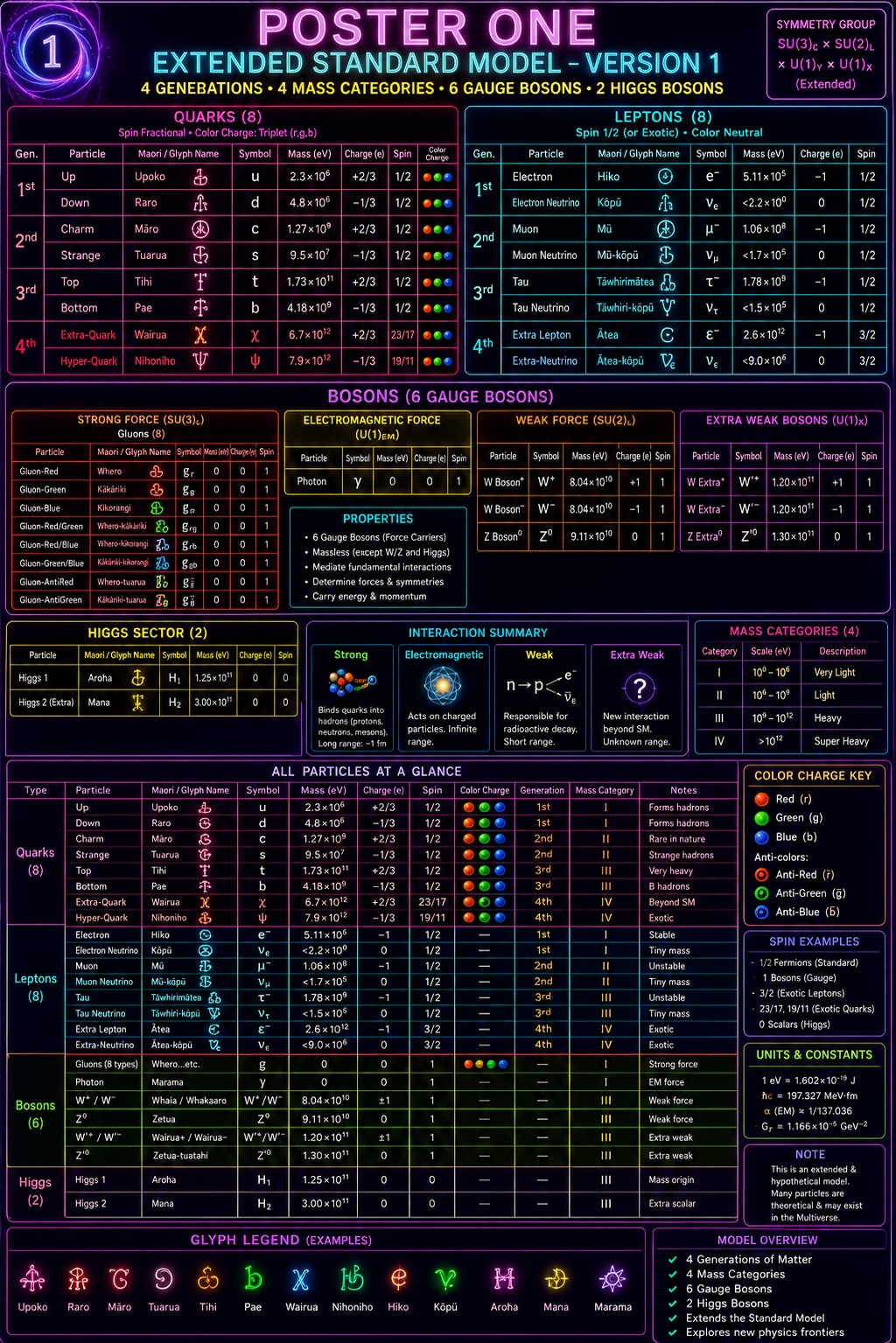
Suppose that if I were to take the masses, charges, color-charges, flavors, spins, and other miscellaneous properties of all the particles in the standard model of particle physics, and suppose I were to make them into the rows and columns of a matrix, and express each of their properties (ESPECIALLY their masses), as rations, in the matrix’s cells, then would I get sub-sets of the set Q (the rational/rations), or sub-sets of set R (the irrational-reals).
Quantum physicists tell me that the nature of time, space, matter, energy and other physical properties and attributed of these particles is quantized, so it would make sense that doing this would generate sub-sets of the set Q, -then wouldn’t it?
If the nature of time, space, energy and matter is continuous, then this procedure would generate reals from the set R!
No one, nobody, and no physicist has ever been able to give me a straight answer to this question, or a theory of all knot weakening (see above).
Indeed, it used to really, REALLY trouble me that the periodic table and the standard model was not an ABSOLUTLEY perfect square, rectangle, obolid, shape, and was irregular, and this is ESPECIALLY true for the periodic table of the elements.
Why are these mathematical object not well behaved like this?
No one has ever been able to give me a straight answer to this question, either!
K. 360 Degrees Panoramas:
As I mention elsewhere in SCAMP, when ever I see junk, scrap metal, bent tin/tortured tin, rubbish, empty beer kegs, stones, railway sleepers, man hole comers, empty oxygen tanks, empty liquid petroleum gas tanks, etc… I think to myself either “EXPERIMENTAL PHYSICALLY MODELED MUSICAL INSTRUMENT” or “NOVEL EXERCISE EQUIPMENT”, but that is another story…
Recently, however, I have been thinking about FULL, TRUE, 360 DEGREE SPEHEREICLA PANORMAMAS…
Bimostitch (Software) for Panoramas, give links,
I need an algorithm written by an artificial intelligence program in Python which enabled the user to input between 6 and 26 many taken images of an object like a head, or a pumpkin, or a tennis, ball, or, (I don’t know, a vase or something like that), from between 6 and 26 taken photograph *.jpg or *.png files.
The user should be able to select all or some of the photos taken from a spherical position around the object, images taken in the position of a cubes faces, edges or vertices (26 in total, which can be selected or deselected for to be used…), -and, as I say, the user should be able to select either faces, vertices or edges form a check box.
I need an algorithm written which prompts the user or to enter these between 6 and 26 many images, and then the algorithm that I need GPT to write, does a very similar thing to the Blender inverse panorama creating software, in that it mathematically undistorts the 6—>26 many images, and maps these photo’s from the 2-dimensional surface of a 3-dimensionsal sphere/spherical object to a 2-dimensional surface, and creates a 2-dimensional flat image from these between 6 and 26 enabled or disabled, -edge, vertex, and face images.
Image cna be taken of pretty much anything taht emits ROYGBIV 9or even IR ioor UV light), or electromagnetic light of some description!.
The panorama works in pretty much that same way an an inverse panorama (see L. below), but it is not looking inward to the center of a 3D sphere from the 2D surface of the 3D sphere, but is looking outwards from the center of the 3D sphere to the 3D sphere’s 2D surface.
I need an algorithm written which can do this, panorama, or something similar to:
Bimostitch.
I can even use this computer’s algorithm (written by GPT), mix and match images form different image sources for to make a weird, hybrid image, of cats, dogs, apples, orange, bananas, strawberries, coffee cups with hot delicious strong black coffee, faces, heads, basketballs etc…
Obviously the more photos we take, the less distorted that the unraveled/undistorted, bent, flattened image will be, and the better the image quality, but more complicated the process of flattening and undistorting the sphere will be…
And, so, I thin 26 images (faces, vertices and edges should be plenty enough).
It was actually, Mr. Carl Friedrich Gauss, who famously proved that you cannot “undistort” a sphere’s surface onto a flat plane without some form of stretching or tearing.
Gauss’s discovery, known as the Theorema Egregium (Latin for “Remarkable Theorem”), established that the Gaussian curvature of a surface is an “intrinsic” property. This means that no matter how you bend or fold a surface, as long as you don’t stretch or tear it, its curvature stays exactly the same.
Gauss’s Theorem: i
Is about…
Curvature Mismatch: A sphere has a constant positive curvature (K=1/R^2), while a flat plane has a curvature of zero.
This gives a situation of an Impossible Mapping:
Because their curvatures are different, it is mathematically impossible to create a 2D map of a 3D sphere that is perfectly accurate in both area and angles.
Bending vs. Stretching,,,:
You can roll a flat sheet of paper into a cylinder because both have a curvature of zero, but you cannot wrap that same paper around a ball without it wrinkling or tearing.
Riemann fits in, here, because…:
While Gauss laid the groundwork, whilst, -Bernhard Riemann took these ideas much further.
He developed Riemannian Geometry, which generalized Gauss’s work to higher dimensions and curved spaces that don’t need to be part of a larger “flat” world. His work was eventually used by Einstein to describe the curvature of the Universe in General Relativity.
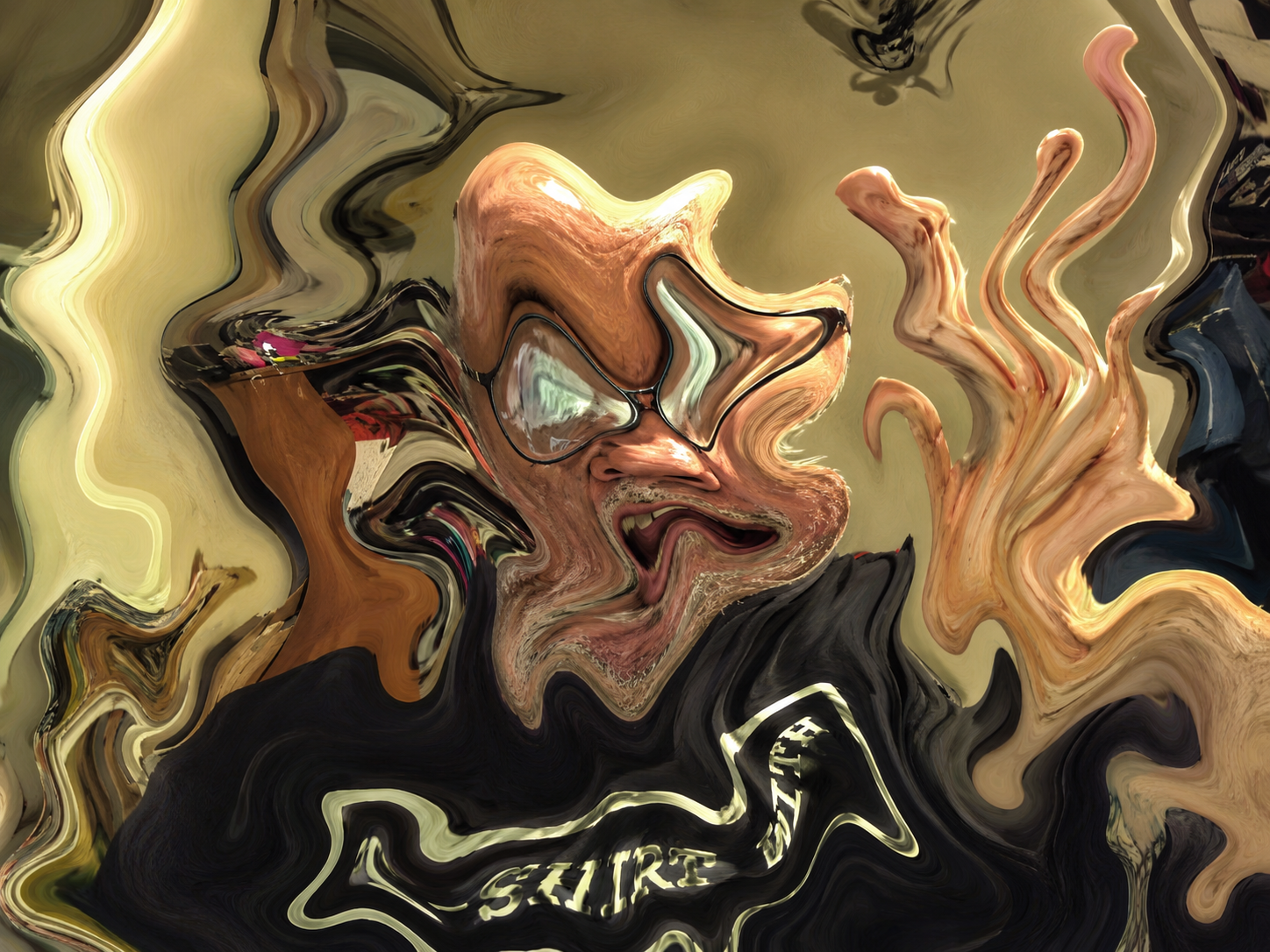
A similar concept, related to this arises from cylindrical anamorphosis, which use a reflective cylinder, which is called a cylindrical mirror, and the technique used to create the seemingly chaotic artwork is known as cylindrical anamorphosis.
There is a quick breakdown of how this mind-bending art form works (below in N.).
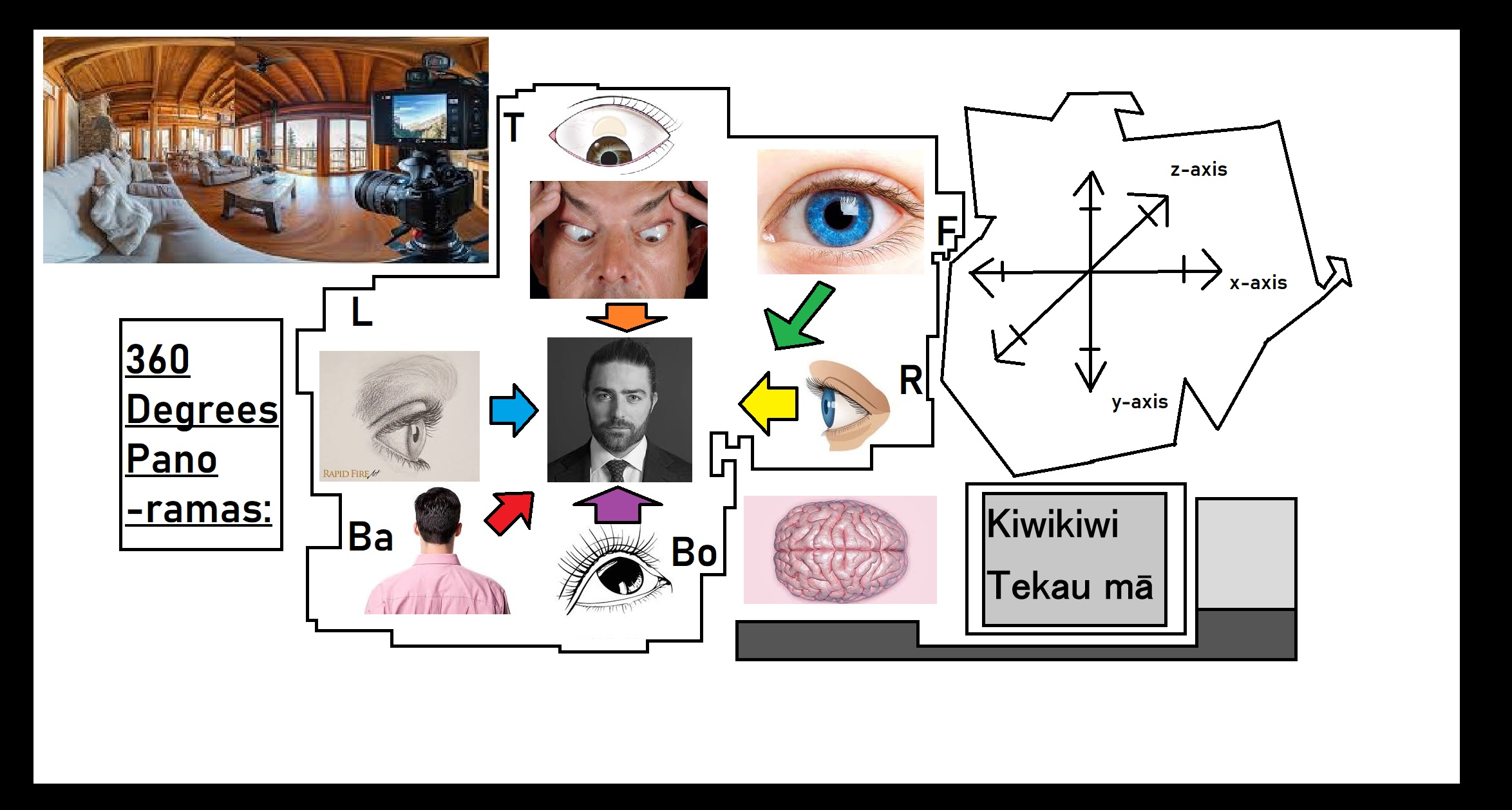
L. 360 Degrees Inverse Panorama:
A similar concept arises with inverse panoramas as with regular panoramas (above in K.), yes, indeed, and panoramas, because here, when mapping these 3D spherical surface photos taken with a set of flat 2D images, when mapping these ot a flat surface without cutting, punching holes, or tearing will DEFINITELY give an image WITH DISTORTION.
This is true for BOTH the panorama and the inverse panorama.
Here we are NOT “merely” looking OUTWARD form the center of a 3-dimensiona sphere to it’s 2d-imensional surface, rather, we are looking INWARDS from the surface of a 3-dimensional sphere’s 2-dimnsional surface to the 3-dimensional surface’s epicenter.
I wish to extrapolate panoramas (given in K.) and inverse-panoramas, given here in L. to higher dimensional, using four, five, six, seven…, etc… dimensional cameras and n-sphere in R^n space (n-dimensional space).
There is software called Blender for undistorting and making inverse panoramas from three dimensional-sketches/built/modeled object…
Please do consult it!
M. Artwork- from artists that I really, REALLY like:
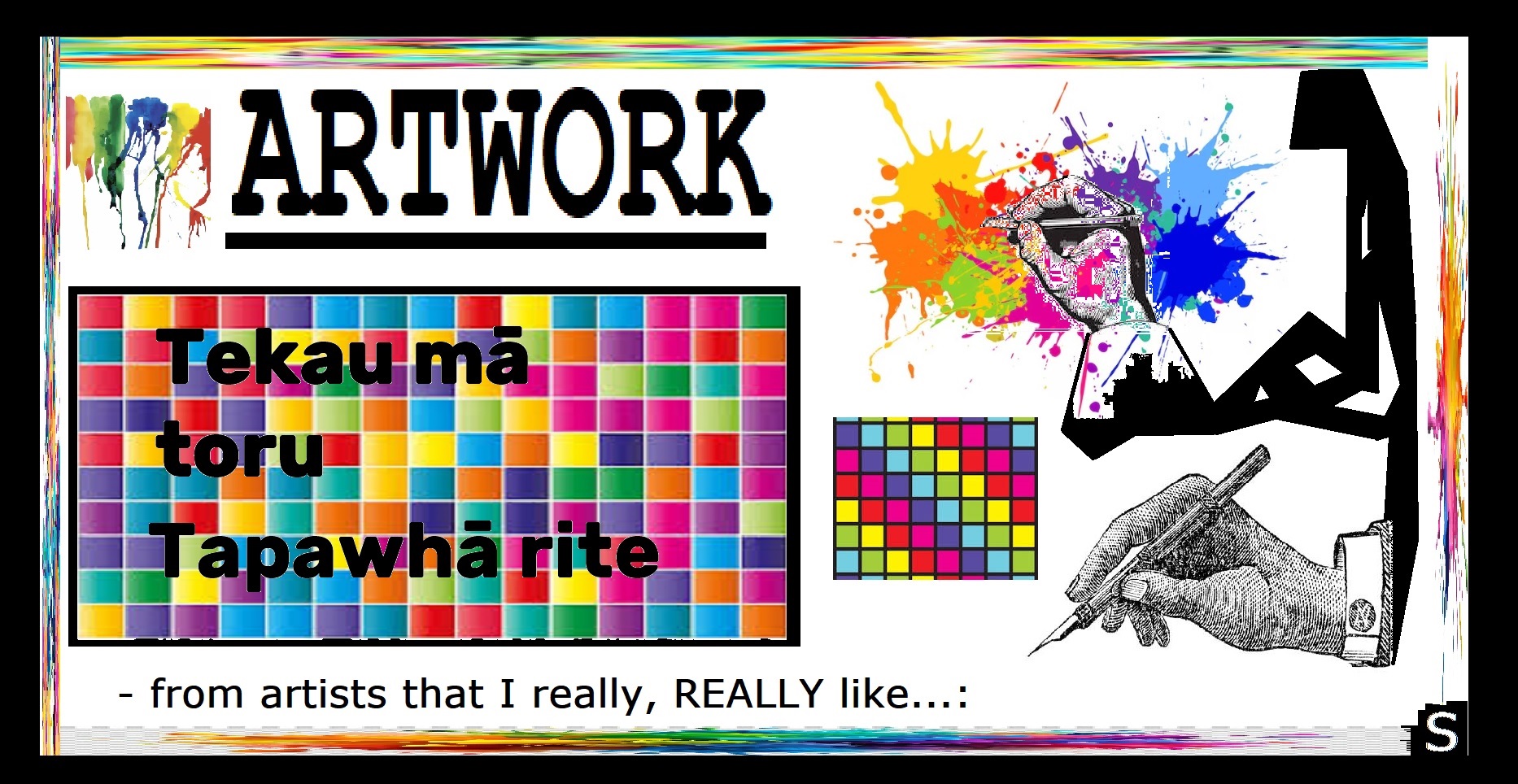

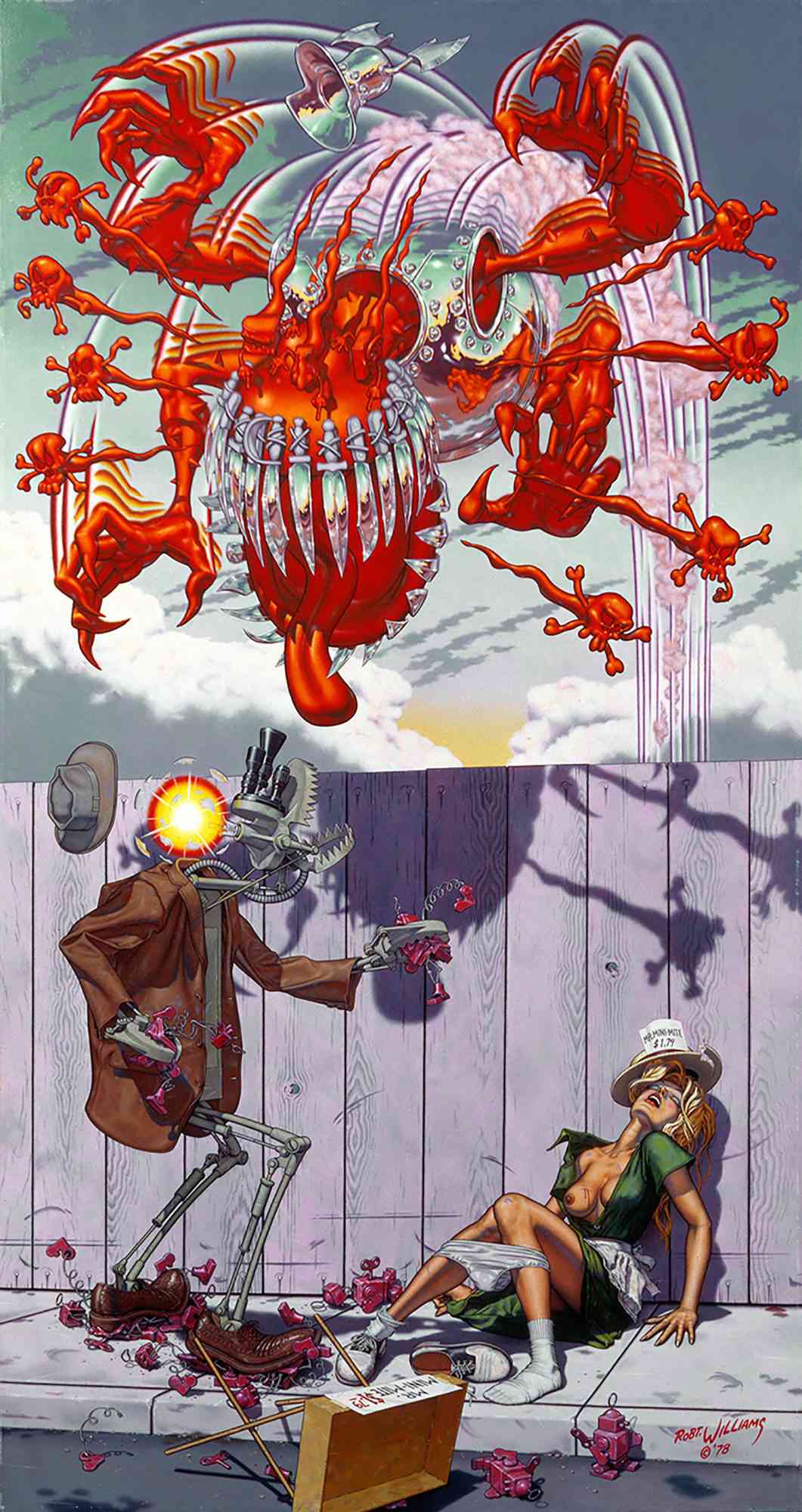
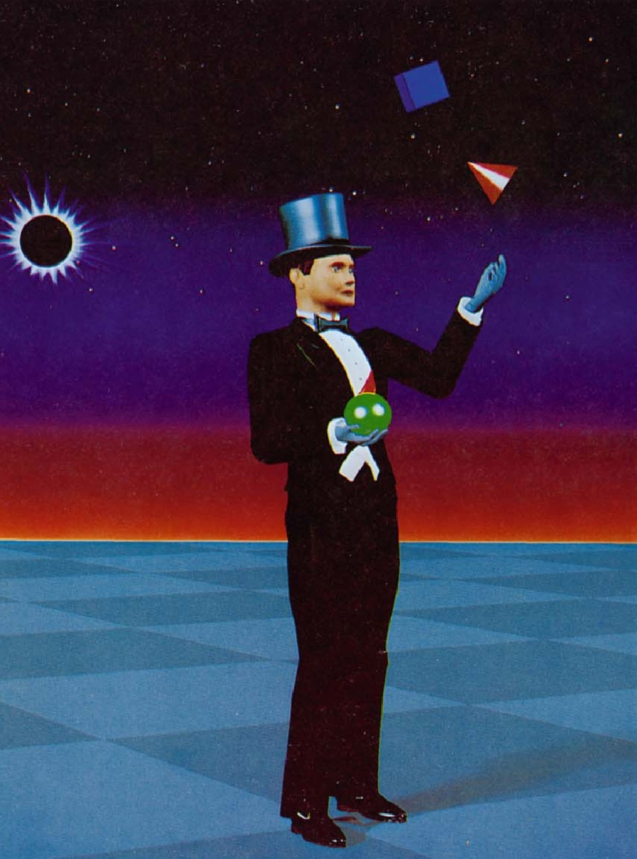
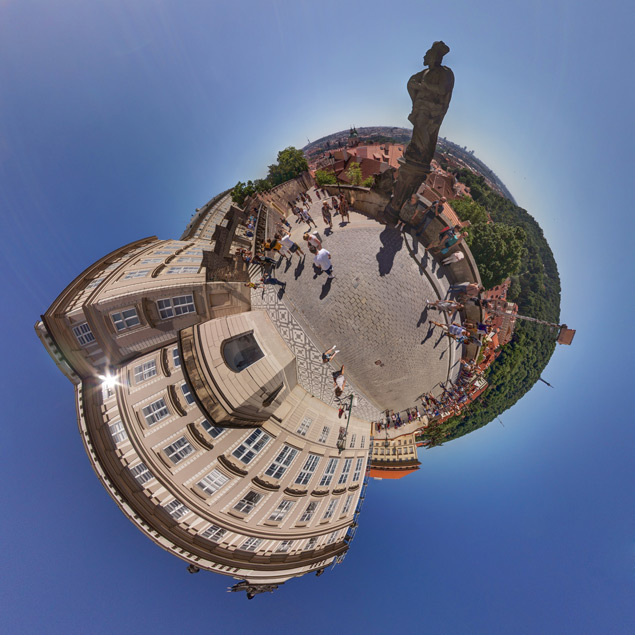
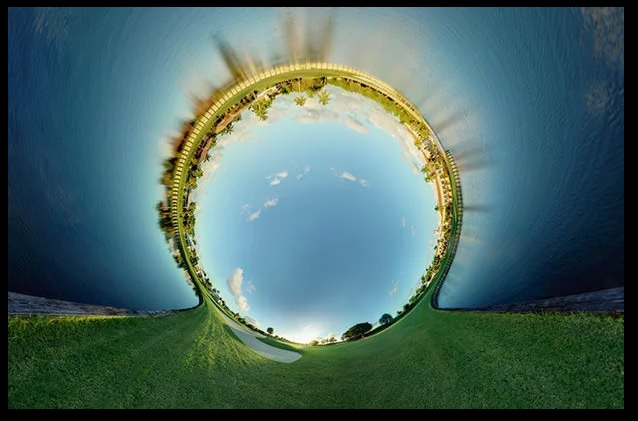
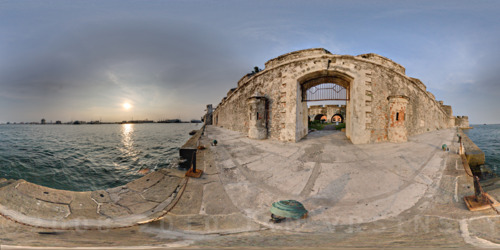
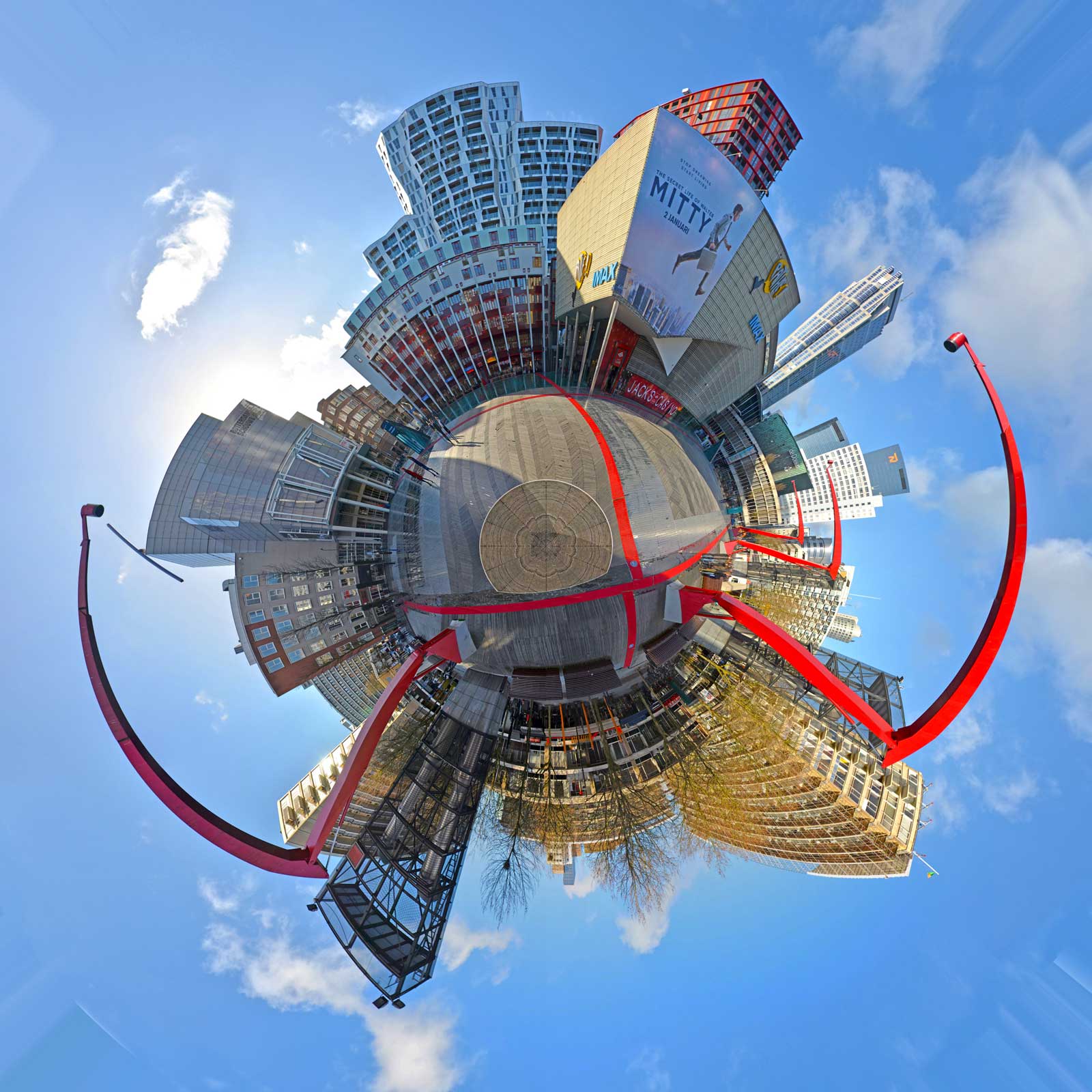
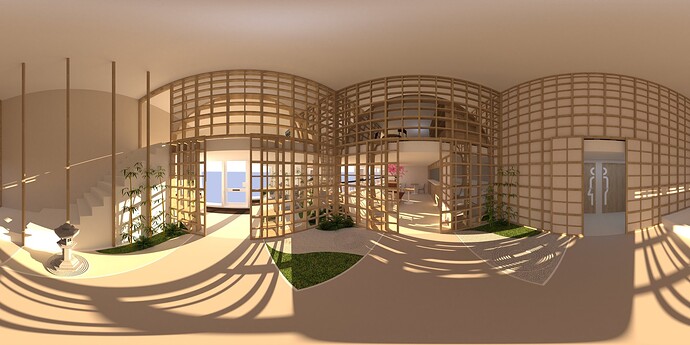
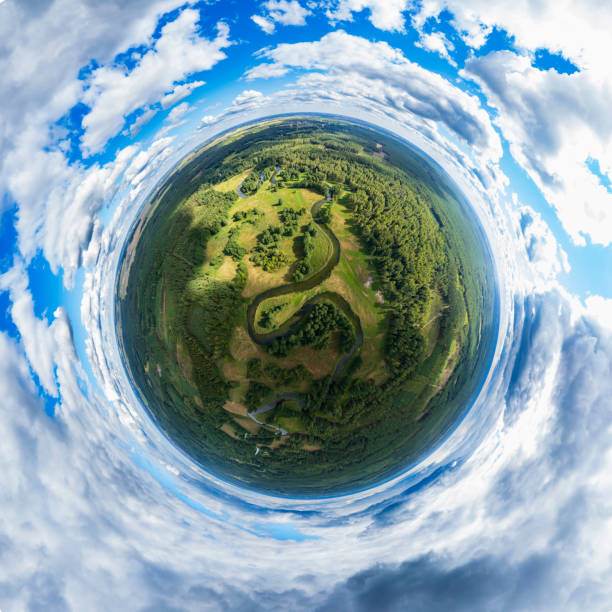
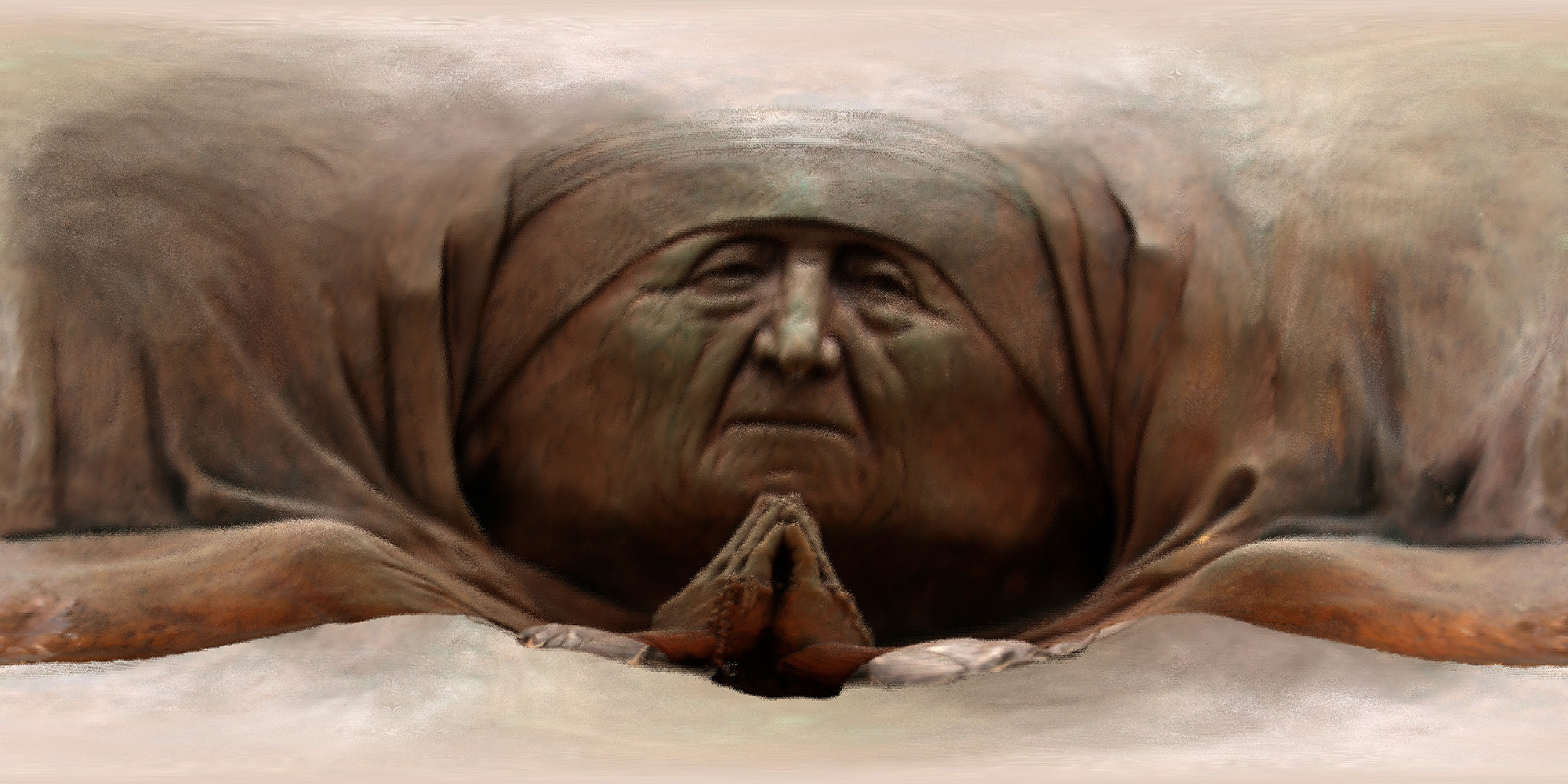
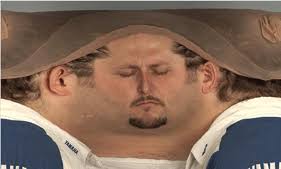
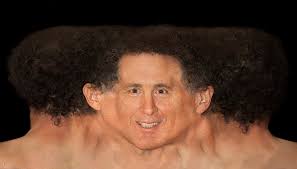

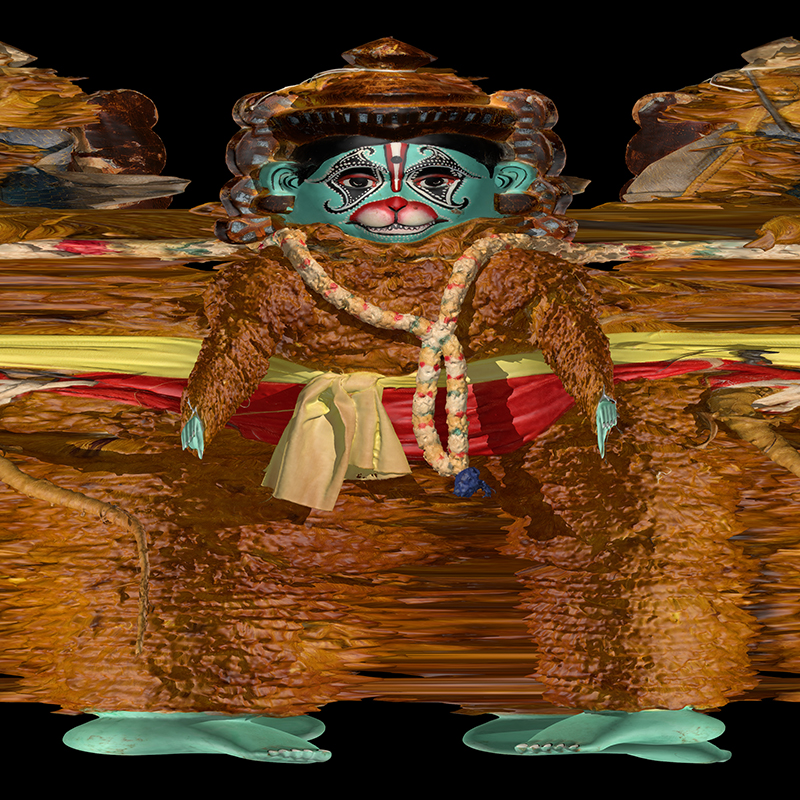
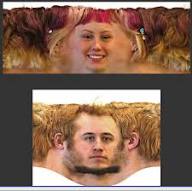
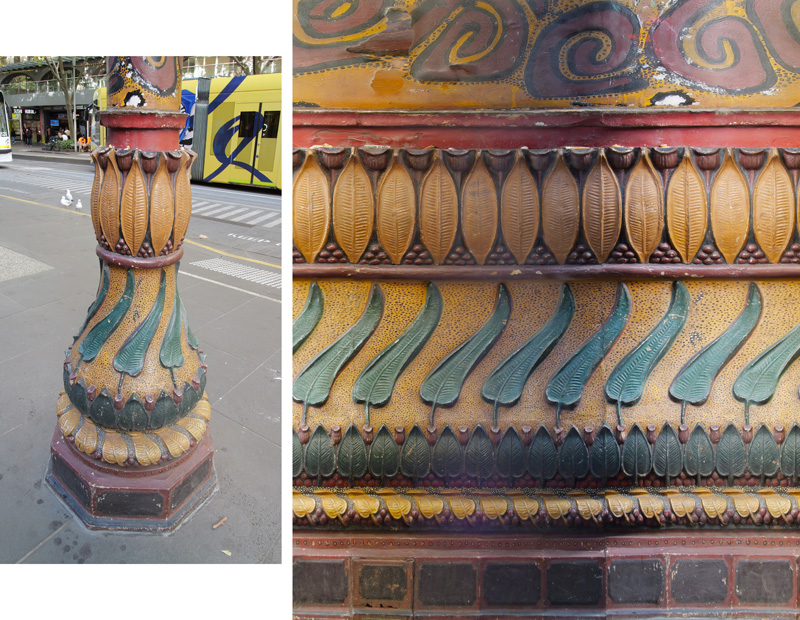
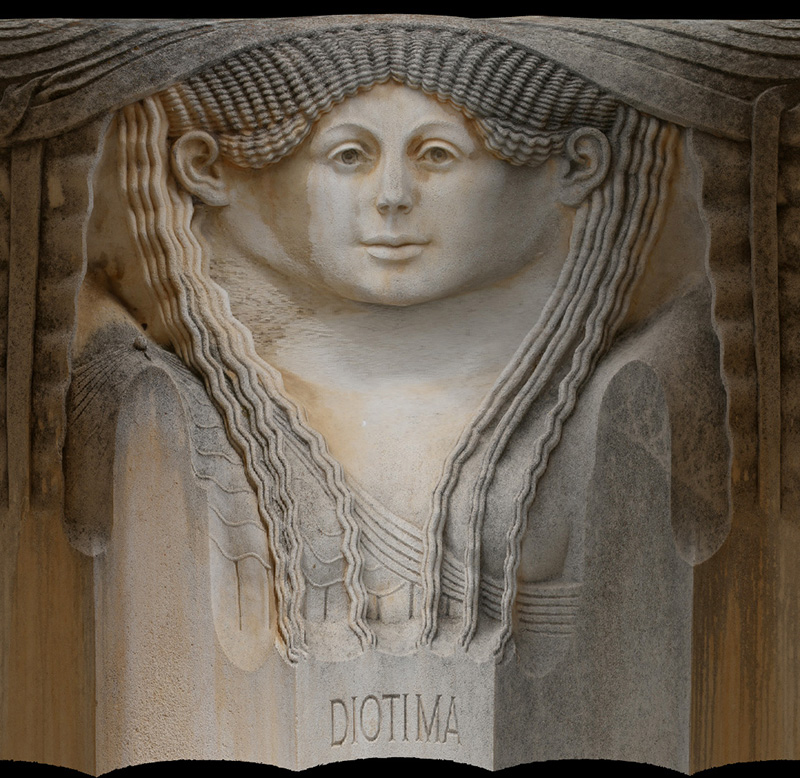
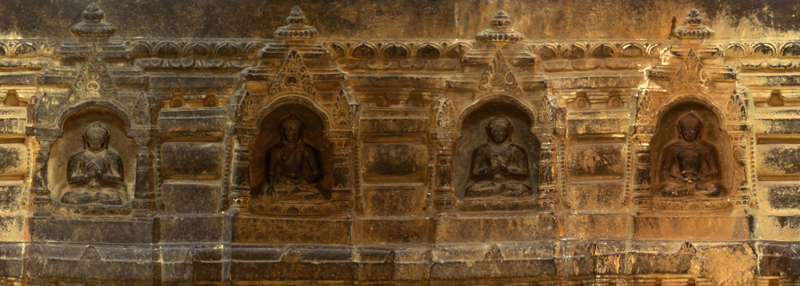
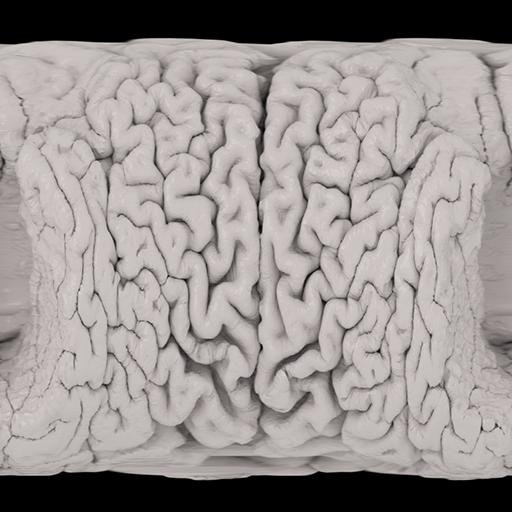
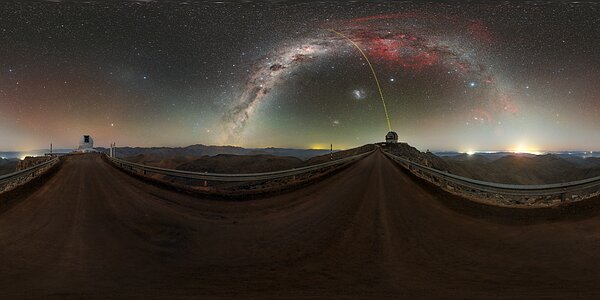
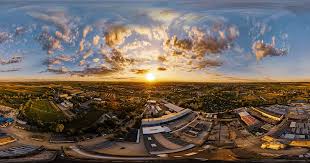
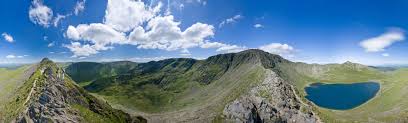
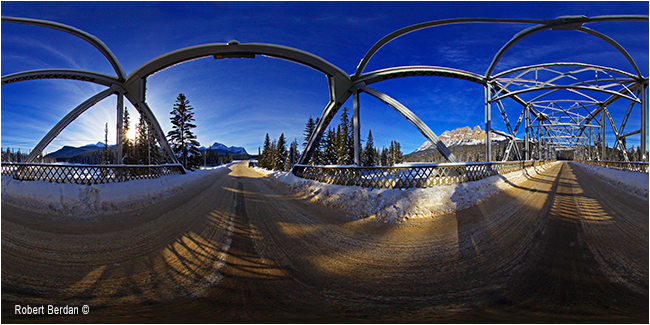
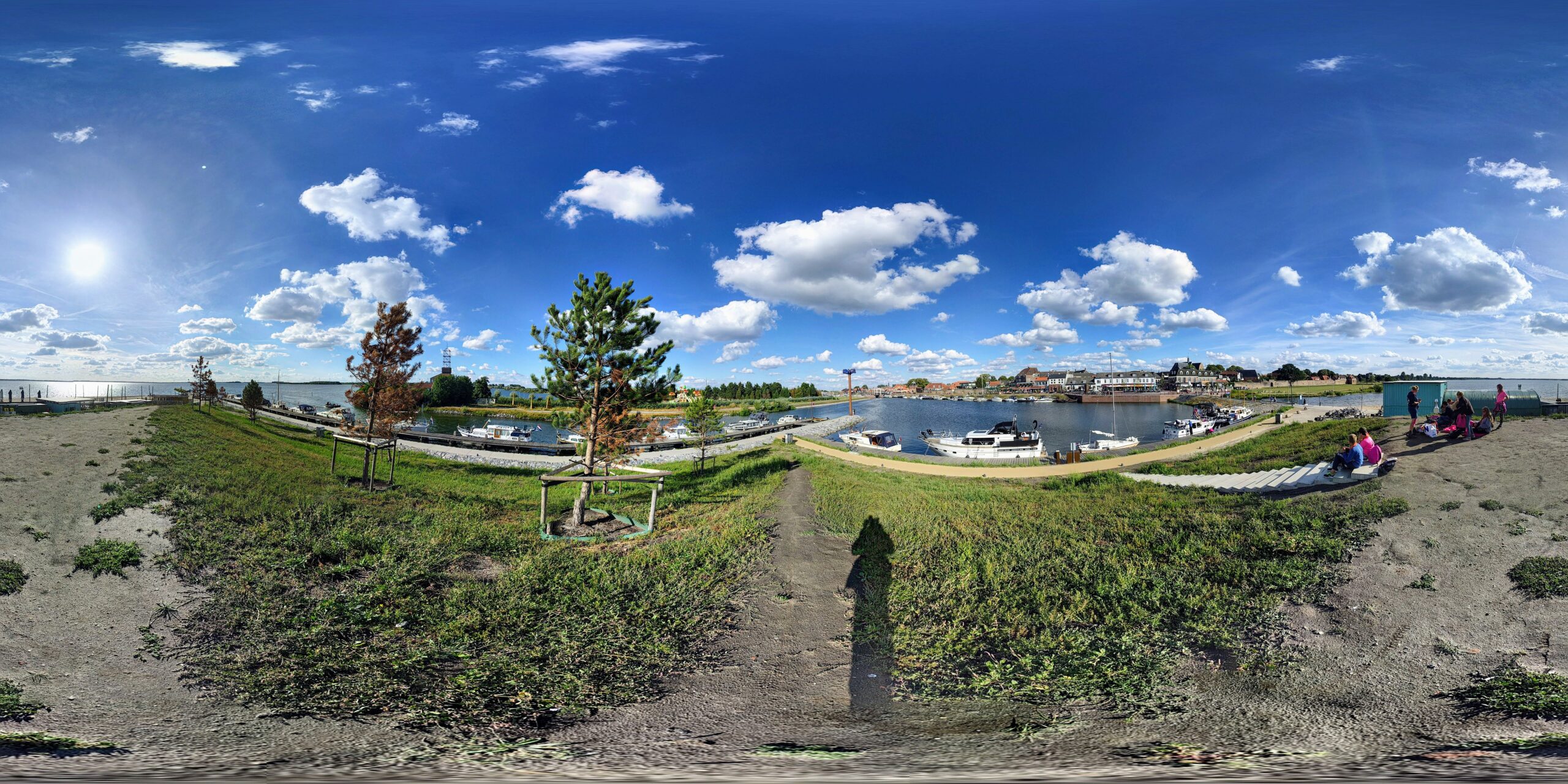
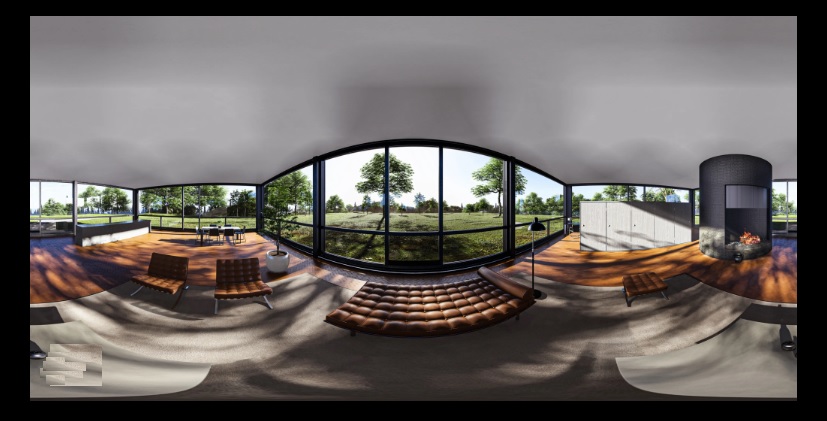

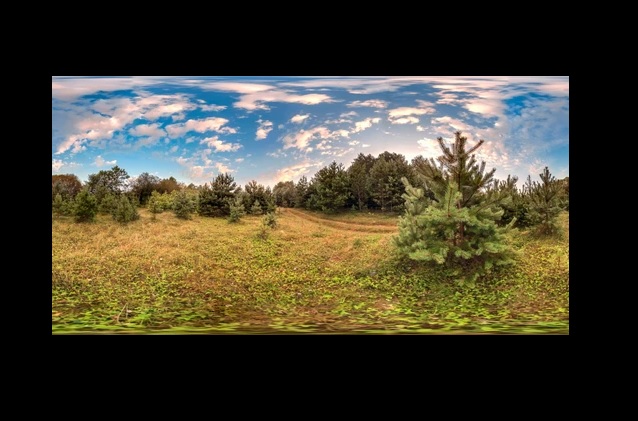
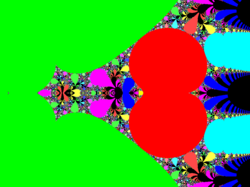
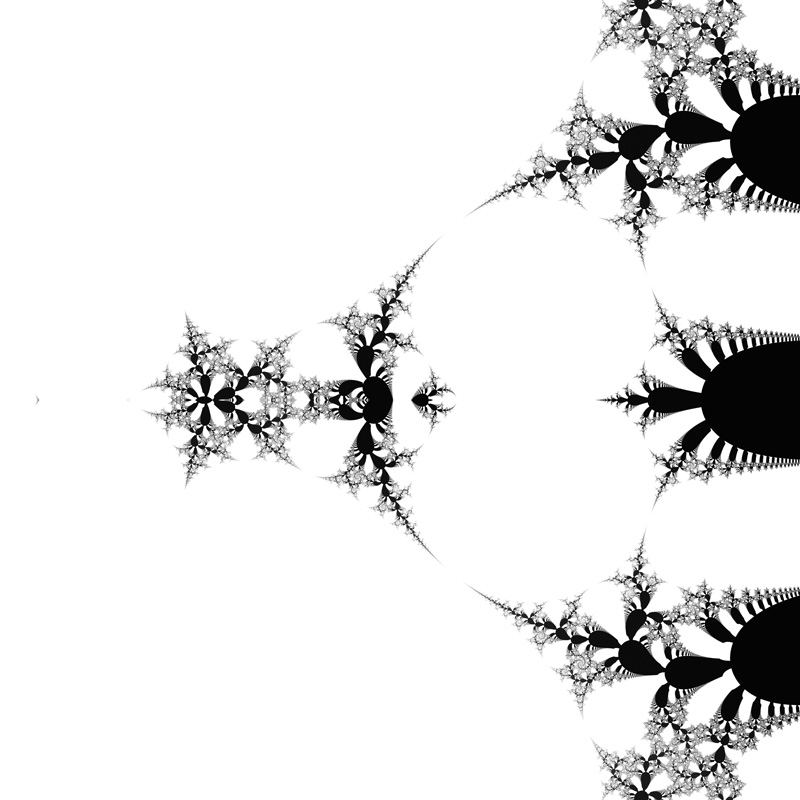
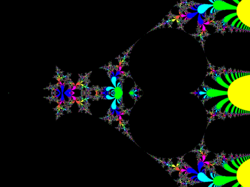
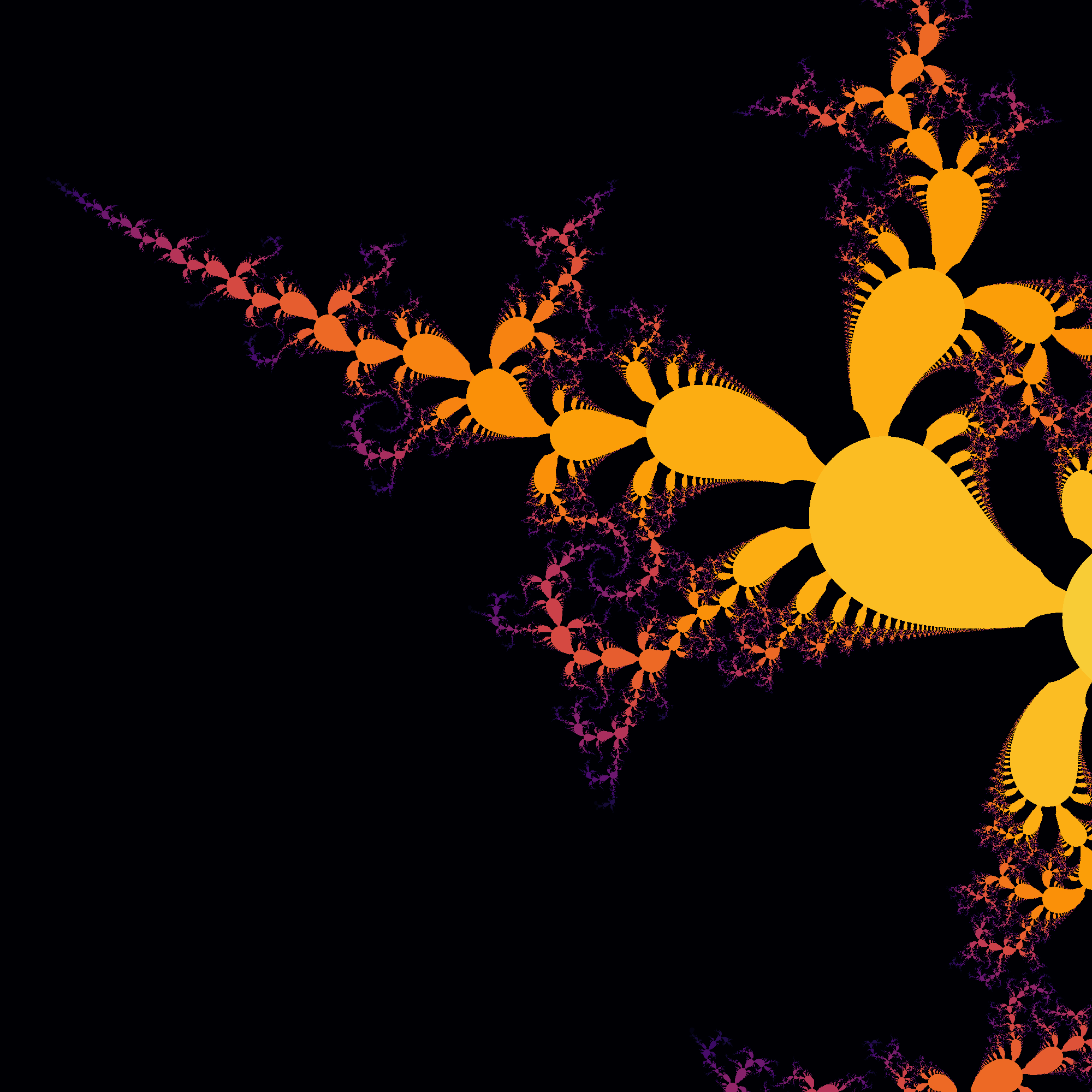
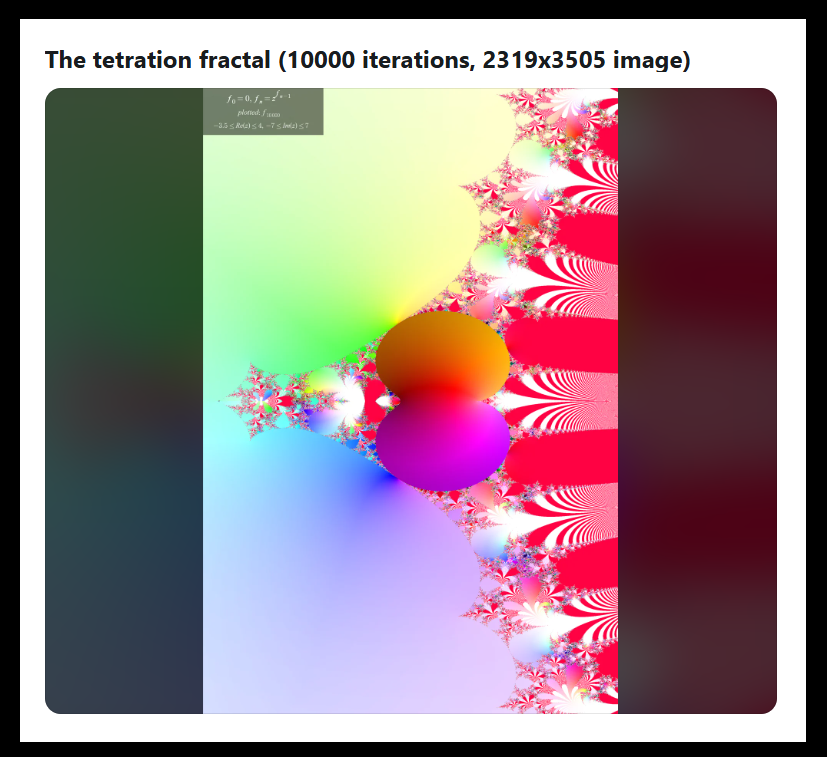
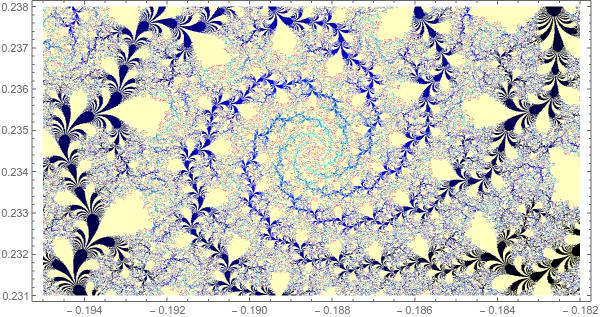
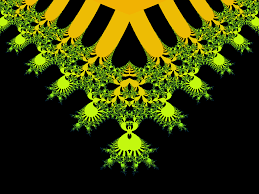
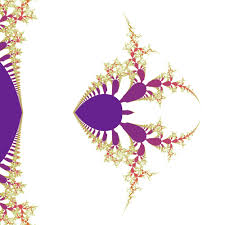
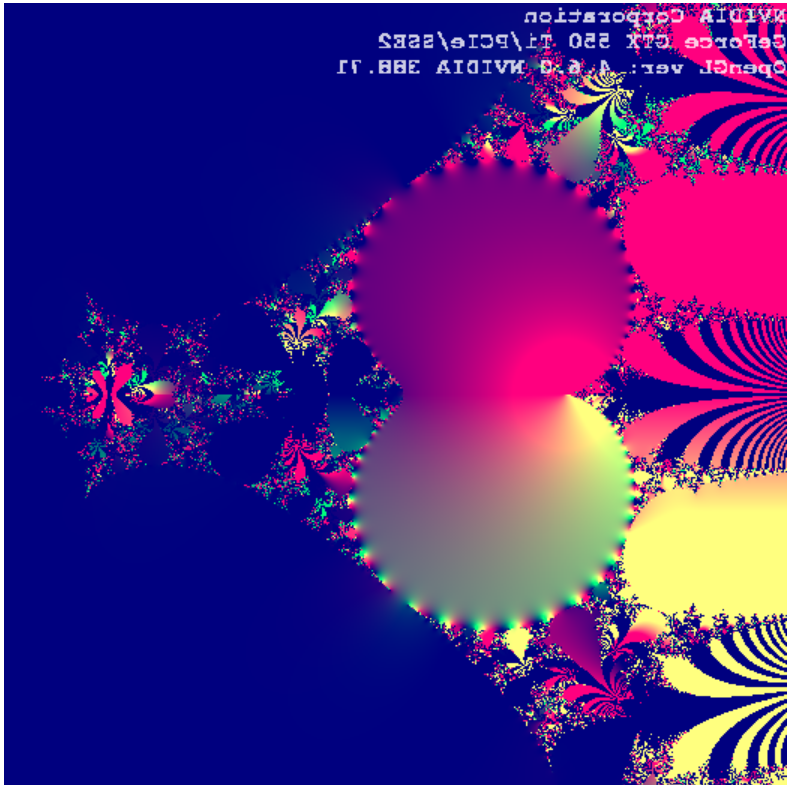
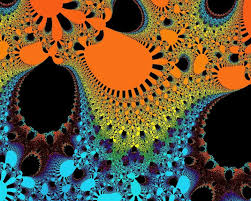
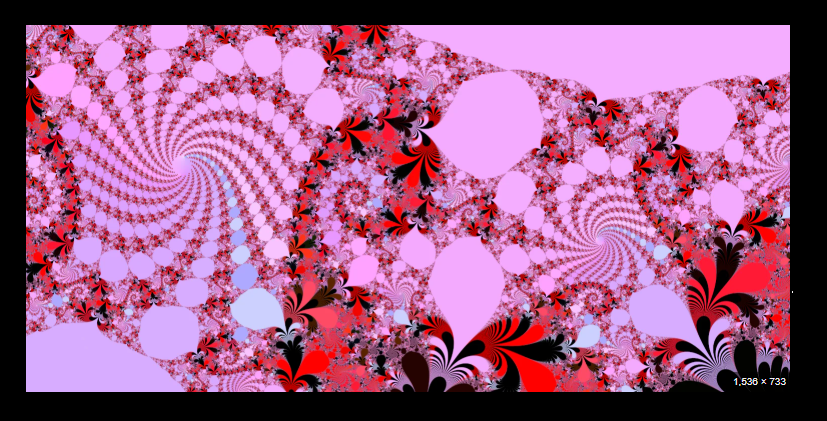
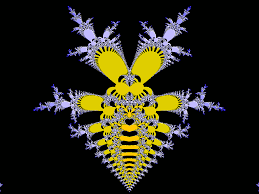
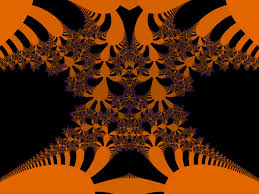
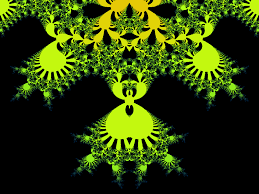
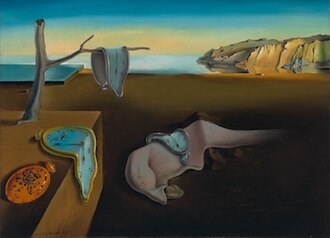
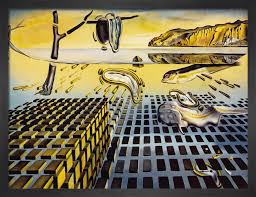

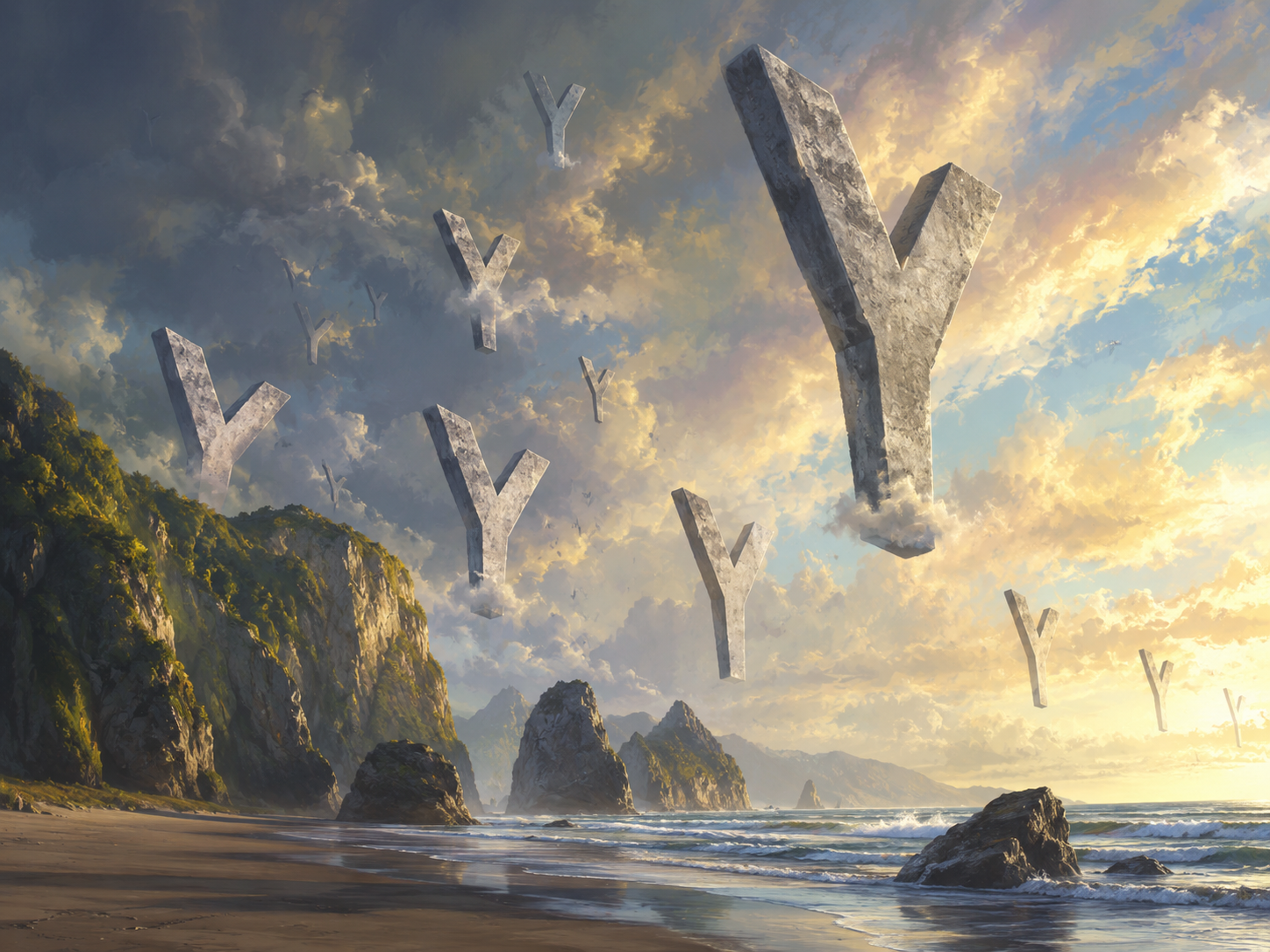

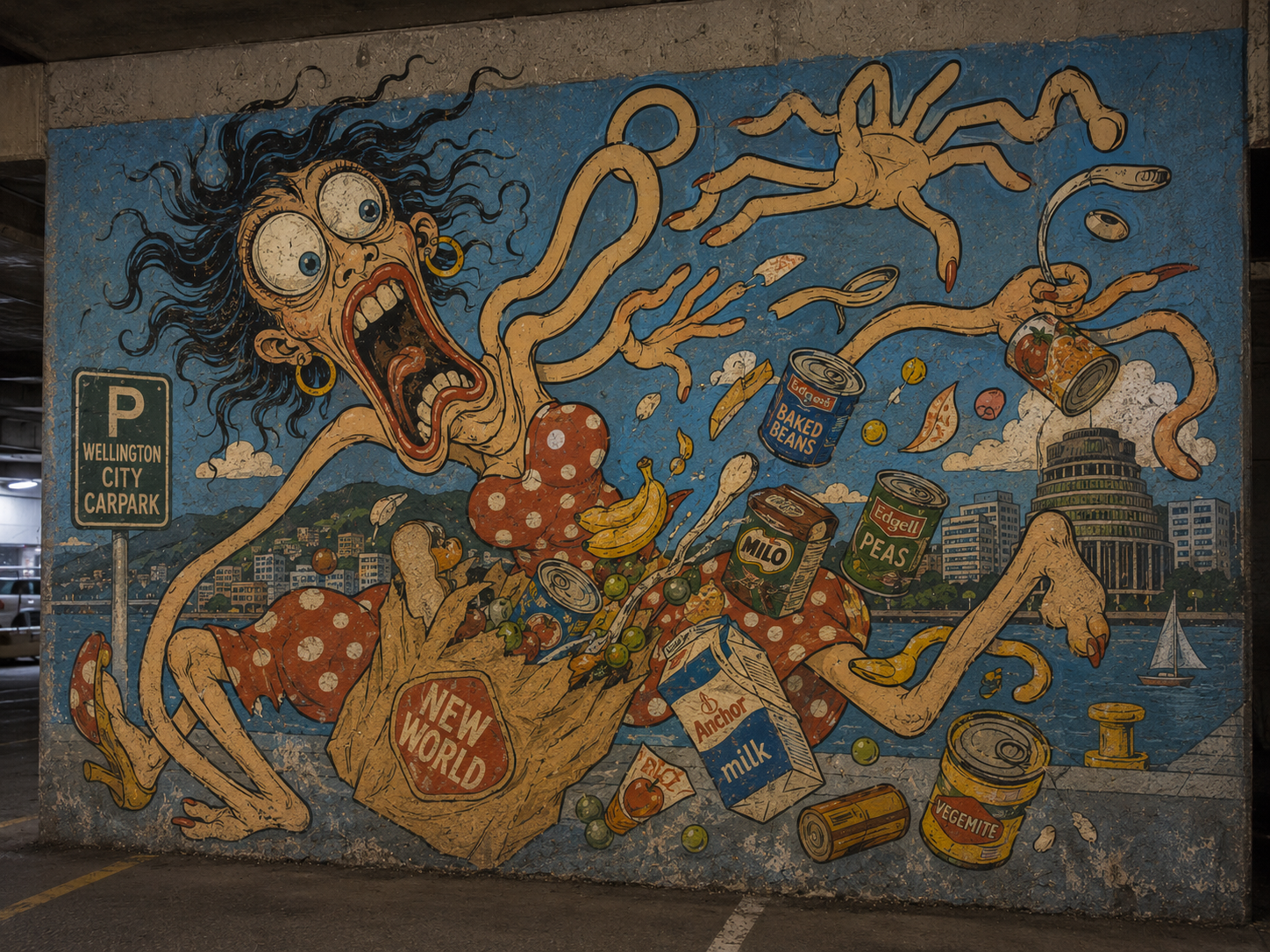
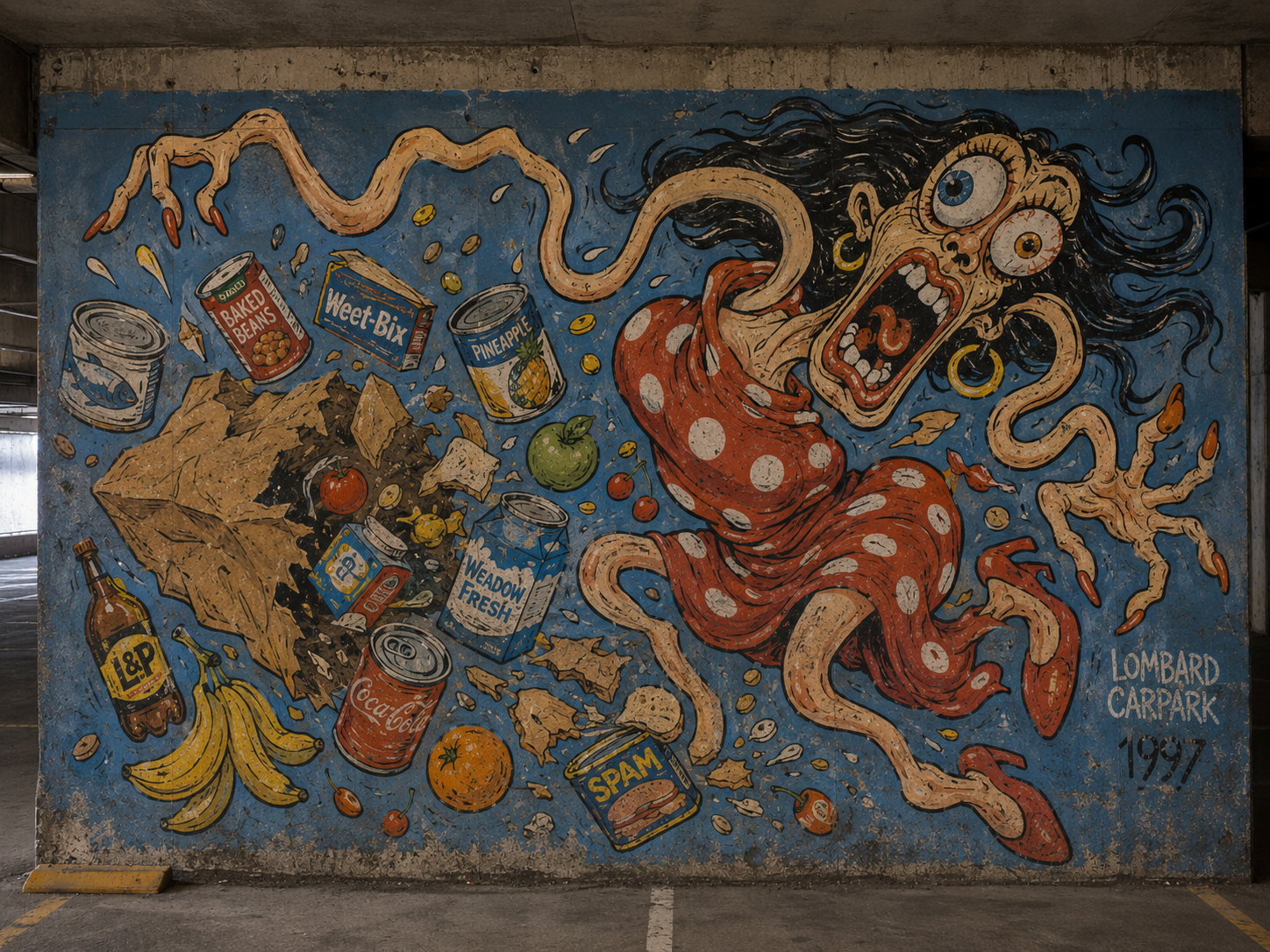
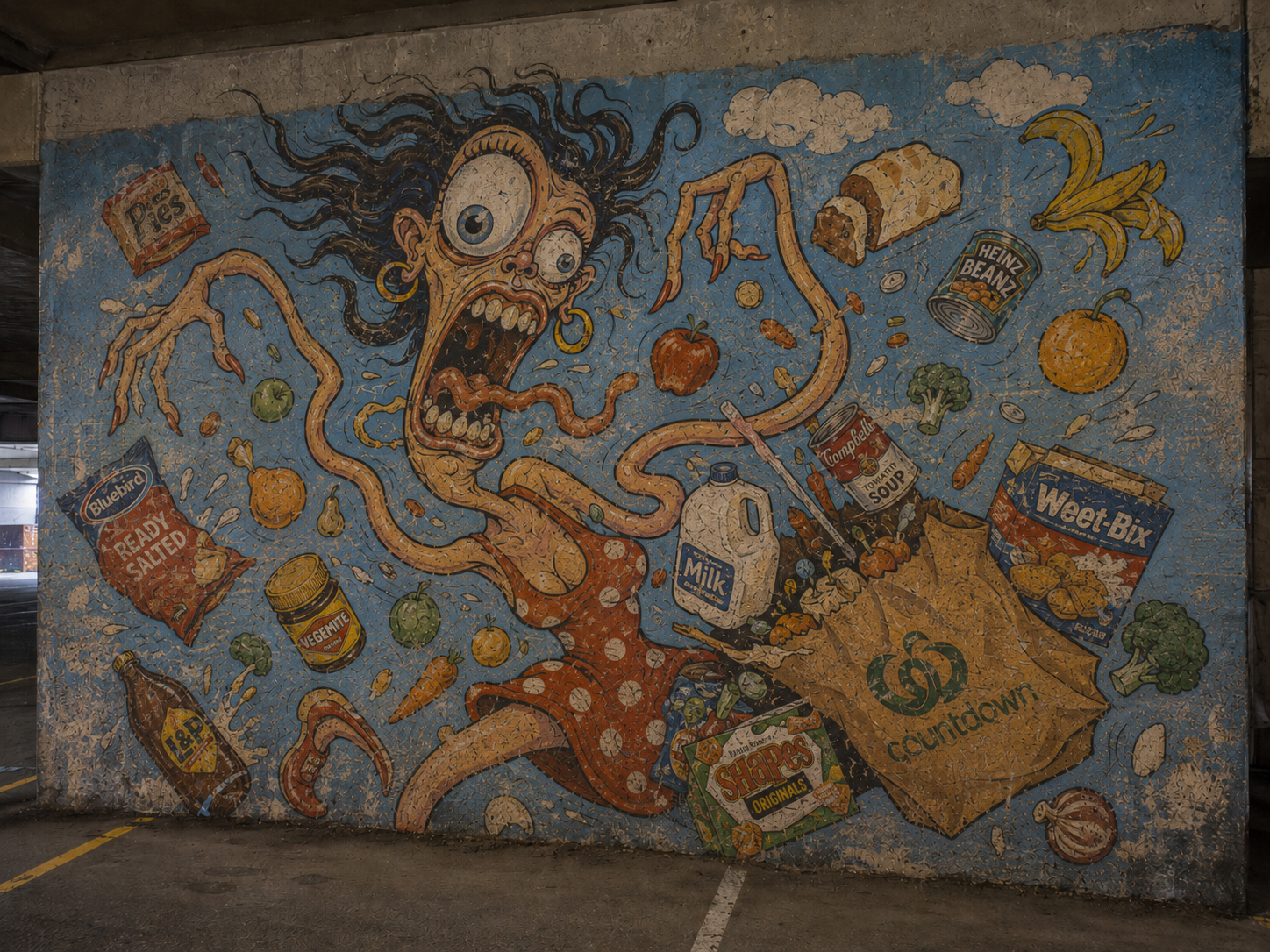
N. Anamorphisms (also known as “Anamorphosis”):
or//
The Illusion (Anamorphosis):
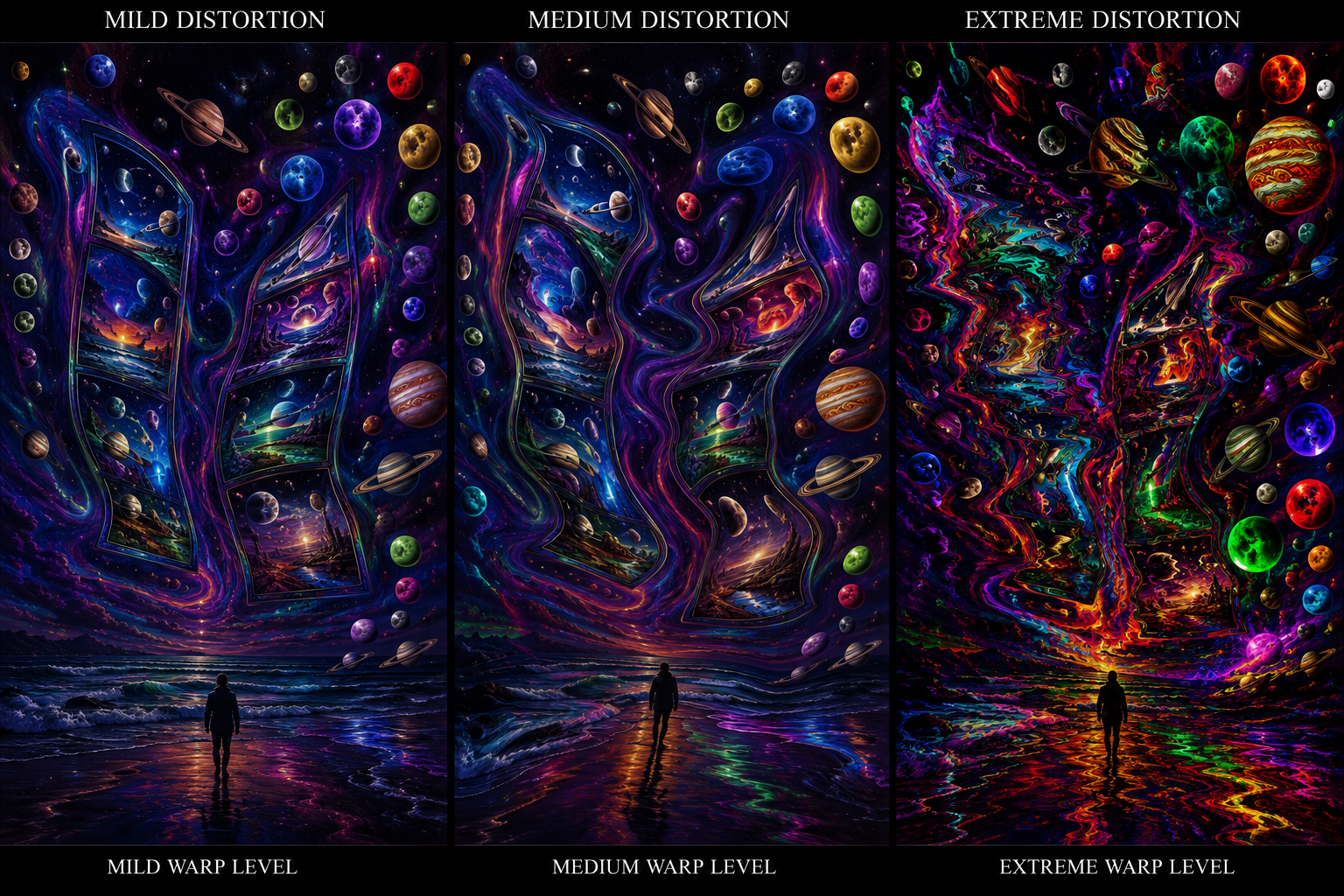
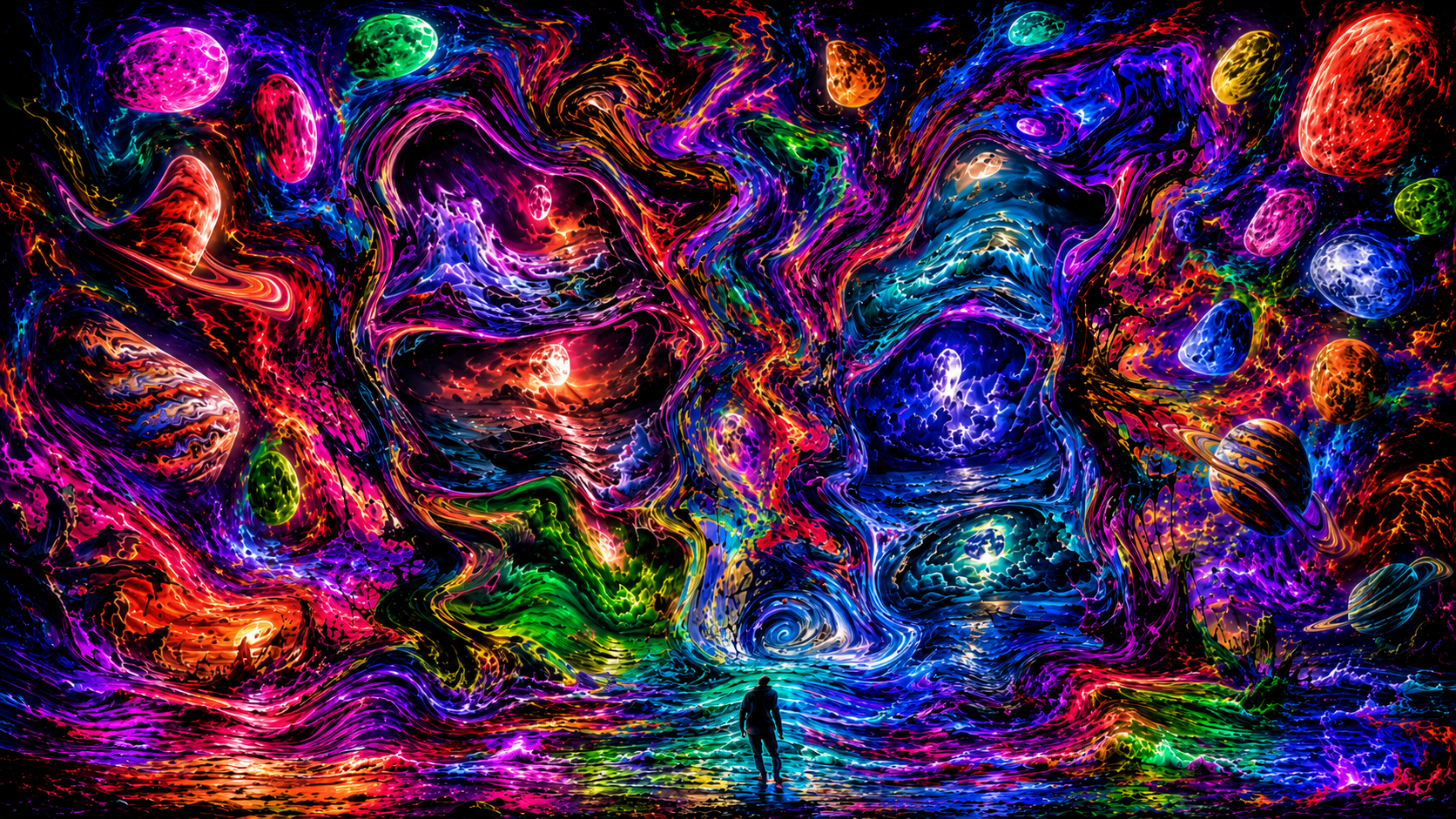
The artwork looks like an unrecognizable, distorted smear or a chaotic swirl of shapes until the curved mirror is placed on the paper.
The Reflection:
When you place the polished metal cylinder onto the center of the drawing, the curved surface corrects and “unbends” the warped lines, revealing a perfectly proportioned, hidden image in the reflection.
The Physics:
The cylinder reshapes the incoming light rays, allowing you to view a 360-degree flat design as a normal 2D image from a single point of view.
You can explore more examples of how artists and mathematicians construct these pieces on the Instructables Cylindrical Mirror Art Guide.
Here I wish to work with all manner of shpaes, spheres, cylinders, cones, irregular polyhedra (also known as superblocks), and even 2-dimensional (and even higher dimensional) mathematical plots in 3-dimensional space (and above and beyond), with these plotted curves, surfaces, solids, and onward up into higher dimensional plots…
…with reflective surfaces.
And, so, it can be seen, that, yes, indeed, an “Anamorphosis” is an optical illusion in which an image appears completely distorted or unreadable from a typical vantage point
. The hidden image is only revealed when viewed from a very specific angle (perspective anamorphosis) or when using a specialized tool like a curved mirror (catoptric or mirror anamorphosis).
How It Works…
Perspective (Oblique):
The image is stretched across a flat surface.
When you view it from a extreme side angle, the perspective flattens out, making the image appear completely normal and three-dimensional
.Mirror (Catoptric):
The image looks like a chaotic, abstract pool of colors.
When you place a reflective cylinder, cone, or pyramid in the center, the distorted image wraps perfectly around the mirror.
Famous Historical Examples of Anamorphosisms are…:
Hans Holbein’s The Ambassadors (1533):
This iconic painting by Hans Holbein the Younger features an abstract, elongated smear across the bottom foreground.
When viewed from the far right side of the painting, it snaps into sharp focus as a human skull.
Leonardo da Vinci:
The technique dates back to the 15th and 16th centuries.
Some of the earliest known examples—including a drawing of a child’s face and a disembodied eye—can be found hidden in da Vinci’s notebooks.
There are also…
Modern Applications such as Street Art & Chalk Drawings:
3D street artists use perspective anamorphosis.
When viewed from one specific spot on the pavement, a painted crack in the sidewalk appears to be a massive, gaping abyss.
A practical applicant of the anamorphic is in…
Sports Broadcasting…:
Television networks frequently use it during live games.
The giant corporate logos painted onto the grass or court look unnaturally stretched out to the spectators in the arena, but appear perfectly upright and normal to the television cameras.
You can even create your own anamorphic images using downloadable software like:
“Anamorph Me!”
…or by generating grids in design programs like Adobe Illustrator.
I really want to alter the mathematics of Anamorph Me, and to experiment with other surfaces apart from the so-called mundane and ordinary cylinder, and to experiment in extrapolating up into ever-higher dimensions.
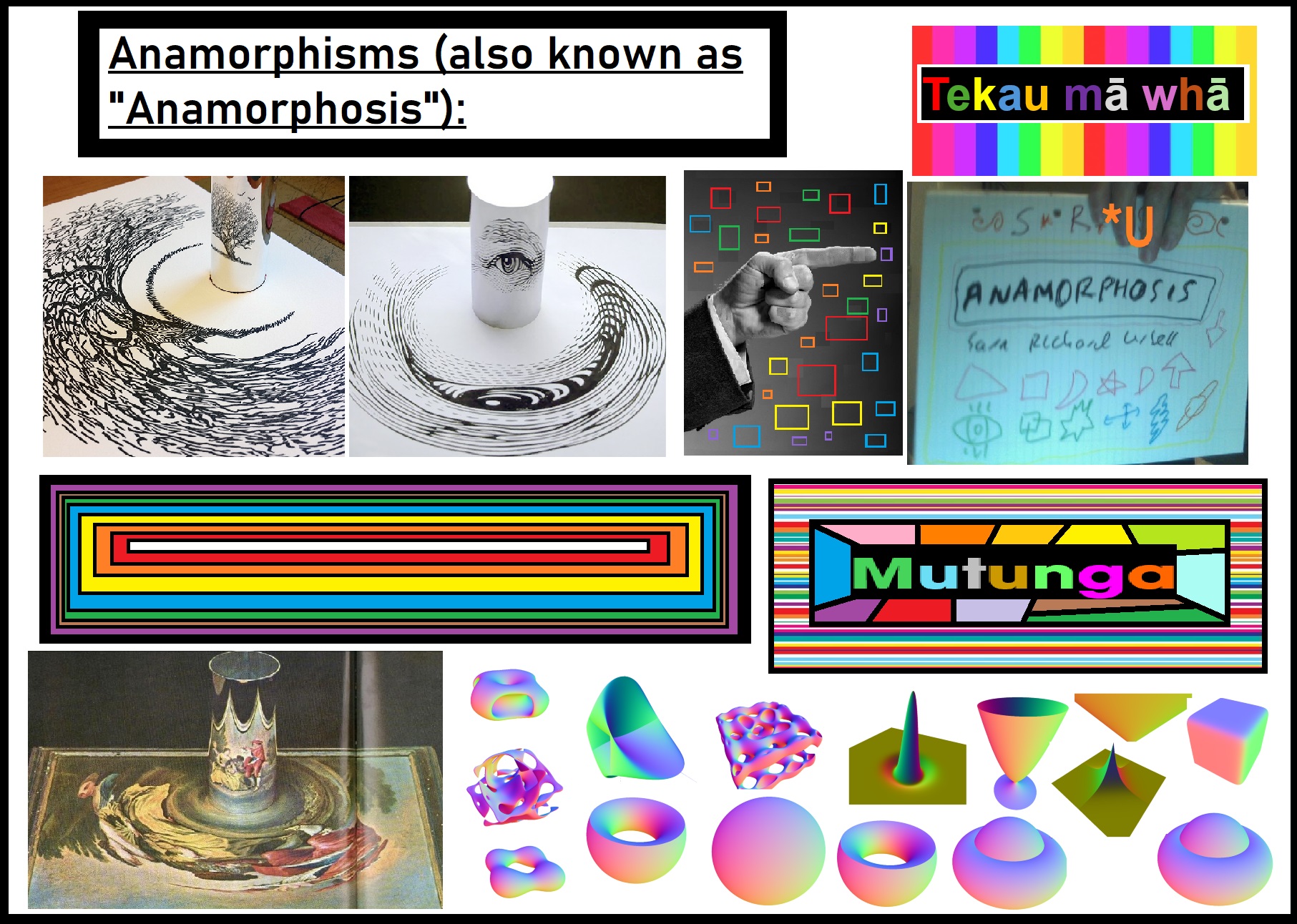
O. The “Miscellaneous Section”:
Here, I give you some artwork that I did on a whim with my good friend GPT (also known as Generative Pre-trained Transformer).
The first thing that came into my head was mutant teapots, so, I instructed it to make me a series, and one a whim I created some art…
With…
THE FIRST THING THAT CAME INTO MY HEAD!!!!
Here…—>: