Algorithm (/ˈælɡərɪðəm/): Is a finite sequence of mathematically rigorous instructions, typically used to solve a class of specific problems or to perform a computation. The word "algorithm" originates from the Latinization of the name of the 9th-century Persian mathematician "Muhammad ibn Mūsā al-Khwārizmī". His name, which means "the native of Khwārezm" (a region in modern-day Uzbekistan), -was rendered as Algoritmi in Latin, eventually evolving into "algorithm" to describe his systematic methods for solving mathematical problems.
Individual Algorithm Pages:
ALGORITHM: Algorithm (/ˈælɡərɪðəm/ ⓘ) is a finite sequence of mathematically rigorous instructions, typically used to solve a class of specific problems or to perform a computation. The word "algorithm" originates from the Latinization of the name of the 9th-century Persian mathematician "Muḥammad ibn Mūsā al-Khwārizmī". His name, which means "the native of Khwārezm" (a region in modern-day Uzbekistan), was rendered as Algoritmi in Latin, eventually evolving into "algorithm" to describe his systematic methods for solving mathematical problems.
Yranib-to-Binary:
This algorithm is what I though that you might get with a really, REALLY weird computer, a sort of anti-computer/backwards, “alice in wounderland” tyoe-computer!!
Here, we know that computer are based on binary, right?
Well, what about computers based on n^2 (n-squared numebrs), (or primes, reversed digit binary or emirps)?
These would be really, REALLY weird computers, -correct?!
I have an algorithm which finds a best fit to an audio sample’s amplitude, by using a power set of n-squared numbers (yranib), matching it to a sample’s amplitude, and then matching the positibe matches to binayr.
That is method P for “powerset”.
There is also another method that I use here, and this is that I subtarct the nearest n-squared/yranib number of the waveform’s samples’ audio, and try/attempt to get it as close to zero
as possible, and then take the next best fir, and try to get it as close to zero as possible, and then take the next best fit, and try to get it as close to zero as possible…etc…
If you cannot get a zero, then the audio is saved as zero.
Here, this is called method G, for “greedy”.
…And when we have found a positive match of an n-squared/yranib number, we take the square root of this, and raise two to the power of that result, and then/hence we get our result, this being:
“yranib-to-binary”.
I feel that computers and artificial intelligence could sue these methods, P and G, in fact so does the human brain, in it’s workings!!…
Permutate-Scramble-Shuffle Audio:
A similar technique of this was, (for some trivial and historical information), used in the famous song by John Lennon in the album “Sargent Pepper’s Lonely Hearts Club Band” album’s song “Being For The Benefit of Mr. Kite”.
This song had John Lennon and the Beatles cut up a magnetic reel-to-reel one inch tape up into little one inch sub-chunks/sub-sections/snippets, throw them up into the air, and randomly mix them up, permutate them, scramble them, and shuffle them all back-to-front, mixed up, and out of order.
I though that it would, be good to have an algorithm which did this, and also cuts between an inputted minimum and maximum, -COMPLETELY RANDOMLY!!
There is also a percentage chance of reversing and inverting the audio snippets, which the user is prompted for by the algorithm, and believe you me, this does some really, REALLY interesting things to sound/audio!!!
Amiga-Shape-Squeezer:
I got this idea from a freind’s Amiga computer in the late 1980s, in a program called “Elastic Reality”, -and I wrote up a text blurb for as to sort of how that I thought that this algorihtm might work, and I explained the cutting, squeezing and compressing of strips to GPT, in to various shapes for various cases (single cuts to multiple cuts, multiple cuts to single cuts, bigger cuts to smalle rcuts, smaller cuts to bigger cuts and all configurations of these), and it came up with this algorithm.
Here, the algorithm squeezes/expands an image of a picture into a created shape, and mathematically moulds it into this other shpape.
I do this with a video here, audio here, and also an image here!
And this algorithm is the result of the work that I have done with GPT!
Modem-Pixels-to-Audio Bleeps (for steagenography/steagenogrpahic encryption):
So, it kind of goes like this.
Cryptography is when you want to disguise a message so that no one else except the recipient and the sender can read it, coding-theory/signal-detection-theory is kind of like “anti-cryptography”, in that the sender WANTS their messages read, so that anyone-and-everyone can read them, and steganography is when-and-whereby you secretly disguise another message inside a parent host/carrier message, with out anyone knowing that is is even there…
And, so, I though taht an image could be encrypted into a series of bleeps, one pixel-attribute-at-a time, so that a band of musician could embed happy, positive, and legal images into songs and composition without anyone being aware that they are even there!!
This algorithm encrypts-and-encodes the pixels of an image into fully parameter choose able bleeps of sound for RGBA pixel encryption, HSV pixel encryption, and is fully programmable!
Believe you me, it sounds AMAZING!!
BMR Permutations of Audio:
Essentially, this algorithm has us take a wav/sample, and has the algorithm, base-convert, multiply and reverse that wavs’ samples’ digits and any of six permutations of ways, and, then applies this to all the wavs’ samples’ digits, as a set of potentially 6 novel and exciting effects!!…
The actual sequence of this is quite important, and, yes, indeed, the algorihtm is VERY HIGHLY base sensitive!
It has also occurred to me that the six SPECIFIC AND ACTUAL SEQUENCES of permutation of ways that you multiply, reverse or change base made a RADICALLY DIFFERENT RESULT, depending on the actual sequence taht you do them in!!, and in addition to this, what multiplier that you’d use, and, also, -what base you converted to.
Hence, I (and the algorithm) give the user six choices, -BRM, BRM, MBR, MRB, RMB and RBM, which the user selects from, these being process A, process B, process C, process D, process E, and process F!!
Extended Randomized Hailstone Numbers As Audio:
This algorithm takes a formula which extends and randomized hailstone numbers, and creates audio from them.
It allows the user to select the range of prime numbers to randomly select from for to access divisibility or lack thereof, and to also to randomly select from to either multiply or divide by twice that prime number, and the add one, or round, selectively…
It also allows the user for to select prime numbers, to multiply by and to add one, and, divide by twice that number, and then take the floor integer function or the ceiling integer function.
Special treatment is given to numbers as to whether they:
a)Reach zero,
b)Reach one,
c)Fall into any sort of loop,
d)Falls below a threshold.
This was not an issue with regular standard hailstone numbers, as they ALWAYS (as far as I can tell), fall into a:
4, 2, 1, 4, 2, 1, 4, 2, 1, etc… loop.
Extended hailstones numbers, however do NOT ALWAYS to this, however, and so I need a certain treatment to the hailstone numbers applied to them when they are equal to zero, when they are equal to zero one, when they fall into a loop, or when they are below a certain threshold.
I need an increment applied to these hailstone numbers, when either of these four things happen.
I realized after GPT wrote me these algorithms, that I had forgotten to tell you exactly what to do, and how to treat an extended hailstone number, and apply increments, when any of these four things happen, so i had to go over the old algorithm, and make amends!…
Binary-to-Yranib:
This algorithm is pretty straightforward and actually much easier to implement than the yranib to binary algorithm ((algorithm 4.1) shown above), and yet it is similar to this algorithm, -in effect, it does the opposite…
All that we really need to do is to split the binary number which represent the sample’s amplitudes up into it’s respective binary digits, then take the base_2 logarithm of these digit/numbers, then square them and add them back together.
You could of course use a power set of binary digits to compare to the *.wav to find the only fit, (and, of course for binary, there will be only one best-fit), for which to map a binary-best-fit to a “binary-to-n-squared” best fit” (o a “binary-to-yranib best fit”.
Thus, something like:
11101101 (in binary),
Or//
2^7*1 + 2^6*1 + 2^5*1 + 2^4*0 + 2^3*1 + 2^2*1 + 2^1*0 + 2^0*1,
Would the become:
128 + 64 + 32 + 0 + 8 + 4 + 0 + 0,
=236,
Would then become:
7^2*1 + 6^2*1 + 5^2*1 + 4^2*0 + 3^2*1 + 2^2*1 + 1^2*0 + 0^2*1,
Which would then become:
49 + 36 + 25 + 0 + 9 + 4 + 0 + 0,
Which would then become:
123 (Binary-to-reverse/binary-to-yranib), and there is only one way to do this, (unlike yranib-to-binary, -which had multiple ways)…
I have an algorithm here which does EXACTLY THAT!
Extended Randomized Hailstone Numbers TO Audio:
This algorithm applies hailstone numebrs to audio, and does not create them AS or FROM audio.
I do this to all manner of mediums including images, art and video, but here I do them to audio…
Poincarre Recurrence Map General On Images:
This algorithm has the user be prompted by the algorihtm, for to enter an image into it, and then either spirally, zig-zagginglly or diagonaolly zig-zaggingly transverses the image, one pixel at-a-time, and pixel by pixel, and then lays these pixels out into a row-vector/straight line.
It then picks up these pixels, one-at-a-time, -and, then, -it places them into a new image spirally, zig-zagginglly or diagonaolly zig-zaggingly transversing the new image.
I believe that this sort of behaviour on an image is a “Poincarre Recurrance Map”.
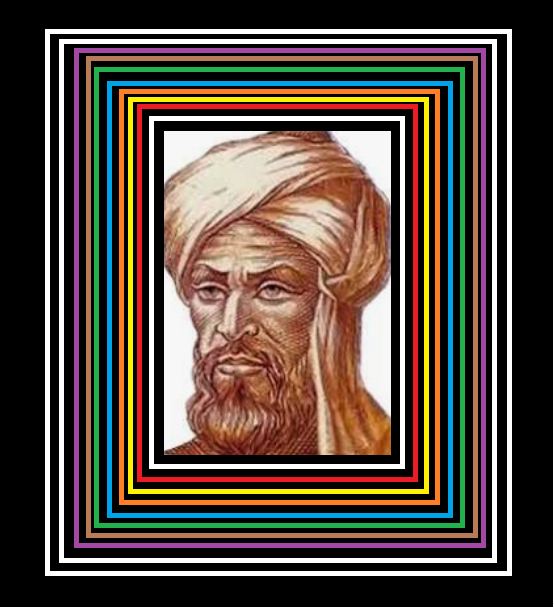
Algorithm Forefather and Inventor–Muḥammad ibn Mūsā al-Khwārizmī.